AI in Supply Chain: Real Visibility,
Real Results for Manufacturers
Many manufacturers lose millions annually to delayed deliveries, stockouts, wrong demand predictions, and disconnected operations. Here's how practical AI is changing that — with real case studies from companies doing it now.




Many manufacturers lose millions of dollars annually due to issues such as delayed deliveries, shortages of goods, wrong demand predictions, and disconnected operations. This is why AI in supply chain is fast becoming a vital element in operations. Small mistakes and omissions in the process can affect production plans and bottom lines.
However, it is one thing to adopt new technologies into the process and another thing to benefit from it. Many manufacturing organizations find themselves at a loss when using solutions that were supposed to transform their operations but have failed to deliver tangible results. That is why it makes sense to move away from AI hype and consider the practical business value of using AI in supply chains.
HonestAI by GrayCyan provides manufacturers with an actionable way to utilize Artificial Intelligence by making decisions easy to explain. This article highlights how artificial intelligence helps manufacturers gain better supply chain visibility and its resulting business value.
What Does AI in Supply Chain Actually Mean?
When talking about artificial intelligence, most of us think about robots performing tasks autonomously. But what exactly does AI mean in relation to supply chain technology? AI supply chain is a process by which data, machine learning, and intelligent systems enable companies to make better and quicker decisions about the supply chain. Instead of depending solely on historical reports and personal judgments, AI processes a lot of data and makes real time decisions from it.
Predictive modeling is one of the parts of AI. It involves analyzing historical and current data and predicting future situations. For instance, a company could use supply chain AI solutions to predict changes in demand, possible delivery delays, inventory shortages, and machinery breakdowns. This way instead of responding to problems, a company can prepare for them in advance and save costly consequences.
Another significant skill that AI possesses is working with real-time signals. Companies' supply chains produce many live signals that originate from suppliers, warehouses, manufacturing facilities, transportation systems, and customers' orders. Artificial intelligence constantly tracks those signals to identify any modifications in real-time. In case there's any delay in delivering products, demand for materials rises suddenly, or stocks fall below necessary levels, organizations are quickly notified which contributes to faster decision-making and greater control.
Moreover, AI helps companies to optimize their supply chains' processes with the help of workflow automation. There are many routine processes in any supply chain that can be automated to reduce delays and improve efficiency, such as order confirmation, stock adjustment, scheduling modification, and reporting. This way in-house staff have more time to focus on making decisions and focusing on other growth oriented responsibilities than routine work.
Predictive Modeling
Analyzes historical and current data to predict changes in demand, possible delivery delays, inventory shortages, and machinery breakdowns — so companies can prepare in advance rather than respond to problems.
Real-Time Signal Processing
Constantly tracks live signals from suppliers, warehouses, manufacturing facilities, transportation systems, and customer orders — identifying any modifications in real time for faster decision-making.
Workflow Automation
Automates routine processes — order confirmation, stock adjustment, scheduling modification, and reporting — freeing in-house staff to focus on growth-oriented responsibilities rather than routine work.
The latest generation of AI-based tools for supply chains is built with humans in mind. They aim to make supply chains more transparent, predictable, and efficient, helping staff members make better decisions based on real time data at hand.
How AI Detects Supply Chain Disruptions Before They Happen
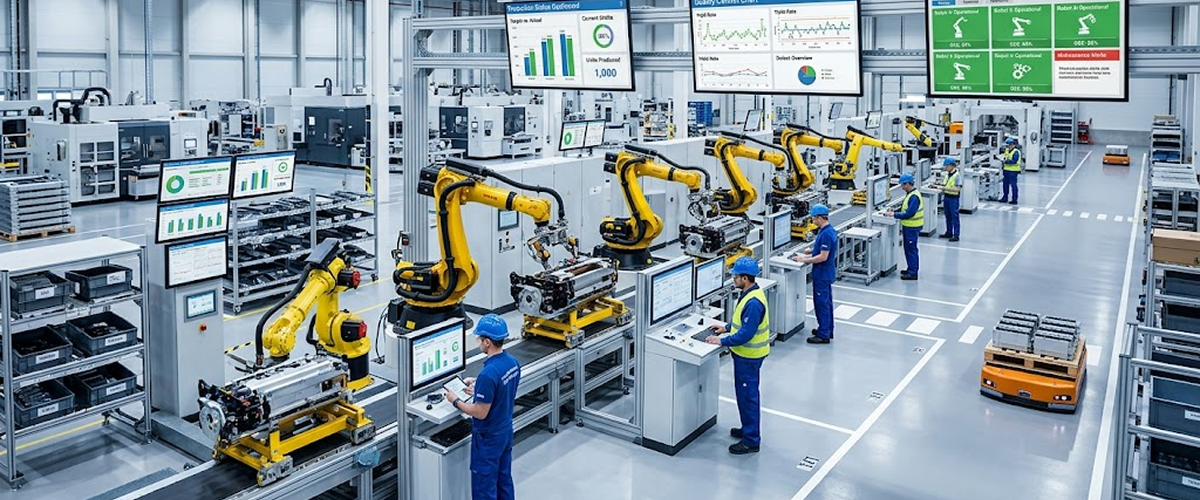
AI-based disruption management in the supply chain domain is redefining the process of identifying and acting upon potential hazards before they escalate into costly challenges. Traditionally, the supply chains are designed to act after the disruptions occur, meaning that delays, stockouts, and other disruptions in processes have already taken place.
The AI supply chain disruption visibility allows for a real-time awareness of all suppliers, logistic processes, scheduling plans, and operational procedures, allowing organizations to spot patterns of disruptions before they become evident.
There is usually something out of place before any disruption impacts the operations. It can be either the delay in the supplier's reaction, missing information regarding the order purchase, an odd timing in deliveries, discrepancies in the number of goods and orders placed, or abnormal changes in the demand pattern. However, such warning signs are frequently overlooked as they remain hidden within different tools used for managing the process, including emails, spreadsheets, logistic communications, and others.
AI works differently because it constantly scans a large amount of operational data and finds patterns that would be difficult for a person to detect. AI supply chain visibility does not depend exclusively on the reports that have been prepared in the past but generates a continuous picture of what is happening along the supply chain and warns of possible risks at the right time for companies to react. For the manufacturer, small and medium-sized in particular, with limited personnel, this presents a valuable competitive edge.
"There is usually something out of place before any disruption impacts the operations. Such warning signs are frequently overlooked as they remain hidden within different tools — emails, spreadsheets, and logistic communications. AI works differently."
— HonestAI Magazine · Edition 14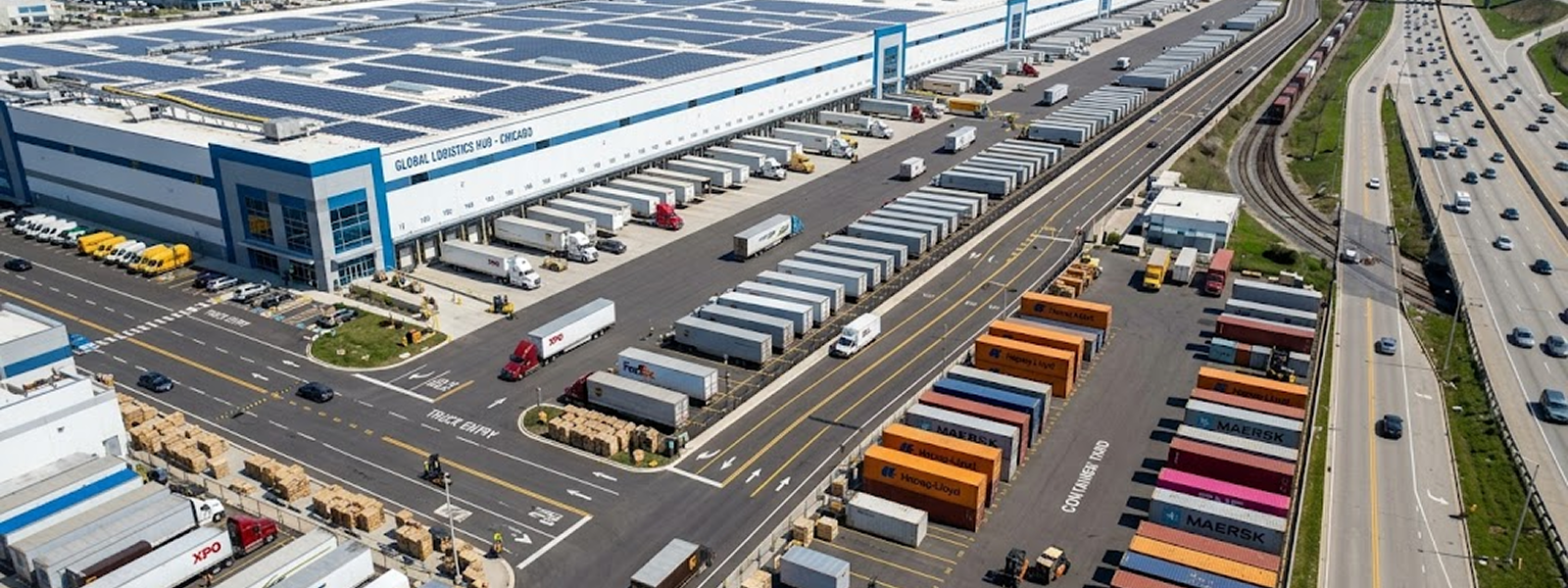
Early Warning Signals AI Monitors
AI systems analyze multiple signals at once to determine whether there is any suspicious activity or potential threats. The signals that may be analyzed include:
Delayed supplier responses and missing order confirmations
Changes in shipment routes or transportation patterns
Sudden lead-time increases from key suppliers
Inventory fluctuations vs. actual consumption rates
Production slowdowns and output anomalies
Vendor communication gaps and unanswered follow-ups
Changes in demand and order patterns
Weather disruptions and regulatory updates on key routes
The benefit is gained by combining all these signals. If an email from the supplier is delayed, this does not necessarily raise alarm bells, but if it occurs in conjunction with shipping delays and peculiarities in purchasing, AI will detect the risk and act upon it in real time. Classic planning systems typically rely on hard-coded business rules and manual monitoring systems. AI is constantly learning about normal behavior and detecting errors before the issues can be seen in traditional reporting, which gives the owner more time to decide how to act.
Teams move from reacting to disruptions to preventing them — reducing costly expediting, production interruptions, and the emergency freight spend that comes with last-minute scrambling.
How AI Correlates Supply Chain Signals to Detect Disruption
Live Signal Sources
Comms
Updates
Levels
Output
Patterns
Factors
Engine
Pattern learning
+ correlation
0 signals selected
Outcomes
👆 Click signal sources to select them. Watch how the outcome changes as signals accumulate — 1 signal = Low, 2 = Watch, 3+ = Alert.
DHL — AI-Driven Disruption Detection
DHL installed a risk management tool based on artificial intelligence, which was aimed at spotting early signs of disruption in global logistics chains. The system is not dependent on disruptions but constantly analyzes thousands of operational variables, including weather conditions, port congestion, transportation delays, changes in legislation, and information about vendors.
Artificial intelligence finds connections between those factors and identifies early signs of disruption. In most cases, owners get warnings from the system before any disruptions become actual problems. The tool often spotted threats several days earlier than the company's traditional system could detect them. It enabled DHL to make changes in plans before the disruptions reached other links in the chain.
Measurable reductions in avoidable delays, fewer emergency shipments, and improved response times during operational disruptionsDigital Supply Chain Twin — Predictive Detection
The company adopted a digital supply chain twin embedded with predictive AI algorithms. This system continuously monitored behaviors relating to inventory levels, supplier lead times, production outputs and shipping times. Rather than tracking separate metrics, the digital twin provided an entire picture of what constitutes normal behavior for operations.
Any deviations from the norm, like lead time variance, supplier silence, inventory variance, or production slowdowns, were detected by AI as warning signals of disruption. Several piloted initiatives proved that the system detected disruptive risks even before any operational issues were raised. There was enough time left to change production planning, engage suppliers, and plan alternatives.
Reduced errors, faster recovery from disruptions, and fewer production interruptions caused by supply shortagesDPM Solutions — Ohio SMB Manufacturer
DPM Solutions is a small machine and manufacturing firm located in Ohio, USA. This company recorded its experiences in embracing the digital approach to work and using AI-based applications to enhance visibility and coordination in its operations. Prior to adopting these digital systems, DPM encountered problems such as delayed communication with suppliers, inconsistent lead times, and late deliveries and purchase order confirmations that led to reactive decision-making processes.
With automated workflow tracking and monitoring of communications, DPM was able to foresee possible operational risks ahead of time. Artificial Intelligence owners could detect any supplier-related challenges earlier compared to the past. It helped to avoid last-minute rush deliveries and other related challenges.
The lesson: DPM showed that smaller manufacturers do not need enterprise-scale systems to gain enterprise-level foresight. Lightweight AI-enabled tools can help lean teams to identify risks earlier, make faster decisions, and compete much more effectively against larger organizations.
Agentic AI in Supply Chain — The Next Step
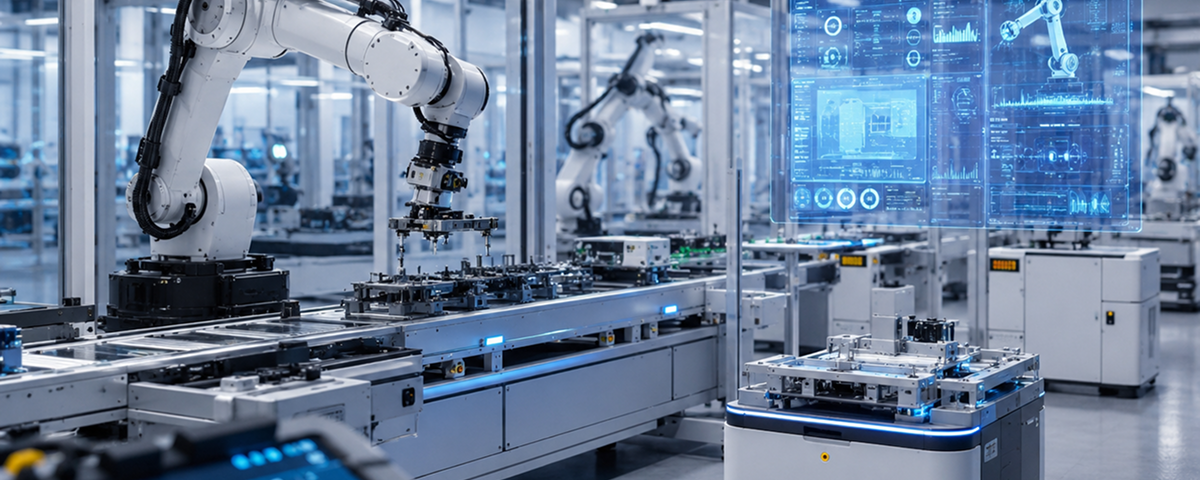
Supply chain AI has long concentrated on visibility, forecast analysis, and early risk prediction. AI pinpoints the possible problems, anticipates disruptions, and provides teams with real time information for decision-making. However, the next evolution of AI involves even more advanced development. Unlike previous models, modern AI does not merely identify problems but also solves them. This approach is known as Agentic AI.
Standard AI might inform a team member about a delay of the supplier and its impact on manufacturing in one week. However, Agentic AI can do much more — the technology allows for evaluating different options, initiating workflows, communicating with partners, and making business decisions based on preset rules. No longer just a tool of monitoring, AI will become a functional component of operational management.
Manufacturers managing complicated logistics can rely on Agentic AI to minimize the need for human labor and to reduce the time needed for completing certain actions after identifying an issue. This is the principle underlying GrayCyan's Workflow AI Agents. Rather than implementing one more dashboard or notification functionality, the solution concentrates on automation of routine decision-making processes without any loss of transparency and control. Teams remain fully in charge while AI takes care of urgent operations.
What AI Agents Do in Supply Chain Operations
AI agents can support supply chain operations in multiple ways, including:
- Automatically identifying supplier delays and initiating follow-up communication
- Monitoring inventory thresholds and triggering replenishment workflows
- Adjusting production schedules when disruptions appear
- Escalating urgent operational risks to the appropriate teams
- Tracking shipment movement and responding to route changes
- Coordinating information between purchasing, logistics, and production systems
- Creating operational recommendations based on real-time conditions
- Executing approved workflows without waiting for manual triggers
Rather than waiting for the staff members to analyze information and act on it, AI systems constantly keep track of everything that is happening in real time and act on the approved processes immediately.
Difference Between Predictive AI and Agentic AI
Predictive AI focuses primarily on forecasting outcomes and identifying risks. It answers questions such as: What might happen? And where could disruptions occur? Its role is visibility and insight generation. Agentic AI adds another layer by answering: What should happen next? And how can action begin immediately? Rather than stopping at predictions, AI agents execute workflows, coordinate actions, and support operational decisions automatically.
In simple terms, predictive AI informs teams. Agentic AI helps teams move faster by turning information into action.
| Factor | Predictive AI | Agentic AI |
|---|---|---|
| Primary Purpose | Focuses on forecasting outcomes and identifying risks | Focuses on taking actions and executing tasks automatically |
| Main Question Answered | What might happen? Where could disruptions occur? | What should happen next? How can action begin immediately? |
| Core Function | Generates insights and predictions from historical and real-time data | Makes decisions, initiates workflows, and coordinates actions |
| Role in Operations | Provides visibility and analytical support | Supports operational execution and process automation |
| Decision Making | Recommends likely outcomes but leaves action to humans | Can trigger actions and support decisions automatically |
| Level of Automation | Low to moderate | High |
| Human Involvement | Requires teams to review and act on insights | Reduces manual intervention by automating responses |
| Business Value | Improves forecasting accuracy and risk awareness | Improves speed, efficiency, and workflow execution |
| Example Use Case | Predicting supply chain delays or customer demand | Automatically rerouting shipments or initiating inventory replenishment |
| Simple Explanation | Informs teams with data-driven insights | Turns insights into action and helps teams move faster |
AI-Powered Internal Order & Approval Workflows
A lot of supply chain disruptions don't occur because of suppliers' problems, logistical challenges, or a lack of available stock. Supply chain inefficiencies start within the business organization through delayed approvals, inadequate follow-ups, broken lines of communication, and other similar activities.
Contemporary AI in supply chain management technology isn't only used to improve predictions or increase visibility into the supply chain beyond one's organization's internal processes. Instead, artificial intelligence can be leveraged to recognize hidden inefficiencies in internal processes and workflows and fix them. While small delays may seem insignificant when considered separately, when viewed collectively, these inefficiencies can significantly increase cycle time and impact decision-making.
In many cases, traditional solutions reveal where there is work done, but don't necessarily point out where there's work being delayed without anyone realizing that. People working on procurement and approvals may understand that their request was submitted, but might not be aware of how long ago it was sent and how much longer it still takes until it is processed. Such issues lead to operational complexities and put companies in a reactive state.
AI solutions help to address this challenge by tracking process activity in real time. Rather than making teams sift through various dashboards, spreadsheets, and emails, software such as HonestAI by GrayCyan provides useful information that clarifies where bottlenecks occur and what needs to be done.
Where Internal Delays Hide
Internal delays often appear in places organizations rarely monitor closely:
- Pending purchase requisitions that are waiting for approvals
- Delayed purchase orders between different departments
- Unanswered requests for quotation
- Outstanding engineering change requests waiting for approvals
- Follow-up messages from vendors left unattended in email exchanges
- Incompleted contracts pending due to a lack of feedback
These types of challenges don't generally cause alarm bells right away. But when there are several minor delays that happen at once, it results in big roadblocks for decision making, production planning, and shipping times. AI-driven workflow technology will watch all of these actions and figure out what areas are causing delays. Rather than finding out about these delays too late, this system provides early warning signs. This helps to keep operations running more smoothly and ensures better communication throughout internal systems.
Where Internal Delays Hide — AI Workflow Visibility Map
Requisition On Track
Approval Delayed
Order On Track
Follow-up Critical
Sign-off On Track
Delays discovered only when production is already impacted. Manual chasing across emails and spreadsheets.
Bottlenecks flagged in real time. Team gets plain-language alerts with exact context — days before they become production problems.
AI tracks every step of your internal procurement workflow, flags stalled items, and surfaces the context needed to act immediately.
Jabil — $30B Global Manufacturing Leader
Jabil is a large manufacturing firm with annual revenues totaling approximately $30 billion, as well as an employee base exceeding 250,000 workers. The problem lay within the inefficiency in the process, as it occurred within the organization itself, rather than in the external supply chain processes.
Recurring Challenges
- Pending engineering change orders awaiting sign-off
- Sluggish processing of purchasing requisitions and orders
- Bottlenecks of RFQs with no visibility into process status
- Unapproved actions due to dispersed groups and traveling personnel
- Operational details buried in emails and old data
What Was Implemented
- Routing automation for PR and PO approvals
- Real-time visibility of engineering changes
- Smart notifications for approval delays
- Role-based workflows in operations and procurement
- Interconnected communication systems cutting down email usage
Documented Impact
- Faster engineering change cycles
- Shortened delay times within procurement process steps
- Better coordination among operations, engineering, and quality staff
- Less workload related to manual sign-off procedures
- Better consistency throughout supply chains by streamlining internal processes
While Jabil works on an enterprise level, the problem reflects issues that many other manufacturers face. Problems in internal processes may go unnoticed until they impact production.
Faster cycle times, fewer workflow bottlenecks, and a supply chain that operates with greater visibility and coordinationAI Inventory Accuracy — Catching Errors Before They Cost You
Most inventory errors never originate as large-scale problems. They usually arise from smaller discrepancies that look trivial at first glance. There might be a delay in updating the receipt for the material. There might be an incorrect update on a bin location. The lot number could end up in the wrong order. Something may be missed in the spreadsheet adjustment. Alone, each of these situations does not mean much, but together they cause bigger problems for production planning, purchasing, and shipping deliveries.
Practical AI supply chain examples demonstrate that better inventory management is more than just proper counting. Conventional inventory systems provide data about the amount of inventory required based on existing data. They do not necessarily spot when the data starts deviating from actual operations. By constantly tracking movement patterns, inventory performance, and operational data, artificial intelligence helps to pinpoint discrepancies and fix them before any damage can occur. The advantages include improved reliability in decision-making and smoother operations based on accurate data.
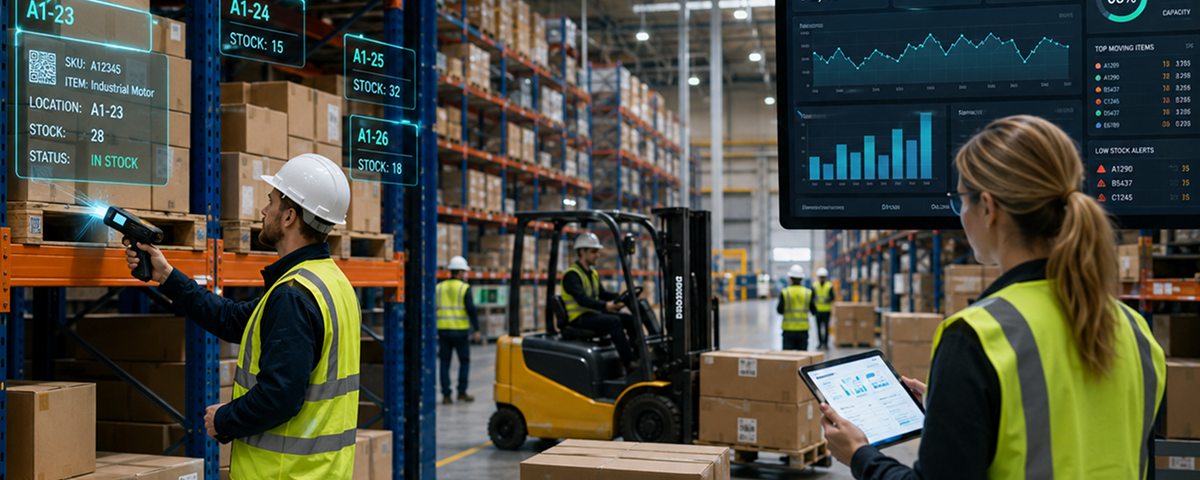
How AI Pattern Detection Works
The pattern recognition process of AI involves understanding what normal operational activity looks like concerning inventory and materials movements. Some of the information analyzed by this system includes:
- Inventory transactions
- Material receipts
- Bin movements
- Production consumption rates
- Lot assignments
- Warehouse activity
- Historical inventory trends
With the creation of normal behavior patterns, AI will always be tracking any deviations or irregularities that might arise. In cases where something shows up out of place, changes in usage patterns occur, or inventory levels start deviating from actual usage, AI detects the deviation right away. Rather than looking for errors in the process after they happen, AI enables you to identify any errors that could arise ahead of time. This way, you get a chance to sort out the problem before it starts impacting other aspects of your business operations.
Roplast Industries — California, USA
The Plex smart manufacturing solution was used by Roplast Industries, a California-based plastics company that specializes in reusable packaging products. While Roplast does handle sophisticated manufacturing processes and large customers, the company is still categorized under mid-market manufacturing, thus representing a great demonstration study on how mid-market manufacturers can embrace advanced solutions.
Problems Before Transformation
- Misaligned bin locations
- Delayed material receipts
- Spreadsheet-driven inventory adjustments
- Differences between physical inventory and system balances
- Inventory drift affecting planning accuracy
- Incorrect material lot usage due to visibility limitations
Results After Implementation
- Real-time material tracking
- Automated alerts for unusual material movement
- Reduced reliance on spreadsheets
- Improved inventory accuracy
- Better traceability and operational visibility
The system was able to detect such discrepancies before they evolved into bigger issues within operations, ensuring that teams were able to manage their inventory data more efficiently. By looking at Roplast, it is evident that manufacturers can have advanced operational insights without having enterprise-class systems. Mid-sized companies can also benefit from intelligent solutions thanks to artificial intelligence.
Higher inventory accuracy, stronger operational control, and a supply chain that plans using reality instead of assumptionsAI Logistics Automation: Freight Tracking & Reconciliation
Freight reconciliation has always been one of the most problematic activities when it comes to operations. Multiple invoices, unconnected updates on shipments, PDF files, and unexpected freight charges are common. Any minor mistake will create more work for you and your colleagues, forcing everyone to investigate problems that could be avoided in the first place.
With AI supply chain planning, however, your business will start relying on proactive logistics rather than reactively addressing challenges. The AI gathers all logistics data based on constant monitoring of shipments, carriers, invoices, bills of lading, and any other delivery milestones. Each step taken is compared to the plan to spot any inconsistency immediately. The system alerts you right away in case of such an inconsistency as a delayed ETA, absence of shipping scan, unexpected delivery date, or unexpected freight charges.
No longer will you be informed about potential problems only when a shipment delay influences production or after finance struggles with reconciliation. Shipment monitoring will become much easier thanks to additional visibility; hidden gaps in your information will appear on the surface, and potential inconsistencies in freight charges will be spotted before causing trouble.
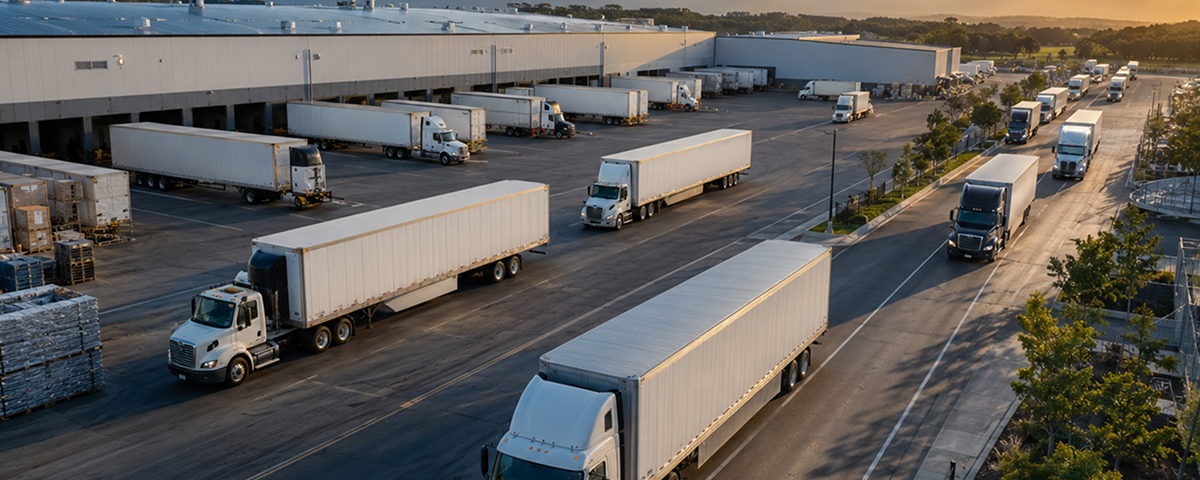
Lower freight costs, faster reconciliation, improved shipment visibility, and less time spent chasing errors and mismatched charges — turning logistics from a reactive headache into a controlled, visible operation.
Generative AI in Supply Chain — What It Adds
In contrast to traditional AI, which is used to forecast trends, make supply chains visible, and automate them, generative AI brings new capabilities into the process. As opposed to simply analyzing the data and recognizing patterns, it generates new pieces of information that can be turned into actions to be implemented instantly. As a result, for companies manufacturing products, less time will be needed to complete administrative tasks, leaving more space for making important decisions concerning production and development.
Draft Purchase Orders
The first way Generative AI can help is by preparing draft documents, such as purchase orders. With its help, one can generate a draft of an order based on operational data. It is much easier to look through the information and sign off rather than create an order from scratch.
Supplier Communication Summaries
A lot of emails, updates, shipping information, and vendor conversations can be processed by members of the supply chain team. Summarization will allow team members to quickly receive relevant information from long communication chains.
Audit-Ready Reports & Compliance Docs
Generative AI could help to create audit-ready reports, compliance paperwork, and operational reports using the company's existing data — structured, accurate, and ready for review without manual compilation.
The aim of all this is not to replace the decision-making process. On the contrary, the idea is to save time, be clear about the situation, and speed up the process.
The Future of AI in Supply Chain
In terms of the future of AI in supply chain developments, one should note the growing trend towards active AI participation in decision-making rather than its mere ability to analyze the current state of affairs and make forecasts. While initially there was an emphasis on inventory tracking, demand forecasting, and disruption identification, the next stage will be characterized by AI that coordinates actions, makes recommendations, and even executes operational procedures.
Agentic Systems Become Increasingly Common
These systems will continuously observe the activity of supply chain networks and launch automatic action according to certain rules. Rather than notifying employees of certain events, such systems can initiate approvals, workflow coordination, and much more.
Autonomous Procurement Assistance
AI will be used to help companies choose suppliers, send orders, and source goods automatically on the basis of data analysis and evaluations made regarding price, inventories, and needs — reducing the cognitive load on procurement teams while improving decision quality.
Predictive Supplier Scoring
Another promising AI solution for supply chains, involving the analysis of supplier performance, delivery, communication, risks, and so on — giving procurement teams data-driven confidence in every sourcing decision before a problem occurs.
"It should be emphasized that the goal of AI in supply chains is not to replace workers but to create a more efficient process for them."
— GrayCyan AI SolutionsHow GrayCyan Brings AI to Your Supply Chain
Dashboards and separate alerts are no longer sufficient for today's supply chains. They require systems capable of identifying patterns, predicting potential issues, and helping teams act on these insights in a timely manner.
GrayCyan AI solutions enables manufacturers to step away from standard monitoring practices to a more advanced means of workflow. With the aid of RegOps and predictive intelligence features, GrayCyan makes it possible for companies to boost transparency across workflow, supplier performance, inventory movement, and operational processes. Rather than reacting to problems once they have already caused delays in manufacturing activities, teams get the necessary information earlier, giving them an opportunity to minimize delays and plan ahead.
Discover more about Predictive Intelligence and Automation to find out what AI could do for your business. Get in touch with us to arrange a consultation on implementing actionable AI solutions.
Frequently Asked Questions
What is AI in supply chain management? ▾
Artificial Intelligence in SCM makes use of AI, machine learning, and automation to optimize planning, stock management, purchasing processes, logistics, and decision-making. It enables companies to process information more quickly, minimize manual work, and make better operational decisions.
How does AI improve supply chain visibility? ▾
Through the collection and analysis of data in real time from suppliers, logistics networks, inventories, and operations, AI can increase visibility within the supply chain. Through this process, any disruption is detected early on to ensure appropriate actions are taken on time.
What are examples of AI in supply chain? ▾
AI examples in the supply chain can be categorized into the following areas:
- Demand forecasting
- Optimizing inventories
- Shipment tracking
- Managing suppliers' risks
- Process automation
- Predictive maintenance
- Identifying disruptions
AI supply chain aids in enhancing efficiency, avoiding unnecessary delays, and making effective decisions.
What is agentic AI in supply chain? ▾
Supply chain agentic AI is more than forecasting and warning because it involves taking action autonomously. These actions include:
- Initiating workflow
- Process monitoring
- Process coordination
- Notification
- Decision making
This assists companies in saving time and improving performance through minimal human interaction.