
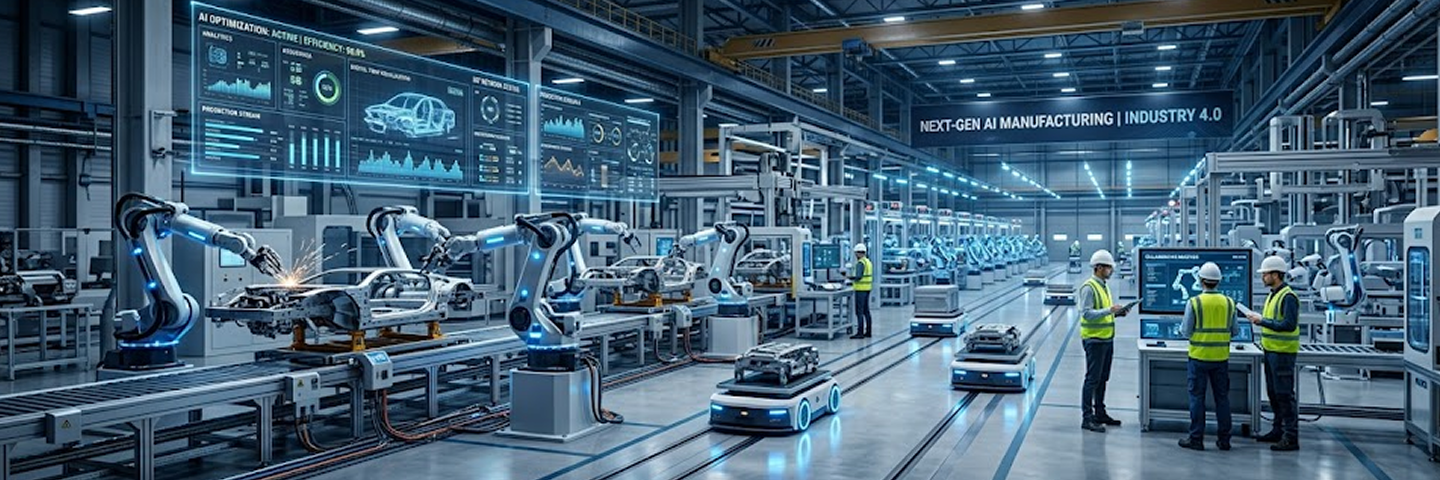




Warehousing has always played a quiet but critical role in manufacturing. In modern AI in warehousing, everything depends on materials arriving on time, parts stored correctly, and kits assembled without delay. Yet even the best-run facilities deal with everyday friction such as bin locations that don't match reality, slow receiving cycles, unpredictable pick paths, and cycle counts that uncover errors no one expected. Industry research from Apexon shows that inventory inaccuracies alone can account for nearly 25% of warehouse productivity loss, highlighting how costly these small gaps can become at scale.
AI isn't here to replace the warehouse; it's here to clarify it. AI in warehousing gives teams a clearer, real-time view of where inventory actually is, how it is moving, and what needs attention next. Instead of relying on periodic checks and manual reconciliation, operations shift toward continuous visibility and faster correction cycles. Material flow becomes more predictable, coordinated, and far less chaotic, especially when connected across receiving, picking, and storage systems.
In this article, we explore how the next generation of AI in warehousing is taking shape through real-world capabilities already being used in production environments. These include intelligent receiving and verification, AI-driven inventory visibility, predictive cycle counting, layout optimization, and automated freight and reconciliation workflows.
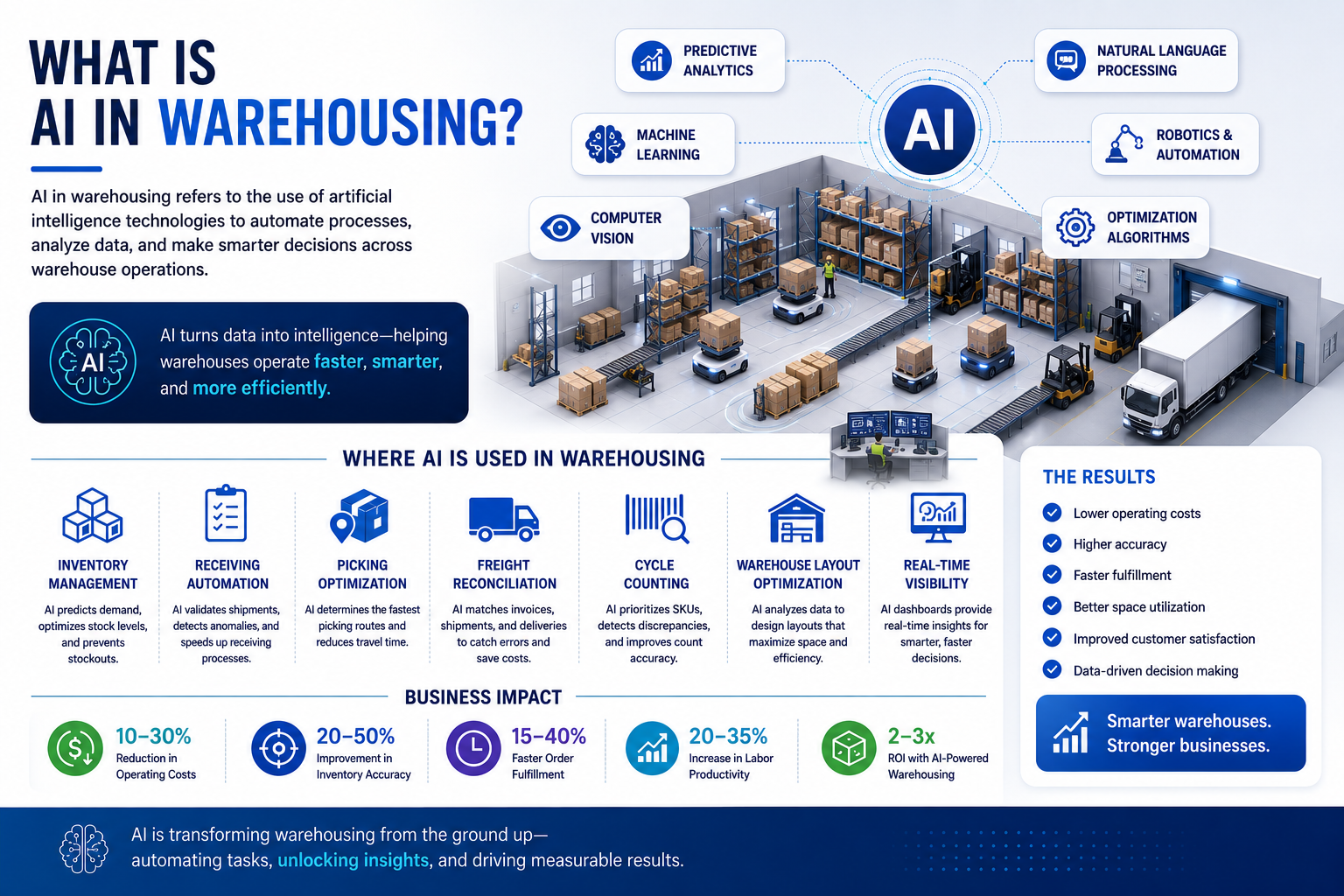
What is AI in warehousing — real-time inventory visibility, automated receiving and intelligent warehouse operations
Digital Material Visibility & AI Pick-Kit Optimization
The problem with most warehouses is not when they pick orders, but when they spend time looking for items that are actually there but misplaced. The material gets moved and not updated, and the kit gets built on old data and the ERP system falls out of sync with reality. AI tackles the problem by building a validation layer in real-time throughout the entire process of managing the warehouse.
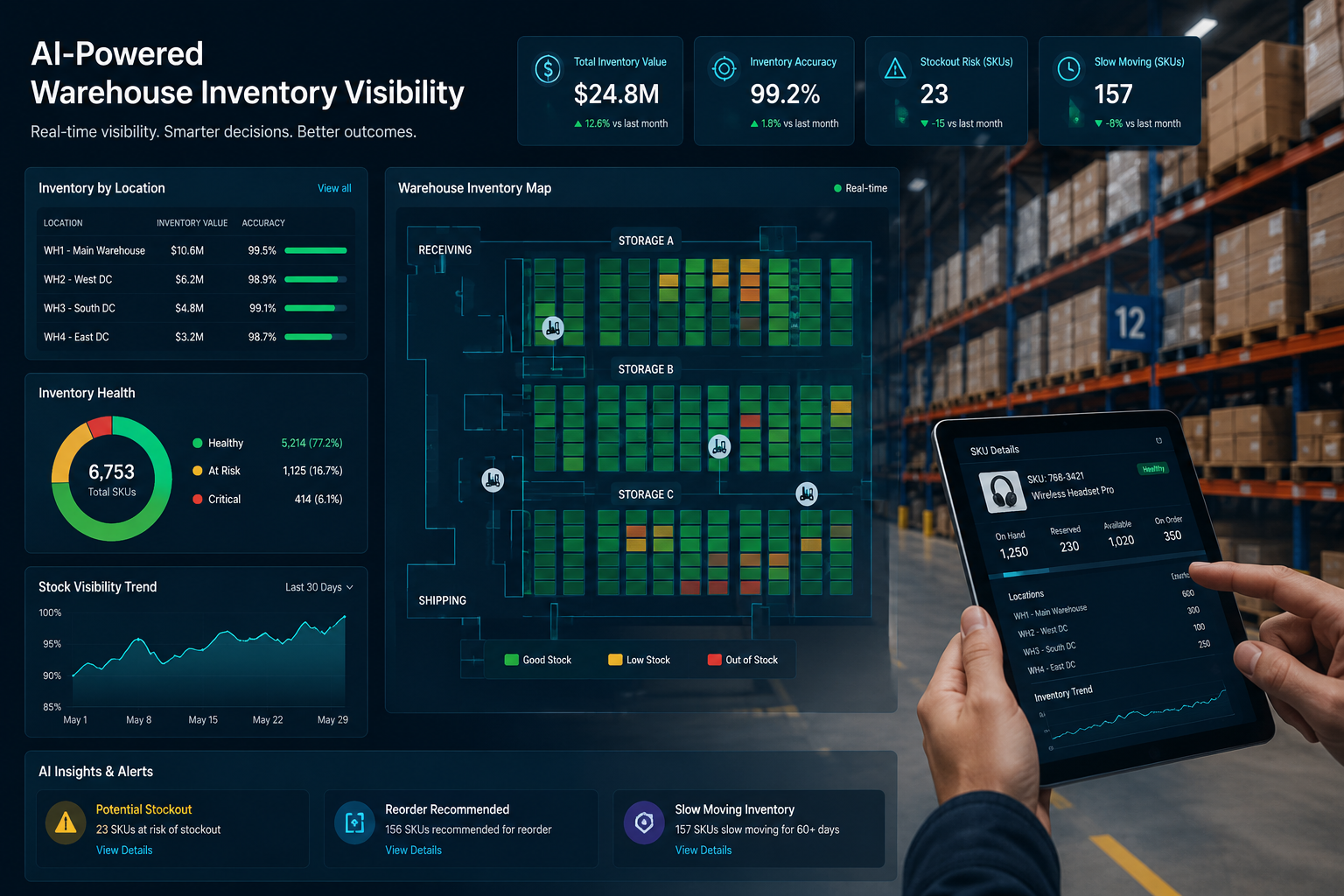
AI-powered warehouse inventory visibility — real-time location tracking and ERP reconciliation
1. Live Location Accuracy Tracking
One of the key areas where AI in warehousing and AI inventory management proves particularly useful is keeping a real-time record of inventory locations. Typically, due to the movement of materials, mistakes in scanning, and other reasons, inventory locations are often shifted during the day. Eventually, records kept by ERPs become unreliable, while people spend much time looking for materials.
Live Location Accuracy Tracking analyzes and reconciles scanner records, operator locations, and ERP records in time. The system allows for the detection of discrepancies immediately; which means there is need to wait until the time for conducting cycle counts.
Whenever there is a discrepancy between records about a component being located at one spot, while physically the same item is in another place, operators are immediately informed about it. This way, unnecessary searches and production stoppages are prevented, while inventory records stay correct. This solution helps to locate materials faster and makes the inventory process much more flexible.
2. Automated Kitting Validation
Kitting errors may cause problems with production, quality, and high costs associated with rework. Missing pieces, revision errors, out-of-date batches, or inappropriate substitutions usually come to light only after the process has started.
Ai picking optimization helps to prevent kitting errors because it validates each kit against all of the operational needs instantly. The system validates revisions of bills of material, substitution approval, batch and lot exclusions, inventory levels, reservations, and change orders prior to bringing any materials to production.
Unlike traditional methods that require human analysis or spreadsheet checking, the AI tool instantly detects differences between what belongs in a kit and what is really there, alerting the operator to make the necessary adjustments right away.
Companies introducing automated kit validation tools experience a reduction in errors of their kits up to 35-60%, which is shown by warehouse automation and manufacturing execution system implementation statistics.
3. Predictive Location Drift Alerts
Typically, inventory location discrepancies do not occur simultaneously. Most cases start with minor discrepancies that eventually escalate. The pallet might temporarily get moved to another location, the fast-selling SKU might get kept in an alternate slot, or the material handler might skip certain steps when handling inventory on a particularly hectic day.
With Predictive Location Drift Alerts, warehouses can spot such risks before their inventories become hard to find.
Predictive systems rely on AI algorithms to analyze historical data in warehouses based on several critical factors:
- Pick frequency analysis
- Trends in operator movements
- Risky SKUs
- Congestion and traffic areas
Based on this data, the system can predict where there is going to be inventory location drift in the future. As a result, warehouses can take preventive measures before the problem gets out of control.
With such an approach, many companies reduce their errors by 40 percent or more.
4. Cost Impact Modeling
Many inventory variances remain as operational matters due to the difficulty in determining their financial consequences. But even minor variances can become costly for the company because they lead to losses of hours, production risks, overtime work, and expedited deliveries.
It is in this area that the value of AI automation in warehousing comes to the light.
Cost Impact Modeling turns each inventory variance into its financial equivalent by calculating such measures as wasted labor hours, incurred overtime pay, increased production risk, and potential loss of margin.
Operational decision makers get the ability to see their inventory problems from the perspective of financial impact.
This enables more better prioritization of inventory variances and focuses attention on solving problems that carry financial implications.
SMB vs. Enterprise: The AI Advantage
Manufacturing companies have used the help of detailed audits, larger inventory groups, and a detailed approval process to retain visibility and control. Although these features make it possible for enterprises to have the edge over their competitors, they can also create problems regarding delayed responses. Unlike big companies, small businesses have to act fast because of a less experienced structure and a smaller number of employees. AI helps small businesses to keep pace with the big players by offering visibility, validation, predictive monitoring, and financial intelligence in an efficient manner. Small and medium-sized companies now enjoy an advantage over much bigger companies.
Real-World Results: What AI in Warehousing Actually Delivers
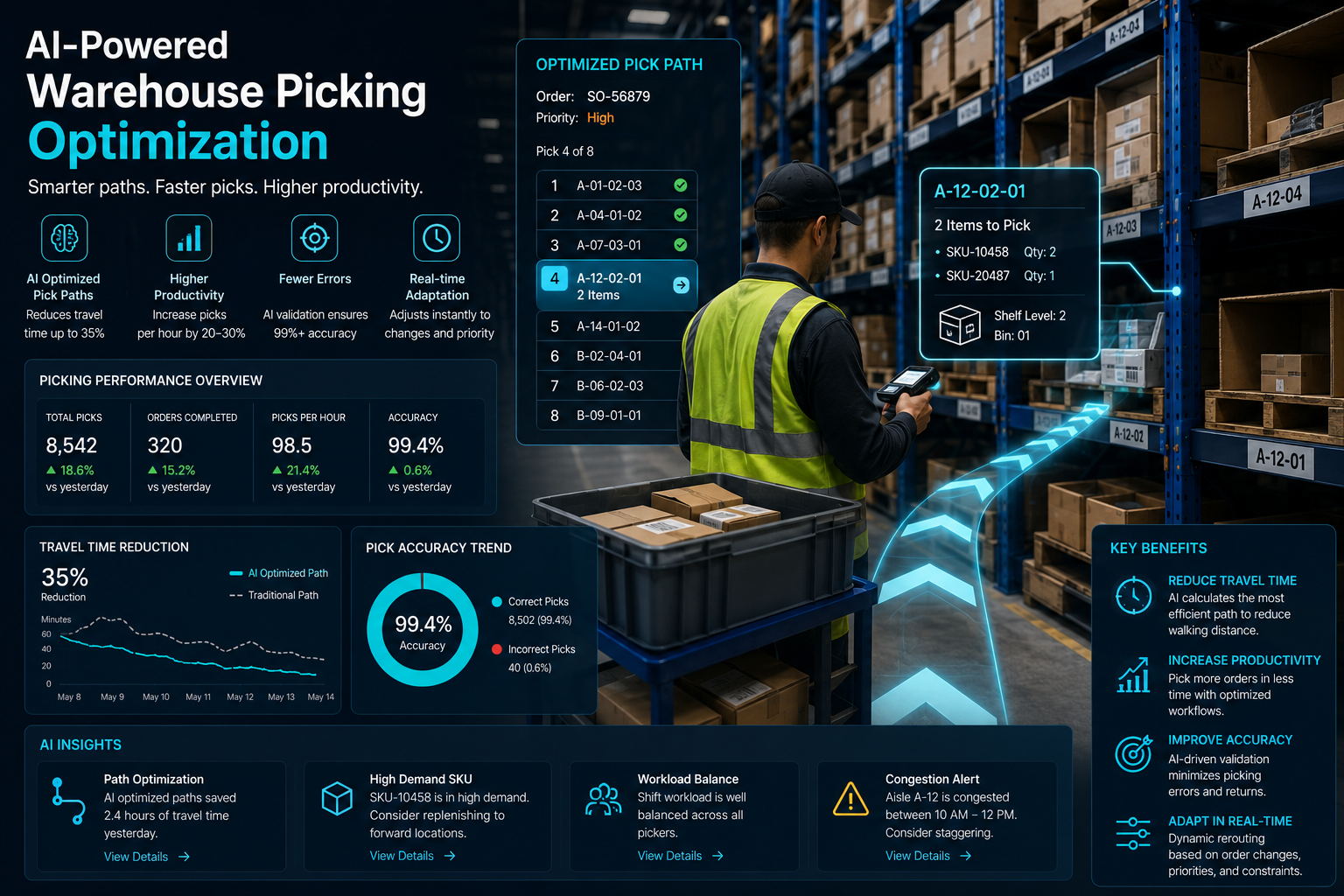
AI-powered picking optimization — 25–40% efficiency improvement across warehouse operations
Industry studies indicate that inaccurate location of inventory is still a primary source of inefficiency in warehouses. Research has indicated that inventory inaccuracies contribute to a substantial percentage of productivity losses, with misplaced inventory still causing increased search times and unnecessary labor costs through longer pick routes. With more and more use of artificial intelligence, performance gains are being measured and recorded with greater frequency.
Key Benchmarks — Industry Research
Organizations implementing AI-powered warehouse visibility, inventory management, and picking optimization consistently report measurable operational gains:
- Inventory accuracy reaches 95–99% with the help of AI-enabled visibility, RFID tracking, computer vision, and reconciliation. The research by McKinsey demonstrates how AI minimizes mistakes made during manual inventory counting, undocumented inventory movements, and delays in updating ERP data.
- AI-optimized slotting, pick path, and routing increase picking efficiency by 25–40%. DHL Supply Chain notes the benefits of dynamic inventory positioning and route optimization in its warehouses.
- AI-validated item locations and anomaly detection minimize search and travel time by 20–30%. Benchmarking by MHI and WERC illustrates the impact of reducing the number of items not stored at their intended locations.
- The number of out-of-stock and missing part incidents is reduced by 30–50% with the help of real-time inventory reconciliation and identifying discrepancies between ERP data and current inventory status to prevent phantom stock.
- Labor savings come up to 10–20% as AI automates discrepancy detection, cycle counting assistance, exception handling, and inventory reconciliation procedures. McKinsey reports that labor productivity is one of the major sources of AI value in warehouses.
- Increased warehouse throughput is another potential advantage of using AI to coordinate picking, inventory visibility, and task sequence execution.
Case Study — Locus Robotics: 2–3x Throughput Increase
One of the best cases can be seen at Locus Robotics, an organization that was established by Bruce Welty and Rick Faulk. In their case, the firm uses AI-powered autonomous mobile robots (AMRs) to assist employees who are engaged in the picking process.
Customers' deployments show that their throughput is twice to three times higher in comparison to regular warehouse processes. This achievement is explained by the fact that AMRs use AI algorithms to optimize the picking process by making appropriate sequences, allocating tasks, collaborating with the employee, and calculating routes. It is not a linear path anymore but a dynamic one where the robot continuously optimizes the distance traveled.
Ocado's Digital-Physical Alignment
Under the guidance of its founder, Tim Steiner, Ocado exemplifies the manner in which AI can be used to achieve near-perfect alignment between digital records and the actual state of affairs in the warehouse. This is because the company uses AI-powered technology to manage inventory location and movement at its automated fulfillment centers.
By constantly verifying the movement of inventory and keeping track of the storage locations, Ocado manages to significantly reduce search times while maximizing operational reliability and picking precision.
AI-Automated Receiving: GRNs, Labels & Verification
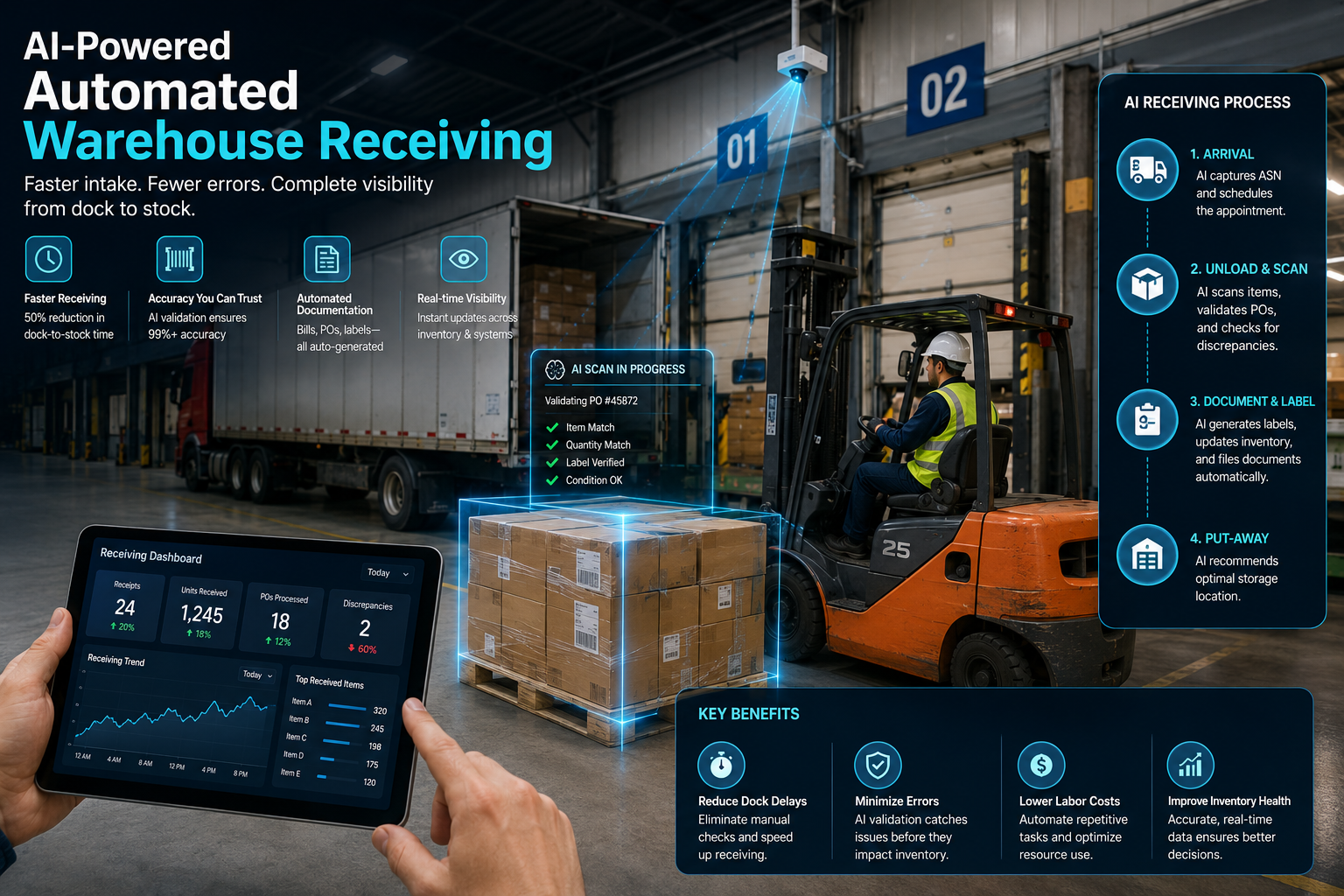
AI-automated warehouse receiving — GRNs, label printing and document verification in real time
Historically, receiving is known to be one of the most tedious and error-prone operations within a warehouse environment. Employees are responsible for aligning purchase orders against packing lists, checking quantities, issuing GRNs, printing labels, and reconciling any inconsistencies before goods can be brought into stock. Contemporary AI warehouse receiving solutions help to streamline this process. Thanks to OCR, computer vision, and document intelligence capabilities, AI can read supplier invoices once received, detect any inconsistencies, prepare draft documents, and even update inventory. If an AI solution is used in conjunction with warehouse management software AI, receiving becomes a highly automated task.
How AI Improves Receiving
Inbound AI warehouse receiving platforms improves efficiency through automation of various verification procedures with warehouse management system AI:
- Scan PO numbers, SKU information, batch numbers, and quantities, achieving OCR accuracy of more than 99%.
- Validate purchase order data against ASNs and packing slips prior to unloading.
- Create draft GRNs and submit any exceptions to be approved.
- Print labels for receiving items automatically upon arrival.
- Link receiving processes with WMS/ERP systems in real time.
- Decrease the need for manual activities and potential errors in receiving procedures.
By ensuring document verification before receiving products into the warehouse, AI prevents downstream problems associated with picking and replenishing efficiency.
Operational Impact — Key Metrics
| Metric | Impact |
|---|---|
| Receiving cycle time | 40–65% faster |
| Manual data entry | Up to 80% reduction |
| Receiving labor costs | 20–30% lower |
| Quantity verification errors | Near-zero levels |
| Supplier dispute resolution | 30–50% faster |
For a mid-sized distribution center processing approximately 5,000 inbound lines per week, these improvements can generate estimated savings of $18,000 to $35,000 per month through reduced labor, fewer errors, and faster processing.
Case Study — Flexport's AI-Driven Document Intelligence
Flexport, established by Ryan Petersen, is widely considered one of the most notable cases where artificial intelligence is applied in document automation in logistics. Flexport managed to create an innovative solution based on machine learning and OCR, which could process millions of documents each year.
The platform automates all steps of document management from extracting structured information from more than 20 standard types of documents to automatically matching, identifying discrepancies, and sorting the documents among numerous categories. This solution allows for reducing manual effort in document handling and improving customs clearance, shipment accuracy, and compliance.
To date, Flexport has managed to raise over $2 billion through funding from such companies as Founders Fund, Google, SoftBank, and Andreessen Horowitz. With operations in more than 112 countries worldwide, the organization handles goods worth almost $19 billion per year. In addition to demonstrating the efficiency of Artificial Intelligence in automating mundane tasks and accelerating the process of inbound logistics, Flexport shows that all of these tools are available for any businesses today.
AI Freight Reconciliation
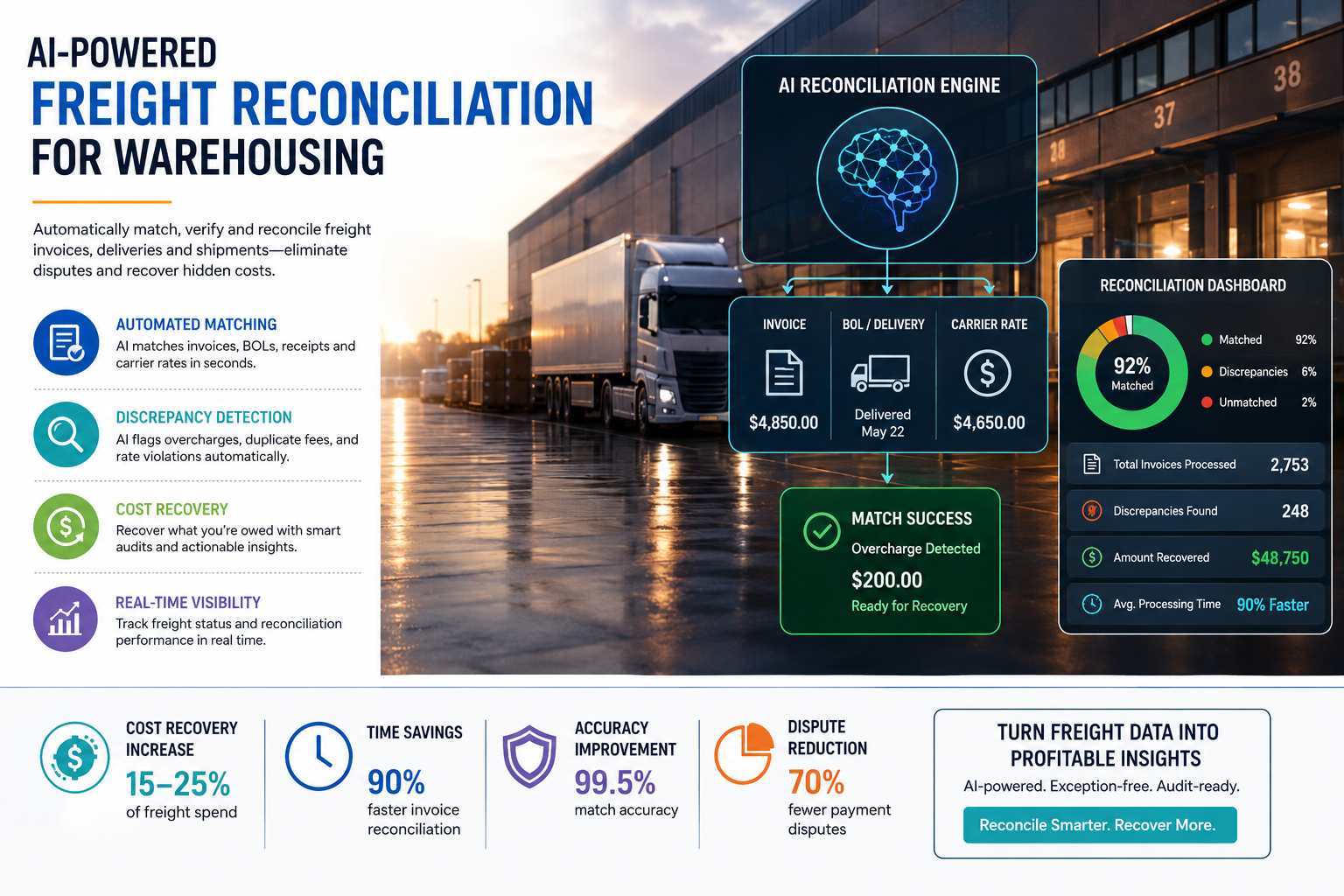
AI freight reconciliation — automated invoice matching and discrepancy detection at the warehouse
Automated freight reconciliation is becoming more and more common when receiving loads, replacing the manual process of reconciling invoices against other information, such as shipping information, carrier costs, and receiving documentation. The AI technology can automatically recognize any discrepancies between various data sources, detecting duplicates, and differences in quantity.
This way, companies can reconcile the costs even before entering them in the accounting cycle, thus increasing efficiency and minimizing human error in verifying the inbound costs as soon as they arrive at the warehouse.
AI-Driven Cycle Counts & Variance Diagnostics
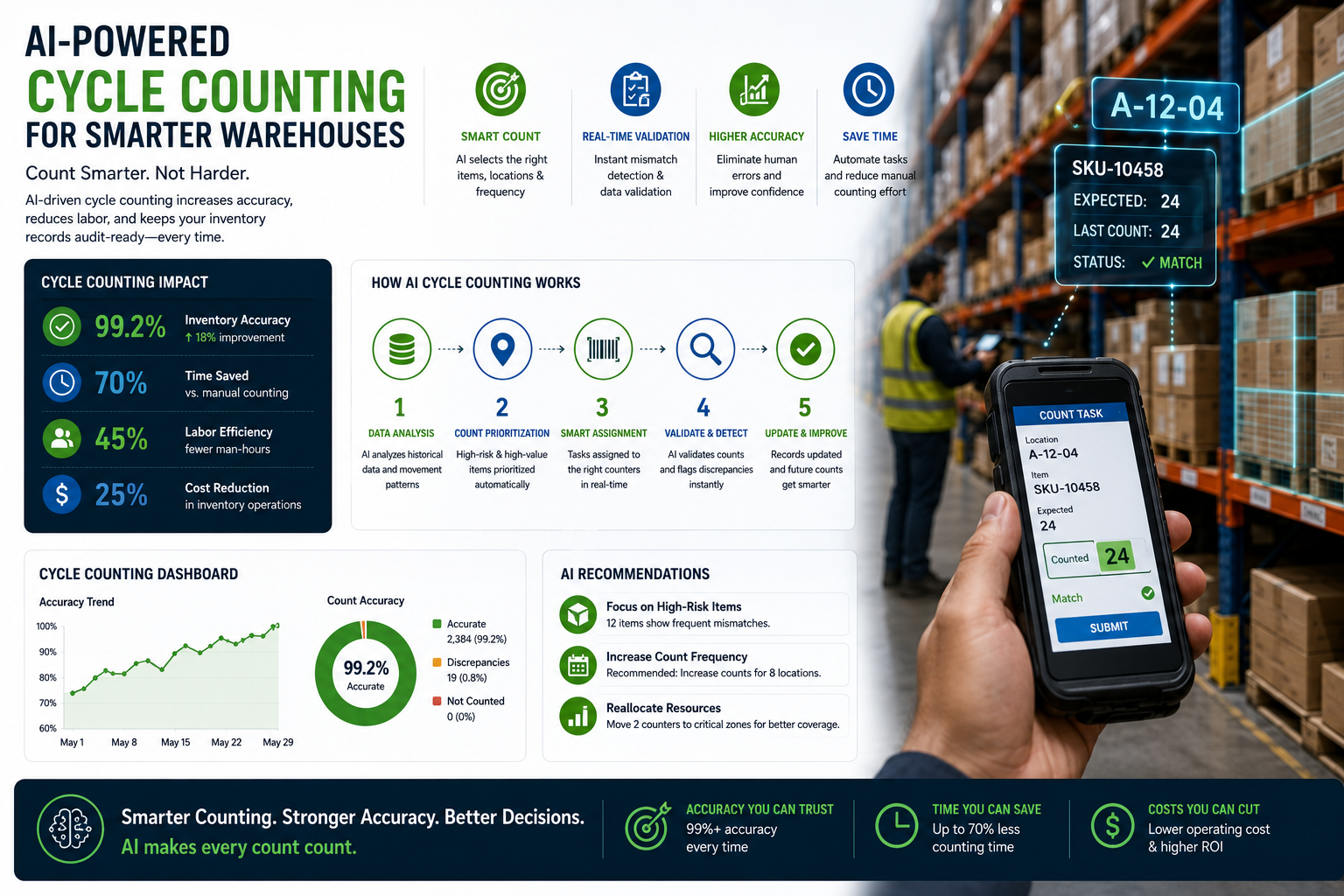
AI-driven cycle counting — risk-based prioritization and variance diagnostics across inventory locations
Cycle counts have always been very laborious processes that waste time and other important resources within a warehouse setting, but produce minimal knowledge in return. The team simply carries out inventory counts at pre-set intervals, even though they do not know what inventory to count, in order to get any useful information. New AI cycle counts change this process.
How AI Prioritizes Cycle Counts
Instead of applying the same approach to all inventory locations, AI cycle counting looks into operation indicators to determine which areas might have issues. Indicators that are analyzed in order to detect possible issues include time gaps between scans, adjustments of inventories, activities related to returned products, inventory movement that has not been posted yet, abnormal transactions, and trends of variances.
Risk assessment of inventory locations and prioritization of those that have the highest risks of errors is achieved through machine learning. As a consequence, inventory locations that are prone to errors will be counted first, before covering the entire warehouse. Such an approach will make the counting process more effective, reduce the workforce needed for counting, and improve inventory accuracy.
Case Study — Walmart's ML-Driven Inventory Prioritization
As part of the technology initiatives pushed through by CTO Suresh Kumar, Walmart applied machine learning techniques to increase its visibility on inventory and detect critical inventory locations. Using Artificial Intelligence models, they were able to examine the movement of inventory, sales, replenishment, and inventory shortages to determine priorities.
Case Study — Zara's RFID + AI Stock Accuracy
Another perfect example of successful integration of RFID technology with AI-assisted inventory control is the Inditex brand, Zara. All products at Zara are tagged, and because of that, inventory counts take place much more quickly than those conducted using barcodes.
Studies of industry experts have found that Zara managed to achieve a high degree of inventory precision with the help of RFID technology, making sure that the inventory accuracy rate was always above 95%. RFID helped the company check its inventory much more often, update it, find missing items, and make more better replenishment decisions.
AI-Driven Layout Optimization & Intelligent Bin Movements
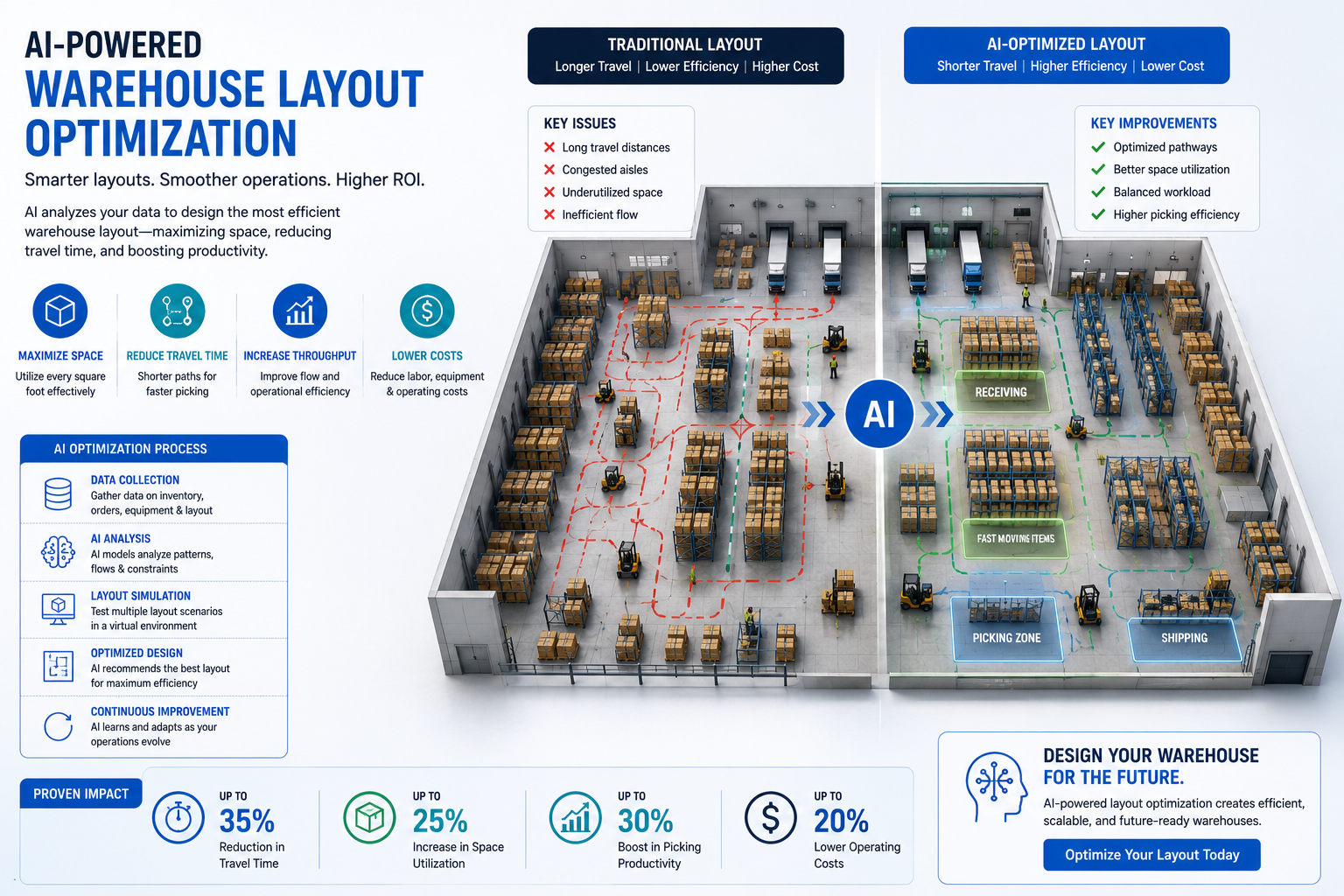
AI-driven warehouse layout optimization — heatmap congestion detection and intelligent bin placement
Warehouse layouts often evolve through habit rather than analysis. The quick-moving items are kept in outdated places, related items get separated from each other, and heavy traffic areas are congested without any effort to fix it. Contemporary air-driven warehousing takes advantage of operation information for continuous optimization.
Six Key Layout Capabilities
- Heatmap-Based Congestion Detection: The system uses AI algorithms to analyze worker movement data, paths, and heat maps to locate areas that experience congestion consistently. This information will assist in optimizing traffic patterns within the facility.
- SKU Pairing Analysis: Some SKUs are always chosen in groups, but they are kept far away from each other. Using machine learning, AI finds such pairings and proposes placing the SKUs in adjacent storage spaces to shorten the distance of travel.
- Travel-Time Optimization: By analyzing past movements, AI considers different bin configurations and calculates how costly each setup would be. The objective is to have the cheapest one possible without sacrificing flexibility.
- WIP Flow Forecasting: The AI system tracks the progress of work done and identifies potential problems that could lead to shortages or delays. The inventory can then be moved strategically to keep things moving smoothly.
- Continuous Re-Slotting Recommendations: The demand cycle varies throughout the year. AI will continually assess the seasonal changes, order trends, and new products, making recommendations for moving inventory based on changing circumstances.
- Cost-Impact Modeling: All suggested layout improvements will include expected savings from labor, time savings, and annual ROI projections. This will allow operations managers to make decisions based on business benefit instead of just guesswork.
Case Studies — Symbotic and Kiva/Amazon
Symbotic: AI-Driven Warehouse Optimization at Scale
Symbotic relies on warehouse orchestration using AI. It was created by Rick Cohen and relies on machine learning and robotics to automate inventory location, density, and motion. Key clients such as Walmart and Target utilize technology offered by Symbotic to streamline the process of operation through increased throughput and reduced warehouse motion. The software analyzes patterns of motion to allow warehouses to change their layout without building new warehouses.
Kiva Systems and Amazon's Dynamic Inventory Model
Kiva Systems, established by Mick Mountz and purchased by Amazon, revolutionized the way warehouses work through smart inventory placement. It enables the inventory to be brought right to where the pickers are, rather than having workers go to the inventory themselves. AI constantly moves inventory around depending on real time demand of the moment, making it much more easier and faster with less traveling involved.
Results: Less travel route, less fatigue, faster picking, and a warehouse that changes according to demand rather than being static.
The Business Case for AI Warehousing: ROI and Cost Impact
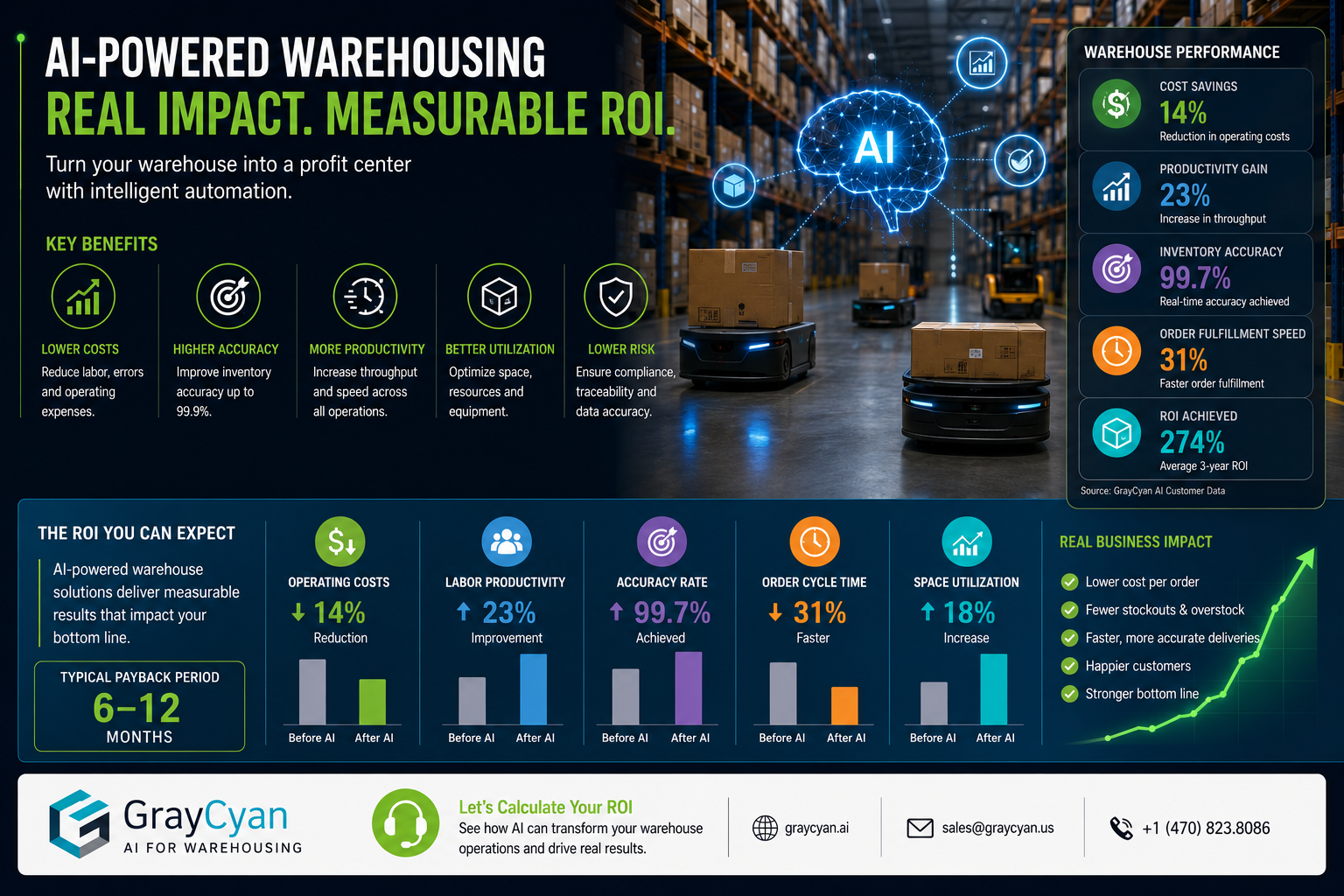
AI warehousing ROI — measurable cost savings across receiving, picking, inventory and layout operations
Implementation of AI within warehousing is not something conceptual anymore; it's becoming a real cost and productivity factor. Faster operations, fewer mistakes, and better utilization of human resources have been observed in all key processes such as receiving, picking, inventory control, and layout design. The best benefit will be achieved if small improvements are implemented in multiple operations at once.
Summary ROI Table — AI in Warehousing by Use Case
| Use Case | Key Metric | Source |
|---|---|---|
| AI Receiving Automation | $18K–$35K/month savings per mid-size DC | Internal operational benchmarks |
| Inventory Accuracy Optimization | 95–99% accuracy with AI visibility systems | McKinsey |
| Picking Optimization | 25–40% efficiency improvement | DHL Supply Chain |
| Cycle Count Optimization | 10–20% labor cost reduction | McKinsey |
| Autonomous Picking Systems | 2–3x throughput increase | Locus Robotics |
These metrics demonstrate that AI automation in warehousing delivers value across every operational layer, from inbound processing to outbound fulfillment, with compounding financial benefits.
Why SMBs See Faster ROI Than Enterprise
The small and medium businesses always manage to reap benefits from AI warehousing quicker and with more evident results when compared with big companies. The main reason behind this is implementation speed. Small firms tend to be less static and more flexible in nature. Thus, SMBs will be able to introduce new technologies much faster, since no time-consuming processes such as procurement or multiple stages of system integration will be required.
Moreover, the intensity effect cannot be underestimated in this case either. Every small decrease in the labor force, travel time, or picking inaccuracies will lead to a huge percentage decrease in costs, while for big companies, the difference will not be evident. For instance, a 20% increase in labor productivity or 40% reduction in receiving times is an immediate increase in warehouse productivity.
Big companies usually suffer from fragmented systems and complicated change management practices. Therefore, it will take more time to see some practical results from using AI warehousing tools. However, SMBs will be able to implement changes in daily activities quickly enough to notice results almost immediately after implementing innovations.
How GrayCyan Brings AI Warehousing to Mid-Market Manufacturers
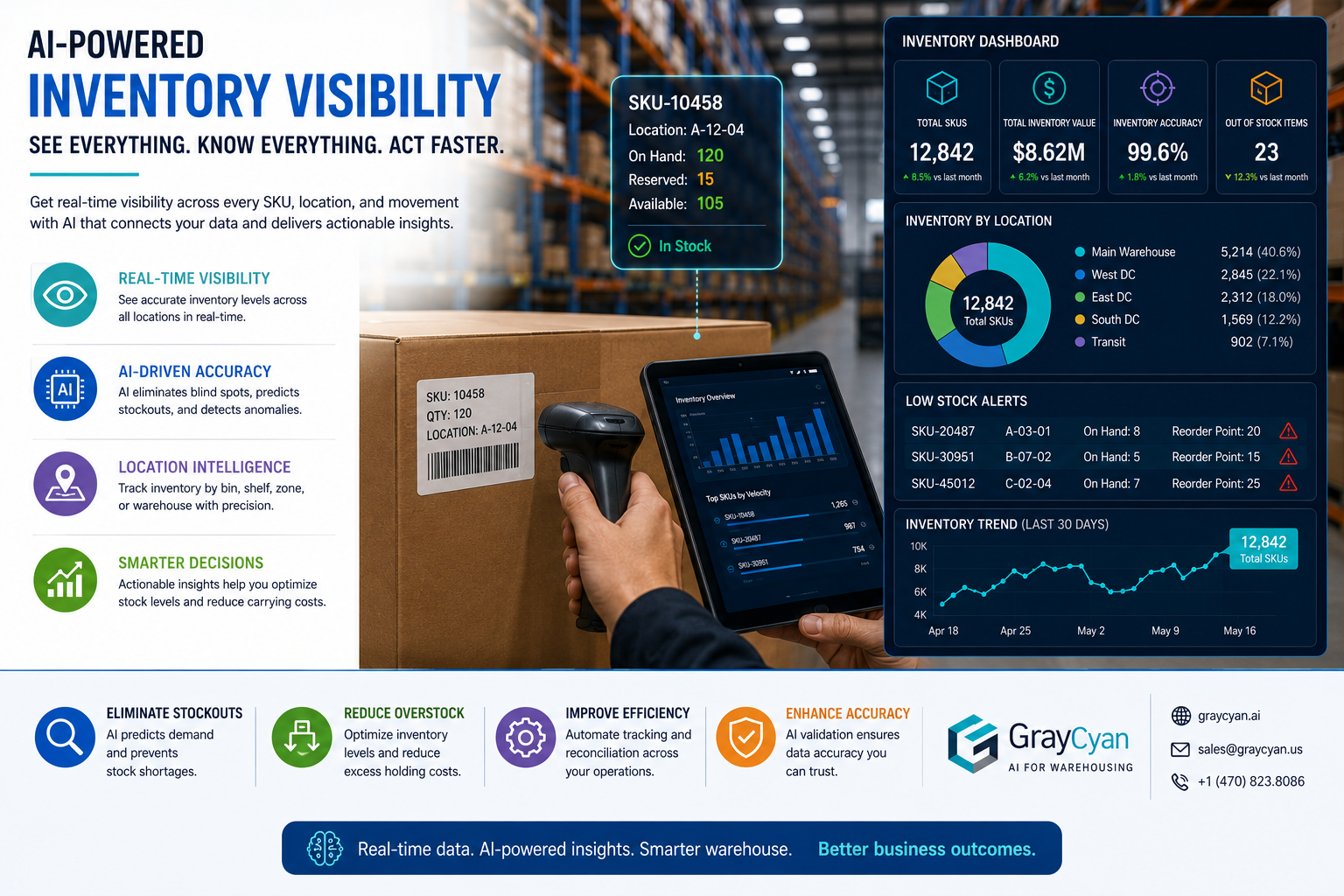
GrayCyan AI warehouse solutions — connecting ERP, WMS and operational systems without replacing existing technology
GrayCyan allows mid-market manufacturers to leverage AI automation in their warehouses without having to replace any existing technology. Unlike using a new WMS, GrayCyan uses its smart process by integrating advanced technology to existing ERP ecosystems in order to increase the accuracy of inventory, speed up receiving, and increase operational visibility.
The software connects with ERP systems such as SAP, Oracle NetSuite, and Microsoft Dynamics, which will allow businesses to enhance their current processes instead of having to completely rebuild them. The software consists of AI for ERP-integrated inventory, receiving validation via human-in-the-loop, and predictive analytics within the warehouse.
Insights and automated workflow execution capabilities include the use of Predictive Intelligence & Automation and Workflow AI Agents, which will help warehouse and supply chain professionals to execute processes much faster and more accurately.
Contact GrayCyan's team to learn more about how your business can leverage AI to reduce costs in your warehouse.
FAQ: AI in Warehousing
Ready to Transform Your Warehouse with AI?
GrayCyan connects AI to your existing ERP, WMS, and operational systems — no new infrastructure required. From receiving automation to inventory accuracy and cycle count optimization, manufacturers are already seeing measurable results.
Schedule a Strategy Call → Assess Your AI Maturity →