From Semiconductor Surplus to America's Chip Renaissance: How JAD Group Is Helping Rebuild Critical Manufacturing Infrastructure
Joe DiBartolo on Semiconductor Reshoring, Workforce Development, and AI-Driven Manufacturing
Interview by Nishkam Batta, Founder, HonestAI by GrayCyan




This interview is part of Manufacturing AI Magazine's ongoing series featuring leaders who are shaping the future of manufacturing, industrial automation, and artificial intelligence. In this conversation, Nishkam Batta, Founder of HonestAI by GrayCyan, speaks with Joe DiBartolo, President of JAD Group, about the semiconductor industry's rapid expansion, workforce challenges, AI adoption, and what manufacturers can learn from the industry's next evolution.
As the global semiconductor industry undergoes one of the most significant transformations in modern manufacturing history, a new generation of infrastructure providers is emerging to support the shift. While headlines often focus on chipmakers such as TSMC, Nvidia, Intel, Apple, and Qualcomm, the reality is that semiconductor manufacturing depends on a vast ecosystem of specialized service providers working behind the scenes.
One such company is JAD Group, a North American semiconductor services organization that has spent nearly three decades supporting the industry's most critical testing and manufacturing operations. Today, as hundreds of billions of dollars flow into new semiconductor facilities across the United States, JAD Group finds itself at the center of an unprecedented industrial expansion.
Manufacturing AI Magazine sat down with Joe DiBartolo, President of JAD Group, to discuss semiconductor reshoring, workforce development, AI adoption, and the infrastructure required to support America's next manufacturing chapter.
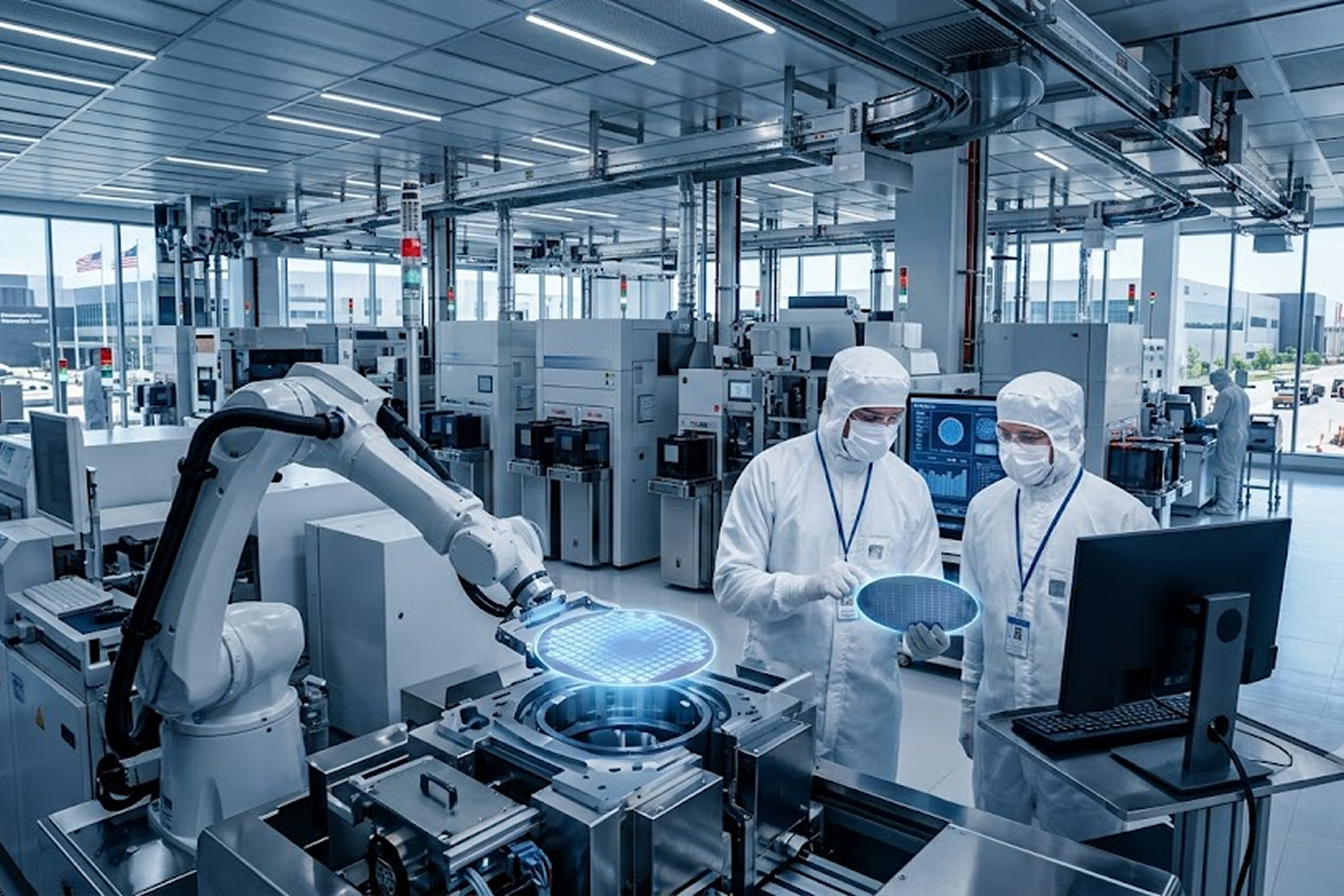
America's semiconductor renaissance — hundreds of billions of dollars flowing into new domestic manufacturing capacity
Riding the Wave of America's Semiconductor Revival
JAD Group's story began nearly 27 years ago in the semiconductor test equipment market. Initially focused on purchasing and reselling surplus automatic test equipment (ATE), the company built deep expertise around the back-end processes of semiconductor manufacturing, where chips are packaged, tested, and validated before entering the market.
Over time, however, the business evolved far beyond equipment brokerage.
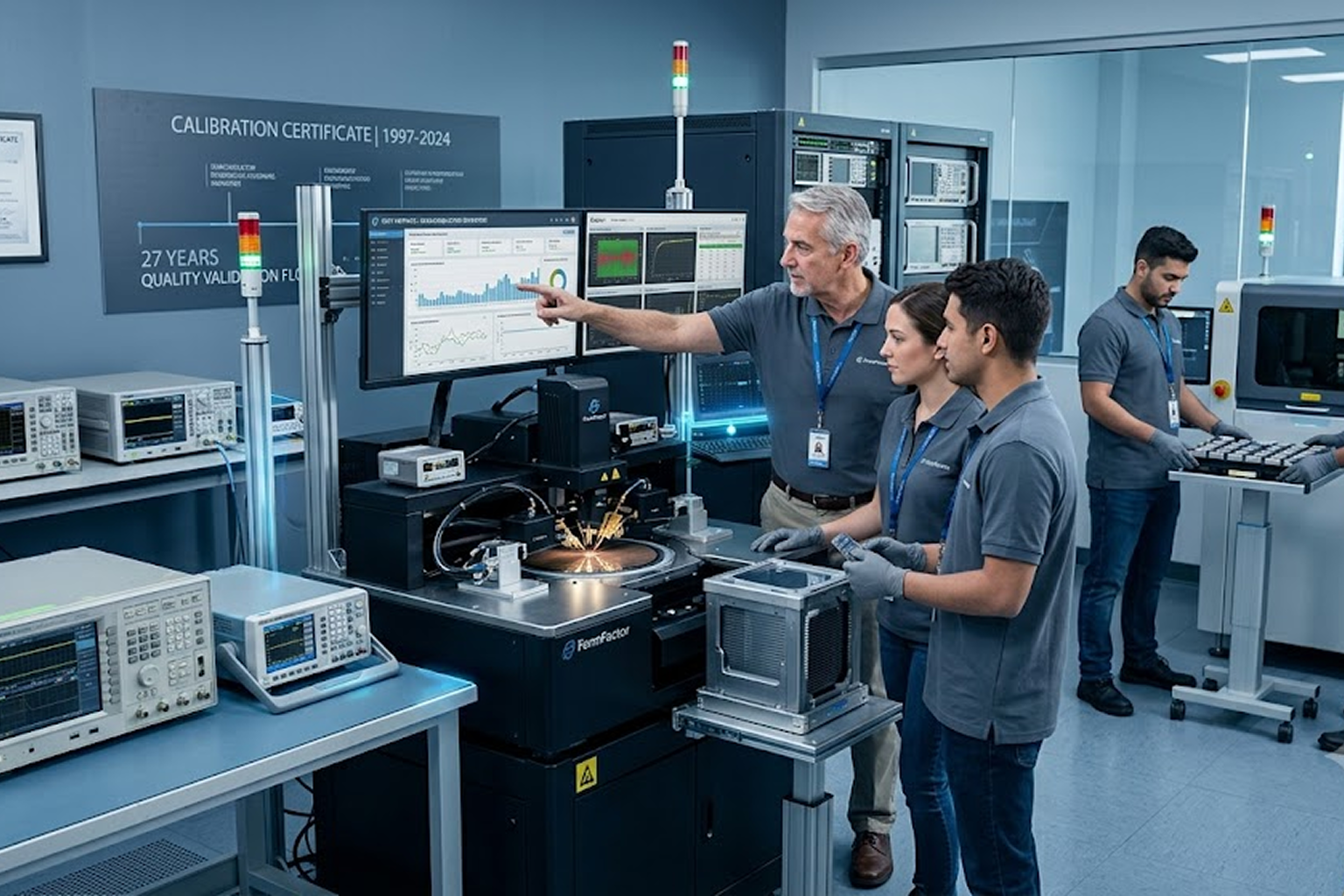
27 years of semiconductor test equipment expertise — from surplus ATE brokerage to full infrastructure services
Today, JAD Group supports semiconductor manufacturers through equipment refurbishment, installation, calibration, maintenance services, workforce development, engineering support, and infrastructure services. The company's evolution mirrors a broader shift occurring throughout the semiconductor industry itself.
"We started primarily as a resale surplus equipment dealer," DiBartolo explains. "Today, we're helping build the infrastructure services required to support the massive reshoring of semiconductor manufacturing into North America."
That demand is accelerating rapidly.
Driven by supply chain vulnerabilities exposed during the pandemic and supported by government initiatives such as the CHIPS and Science Act, semiconductor companies are investing heavily in domestic manufacturing capacity. The result is an industrial expansion measured not in millions, but in hundreds of billions of dollars.
For DiBartolo, the motivation goes beyond economics.
While American companies design roughly 60 percent of the world's semiconductors, only a small percentage of manufacturing currently occurs within the United States. As geopolitical tensions rise and supply chain resilience becomes a strategic priority, semiconductors have increasingly become a matter of national security as much as industrial competitiveness.
The Business of Supporting Critical Infrastructure

JAD Group's infrastructure services span maintenance, calibration, repairs, spare parts, and engineering support
A key differentiator for JAD Group is its role in supporting semiconductor equipment long after original manufacturers discontinue support.
Several years ago, semiconductor test equipment leader Advantest selected JAD Group and its partner, Taiwan-based Jtron Technology., to provide authorized legacy support services for customers operating older testing platforms.
When equipment reaches end-of-service status, manufacturers often face difficult choices. Replacing multimillion-dollar testing systems can require extensive engineering effort, software redevelopment, process qualification, and operational disruption.
Instead, JAD Group helps customers extend the life of these assets through maintenance programs, calibration services, repairs, spare parts support, and engineering expertise.
"The customer may want to continue using that platform for many years," DiBartolo says. "Our job is to provide the support infrastructure that allows them to do that reliably."
The partnership has positioned JAD Group as a critical bridge between legacy manufacturing assets and next-generation semiconductor investments.
Beyond the Fab: The Hidden Infrastructure Challenge
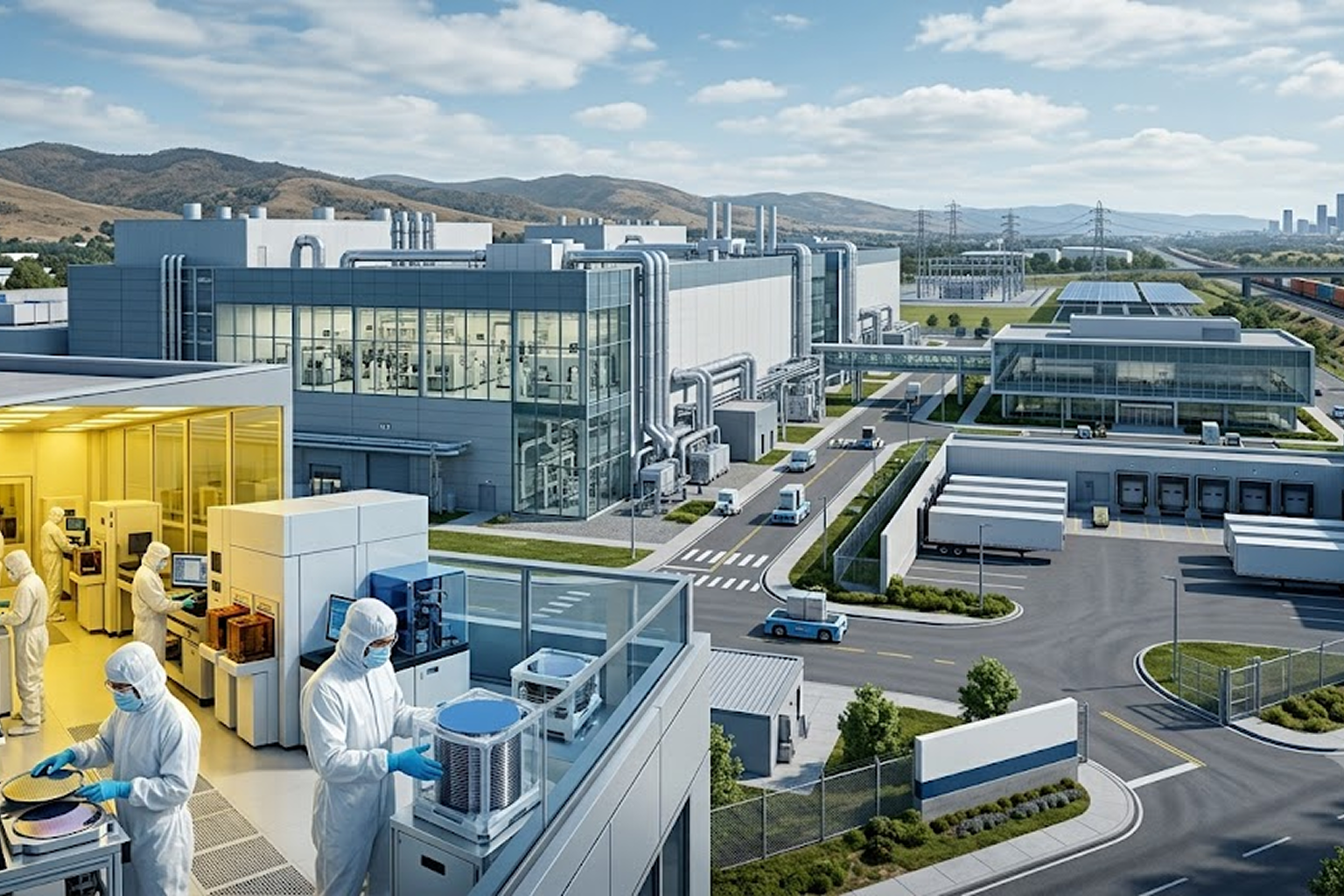
Semiconductor reshoring in North America is rebuilding capabilities that haven't existed domestically at scale for years
Building a semiconductor fabrication facility is only the beginning.
Each new fab requires thousands of specialized professionals, from construction teams and utility providers to equipment installers, calibration specialists, service engineers, process control experts, and maintenance technicians.
According to DiBartolo, the greatest challenge may not be funding—it is finding enough skilled people to support the industry's growth.
"For decades, much of the semiconductor supply chain moved overseas," he explains. "Now we're rebuilding capabilities that haven't existed domestically at scale for years."
This challenge is particularly visible among international semiconductor companies expanding into North America.
Taiwan Semiconductor Manufacturing Company (TSMC), for example, continues to expand its U.S. footprint with major investments in Arizona. At the same time, many suppliers throughout the semiconductor ecosystem are establishing North American operations to support those facilities.
As these companies expand, they face a common problem: workforce availability.
Many organizations lack sufficient technical talent to install, maintain, and operate highly specialized semiconductor equipment. In response, JAD Group has expanded its workforce development initiatives, recruiting, vetting, training, and deploying engineers to support semiconductor manufacturers and suppliers entering the North American market.
The result is a new category of industrial opportunity—one focused not on manufacturing products directly, but on enabling manufacturing itself.
Workforce Development Becomes a Competitive Advantage
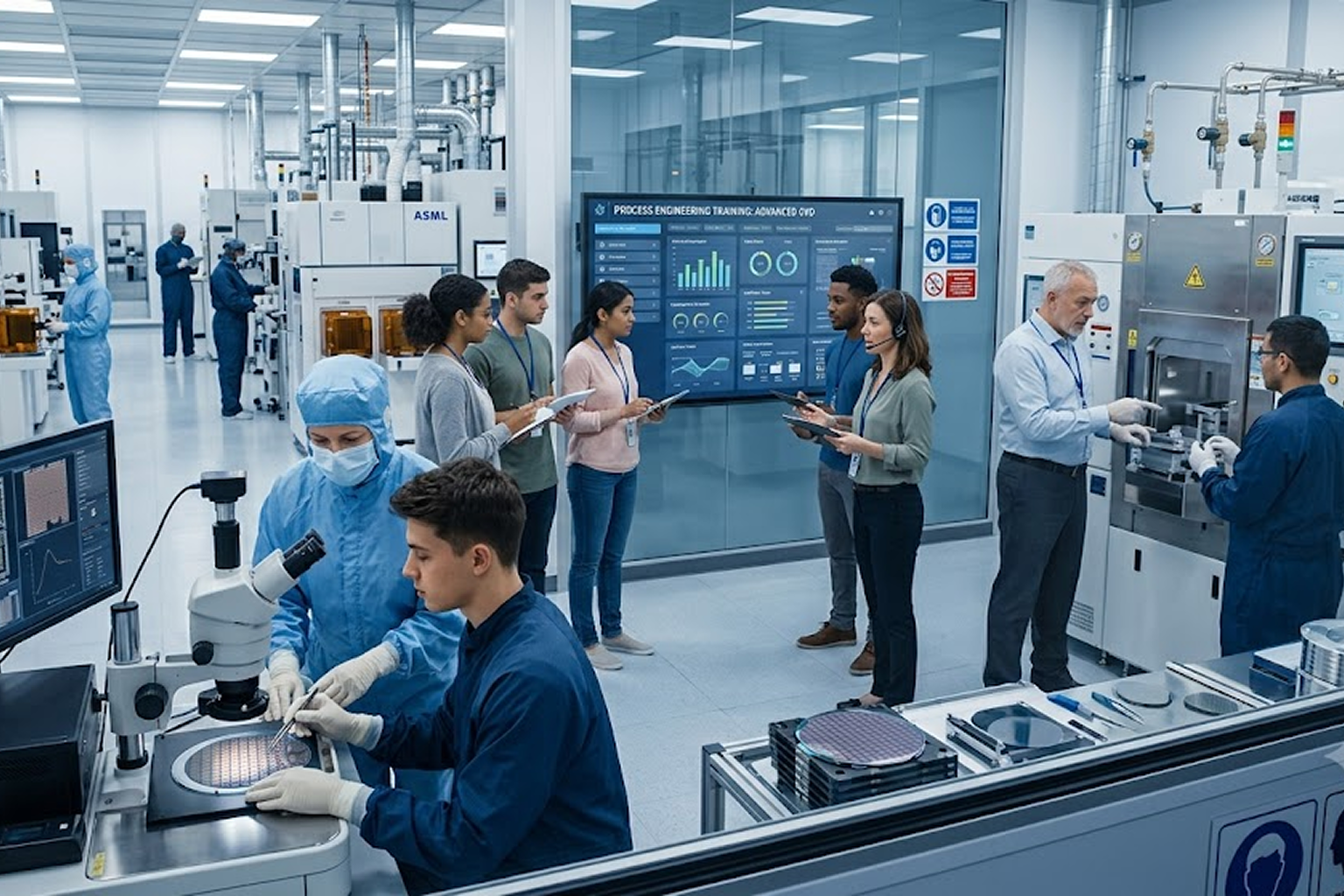
Workforce development is becoming one of the semiconductor industry's most important competitive differentiators
The semiconductor industry's workforce challenge extends far beyond hiring.
Many experienced engineers are approaching retirement, creating an urgent need to transfer decades of technical knowledge to a new generation of workers.
For companies building new semiconductor operations, technical expertise cannot be developed overnight.
Running advanced semiconductor facilities requires specialized skills in process control, equipment maintenance, testing methodologies, quality systems, and operational troubleshooting. Developing those capabilities can take years.
At the same time, companies entering North America often lack the local support networks they rely on in Asia.
This reality is creating growing demand for workforce development programs, technical training, and engineering support services.
"We're helping create a hybrid workforce model," DiBartolo says. "It's about building the infrastructure and the people needed to keep these operations running."
As semiconductor investment accelerates, workforce development may become one of the industry's most important competitive differentiators.
AI, Automation, and the Rise of the Intelligent Factory
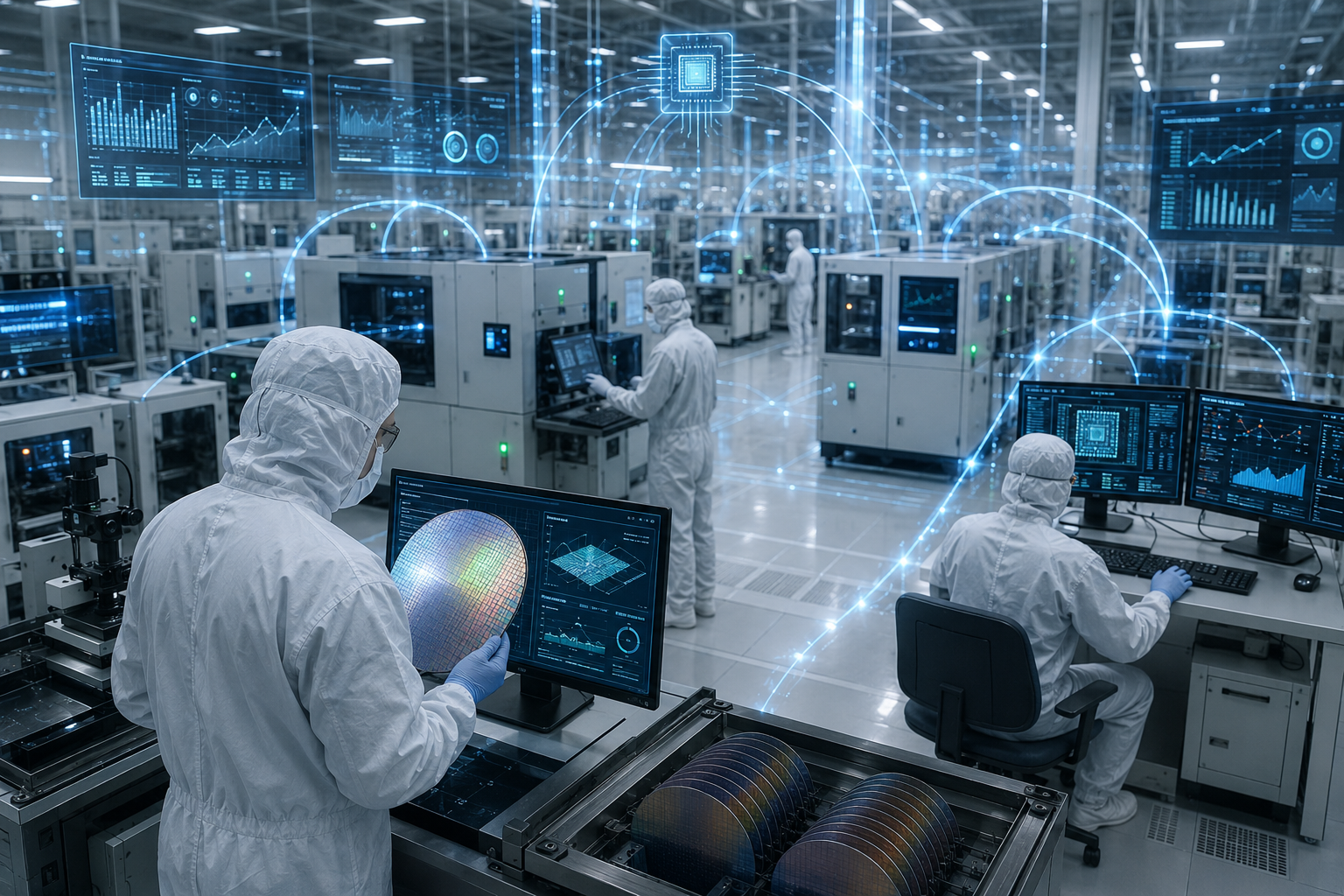
AI and automation are powering the rise of the intelligent semiconductor factory
While workforce development remains critical, DiBartolo believes artificial intelligence and automation will play an equally important role in enabling semiconductor expansion.
One area already gaining traction is real-time process monitoring through edge computing systems. These platforms connect thousands of sensors, instruments, and production assets across fabrication facilities, allowing manufacturers to analyze performance data at the source rather than relying solely on centralized systems.
"You're able to crunch data and perform analysis directly at the equipment level," DiBartolo explains. "That gives manufacturers real-time visibility into process control while minimizing network overhead."
For global semiconductor companies establishing operations in North America, these technologies create another advantage: remote expertise.
Engineers located halfway around the world can monitor equipment performance, review production data, troubleshoot issues, and support operations without being physically present on-site.
The implications extend beyond semiconductors.
As manufacturers across industries confront labor shortages and increasing operational complexity, AI-powered knowledge management, predictive maintenance, intelligent scheduling, and resource allocation are becoming essential tools for maintaining productivity.
DiBartolo also points to the growing adoption of highly automated manufacturing environments.
Some advanced semiconductor facilities already operate with minimal human intervention, relying on robotics, automated material handling systems, and digital process controls to maintain continuous production.
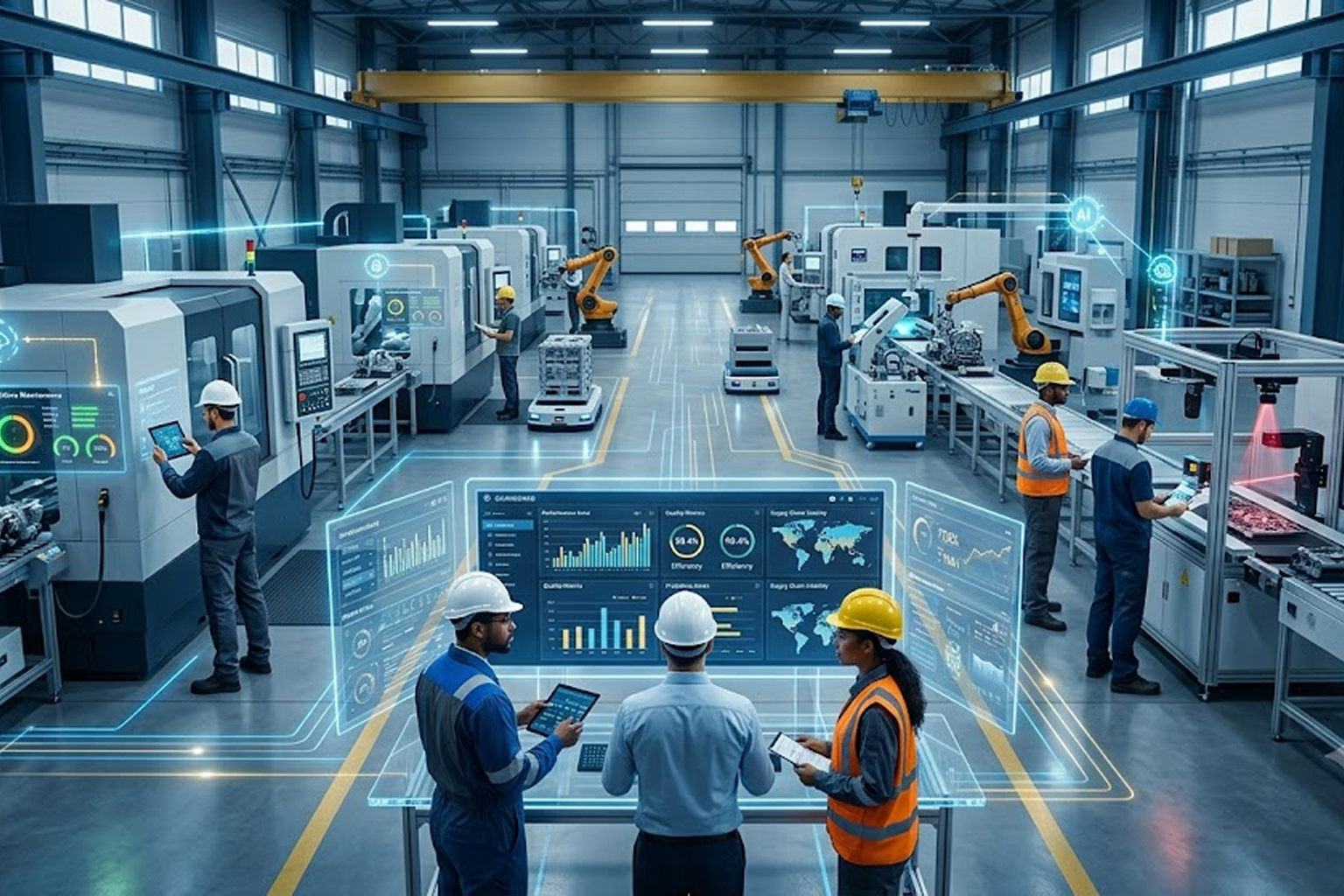
The future of intelligent manufacturing leans on reliability, resiliency, and supply chain security as much as automation
"The economics have changed," he says. "Manufacturing is becoming so automated that labor is no longer the primary factor it once was. Reliability, resiliency, intellectual property protection, and supply chain security have become much more important."
For infrastructure providers like JAD Group, this shift creates opportunities not only to support equipment and facilities but also to help manufacturers deploy the digital systems required to operate the next generation of intelligent factories.
What Manufacturing Leaders Should Be Thinking About
When asked what lessons manufacturers should take from today's rapidly changing environment, DiBartolo points to one word: diversification.
Geopolitical uncertainty, shifting trade policies, supply chain disruptions, and technological change have made flexibility more valuable than ever.
Companies that depend on a single supplier, region, or operational model may find themselves increasingly exposed to risk.
"The real issue is uncertainty," DiBartolo says. "Nobody has a crystal ball."
As a result, manufacturers must build resilient supply chains, invest in workforce capabilities, and maintain the flexibility required to adapt to changing market conditions.
The organizations that succeed will be those capable of balancing efficiency with resilience.
Editor's Perspective: The Knowledge Cliff May Be Manufacturing's Greatest Risk
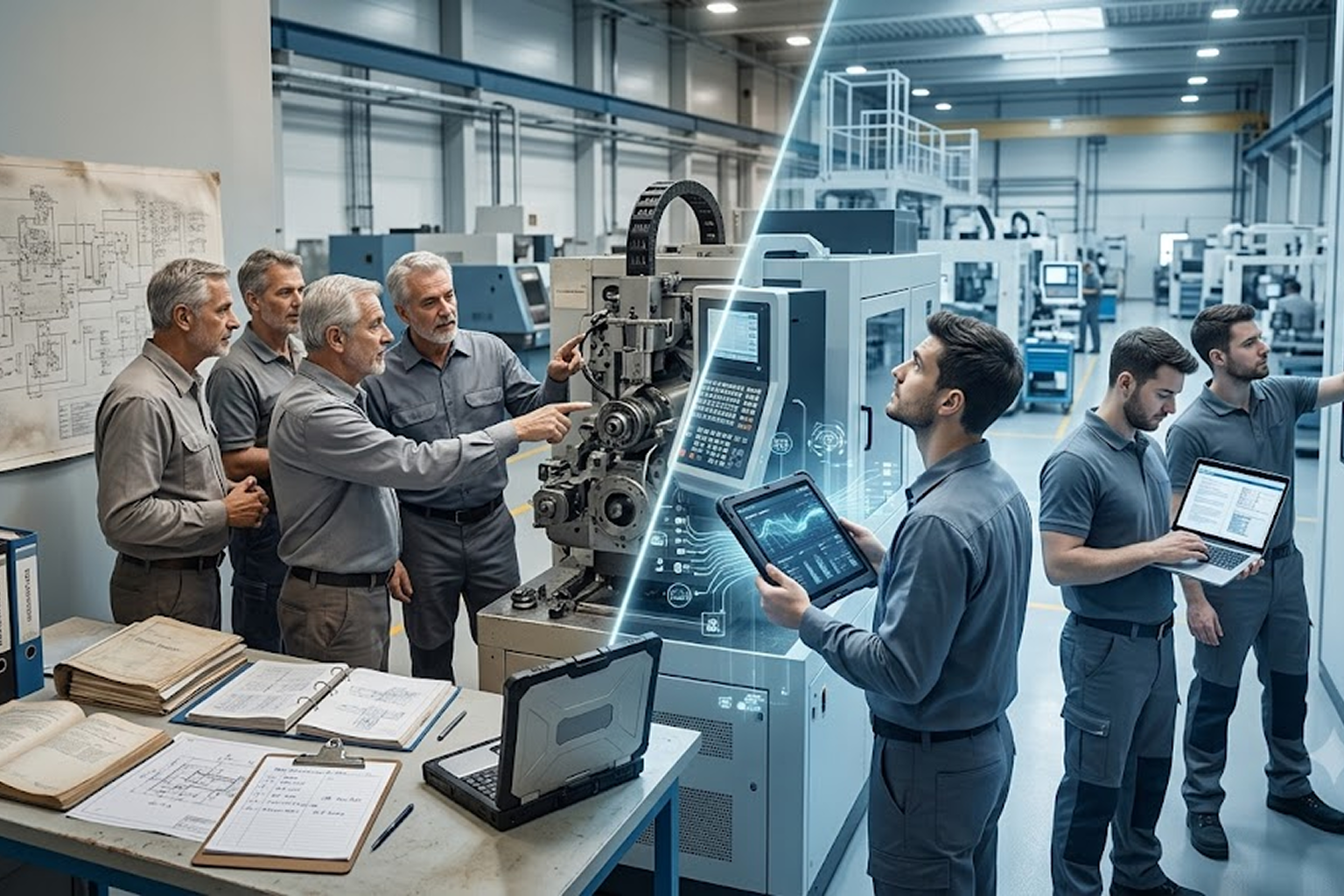
The Knowledge Cliff — the accelerating loss of institutional expertise as experienced workers retire faster than they can be replaced
One of the most important insights from my conversation with Joe DiBartolo wasn't about semiconductor equipment, factory construction, or even AI. It was about people.
More specifically, it was about knowledge.
Across manufacturing, we are approaching what industry leaders increasingly refer to as the Knowledge Cliff—the accelerating loss of institutional expertise as experienced engineers, technicians, operators, and maintenance specialists retire faster than organizations can replace them.
For decades, manufacturers have invested heavily in physical assets. We track machines, monitor inventory, optimize production lines, and manage supply chains with remarkable precision. Yet many organizations continue to rely on something surprisingly fragile: human memory.
Critical knowledge often lives inside individuals rather than systems.
The technician who knows why a machine behaves differently during summer months. The process engineer who remembers how a recurring quality issue was solved five years ago. The maintenance specialist who understands subtle warning signs before a critical failure occurs.
These insights are rarely captured in a way that can be easily transferred, searched, or scaled.
When those individuals leave, the organization loses far more than a headcount. It loses experience, context, and decision-making capability.
The semiconductor industry illustrates this challenge perfectly. New fabs can be financed and built in a matter of years. Developing highly skilled engineers and equipment experts often takes decades. As North America rebuilds domestic semiconductor manufacturing capacity, the industry's ability to preserve and transfer knowledge may become just as important as its ability to deploy capital.
This is where modern knowledge management systems and artificial intelligence are beginning to transform manufacturing.
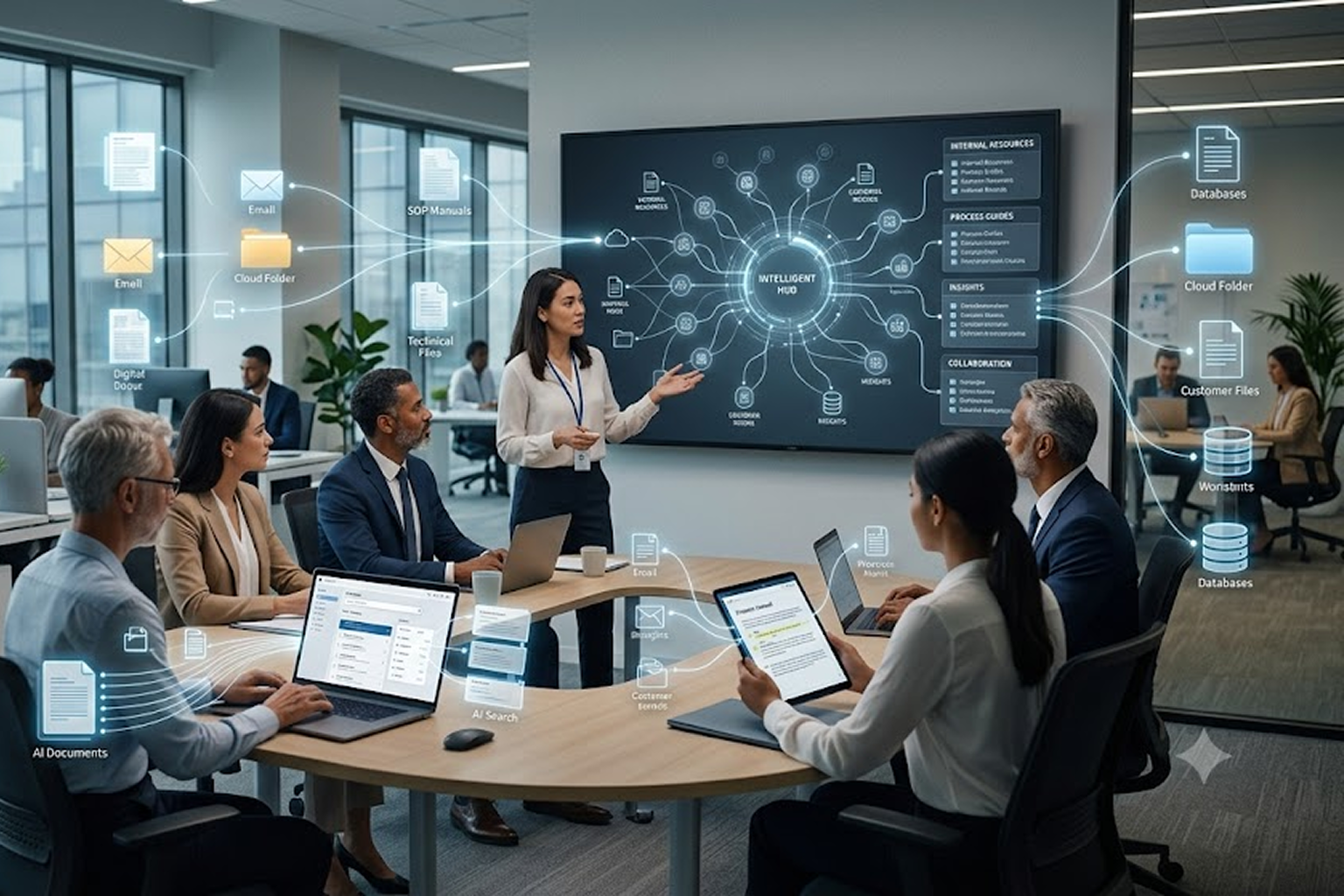
AI-powered knowledge management turns decades of organizational experience into a living operational resource
The next generation of industrial knowledge platforms can capture information from engineering documentation, maintenance logs, standard operating procedures, training materials, quality reports, and historical troubleshooting records. More importantly, AI can help employees access that information in context, turning decades of organizational experience into a living operational resource.
Instead of searching through disconnected folders, emails, PDFs, and tribal knowledge networks, employees can quickly access institutional expertise when and where they need it.
The business impact is significant.
Organizations can reduce onboarding time, accelerate workforce readiness, improve troubleshooting speed, enhance compliance, minimize downtime, and preserve critical expertise before it disappears.
As labor shortages continue and manufacturing complexity increases, knowledge itself is becoming a strategic asset.
The manufacturers that thrive in the next decade will not simply automate production. They will institutionalize expertise.
They will build systems that ensure organizational knowledge survives workforce transitions, geographic expansion, and generational change.
In many ways, the next competitive advantage in manufacturing won't come from smarter machines alone.
It will come from smarter knowledge.
And those who successfully bridge the Knowledge Cliff may ultimately define the next era of industrial leadership.
Related Template