



AI governance news is now one of the fastest-evolving areas in enterprise technology as artificial intelligence moves from experimental tools in labs into core business operations. What was once a technical discussion has become a boardroom priority, driven by rising regulatory pressure, operational risks, and the need for greater accountability in automated decision-making systems.
Across regions, EU AI Act news and broader AI regulation news today 2026 show how quickly governments are formalizing rules for transparency, safety, and compliance in AI systems. From risk classification frameworks to audit requirements and documentation standards, regulations are no longer theoretical — they are actively shaping how enterprises design, deploy, and monitor AI.
As a result, organizations are being forced to rethink how they build and use AI. It is no longer enough to focus on performance alone. Trust, explainability, fairness, and governance are becoming essential requirements for any system operating at scale.
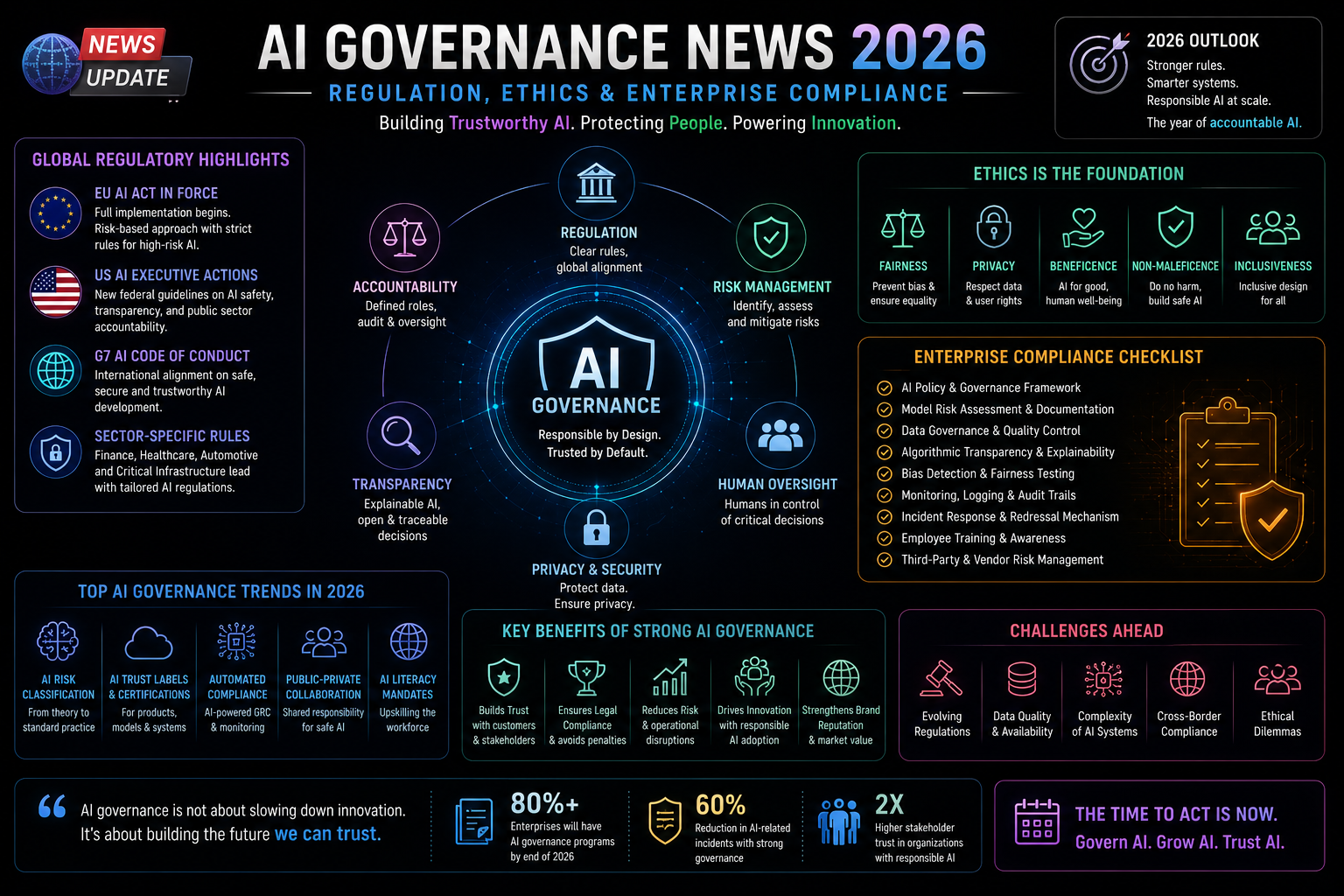
AI governance news 2026 — regulation, ethics, and enterprise compliance frameworks
What Is AI Governance and Why It Now Affects Every Enterprise
AI governance means all the policies, guidelines, regulatory requirements, and internal measures that help define the development and deployment of AI systems from inception through audit and monitoring until accountability during their entire life cycle. With AI becoming more mainstream in enterprise operations, the field of AI governance news has started gaining more relevance and importance.
In fact, AI governance is almost necessary for any enterprise employing AI in its customer-facing or decision-making activities. If it involves AI in loan approvals, recruitment screenings, helping doctors with their diagnosis, product recommendations, fraud detection, or manufacturing activities, the enterprise must have appropriate controls over its systems.
The cost of poor governance can be substantial. In the EU AI Act, non-compliance with some aspects could result in fines of €35 million or 7% of global annual turnover, depending on the violation. As regulation becomes more complex, enterprise AI compliance news is increasingly vital for companies operating in several markets.
Yet, AI governance is about much more than just compliance with regulations. It helps to create trust, enhance explainability, increase security, minimize bias, and ensure accountability in all decisions made using AI. Businesses that focus on responsible AI in the enterprise have the right position to implement AI effectively, fulfill stakeholders' demands, and stay ahead of competition through growing AI adoption globally.
EU AI Act News – Q2 2026: What's Changing
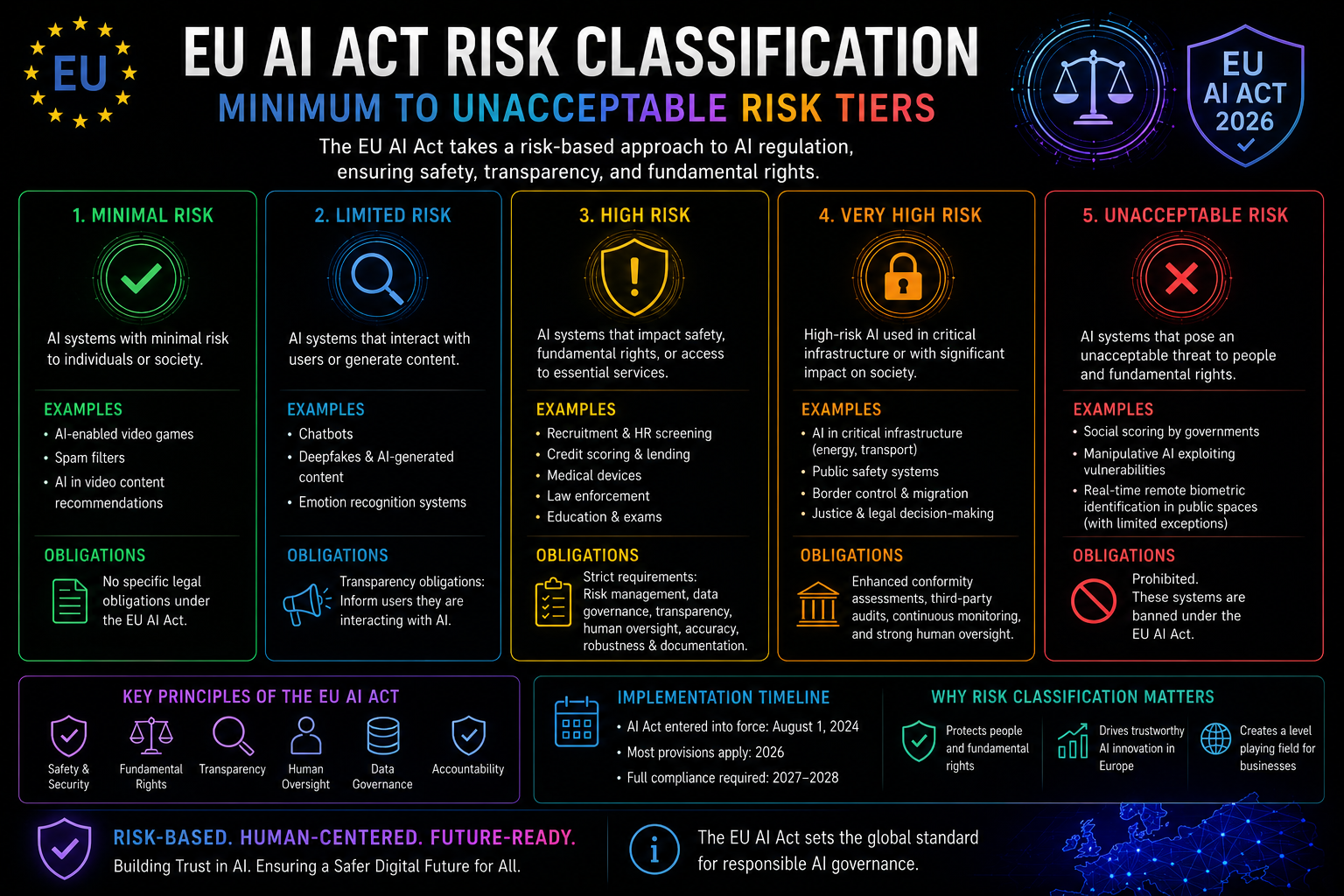
The EU AI Act's phased implementation is reshaping compliance requirements across every risk tier
EU AI Act Implementation Timeline: What's Now Mandatory
The EU AI Act is currently being implemented, making EU AI Act guidance news an increasingly important issue for enterprise technology. The regulations come under a phased implementation approach, whereby prohibited use cases have been banned since February 2025, and the obligations regarding governance of general-purpose AI (GPAI) models came into effect in August 2025. During Q2 2026, regulators continue to provide guidelines, transparency measures, and compliance tools to assist companies in preparing for future enforcement.
With regard to following EU AI Act news today 2026, the next important step would be the widening of transparency obligations and enforcement measures on the European market. High-risk AI systems, especially those used in employment, education, healthcare, finance, critical infrastructure, and public sector decision-making, are the main targets of compliance efforts at present.
AI systems under the Act will be classified according to four different levels of risk involved namely:
- Minimum
- Limited
- High
- Unacceptable Risks
Companies that deploy higher levels of risk AI systems have to document their technology, perform human oversight, control risks within the entire life cycle of AI, perform performance monitoring, and maintain appropriate levels of transparency. Companies that undertake activities of using prohibited forms of AI systems will incur fines of up to €35 million or 7% of their global annual turnover, whichever is higher.
What the EU AI Act Means for Manufacturers and B2B Operators
Much of the discussion of the enterprise AI compliance news concerns large tech firms, yet it has significant consequences for the manufacturer or B2B firm applying AI in their processes. This is increasingly becoming a significant area of enterprise AI compliance news since most industrial AI applications today have some bearing on decision-making considered to be of high impact by the regulators.
For the manufacturer, this includes reviewing AI applications that make decisions about employees' hiring or human resource screening, customers' eligibility for loans or financing, production process quality testing through AI decision-making processes, and any other AI systems used in regulating industrial processes. Even where the AI system does not fall into the category of high-risk applications, firms need to keep track of the training, monitoring, testing, and supervisory human intervention of those AI applications.
It may be wise to start by conducting an internal audit of the AI assets. Determine all the AI systems that are being used at the moment, ascertain whether they have any impact on decisions being made through regulated decision-making processes, document their data sources, identify human supervisors for such systems, and create a model revision process. It is also true that good AI transparency and explainability practices will build trust among customers, make auditing easier, and minimize regulatory risks. Compliance does not have to be seen as a legal exercise but a business one.
Global AI Regulation News – Q2 2026
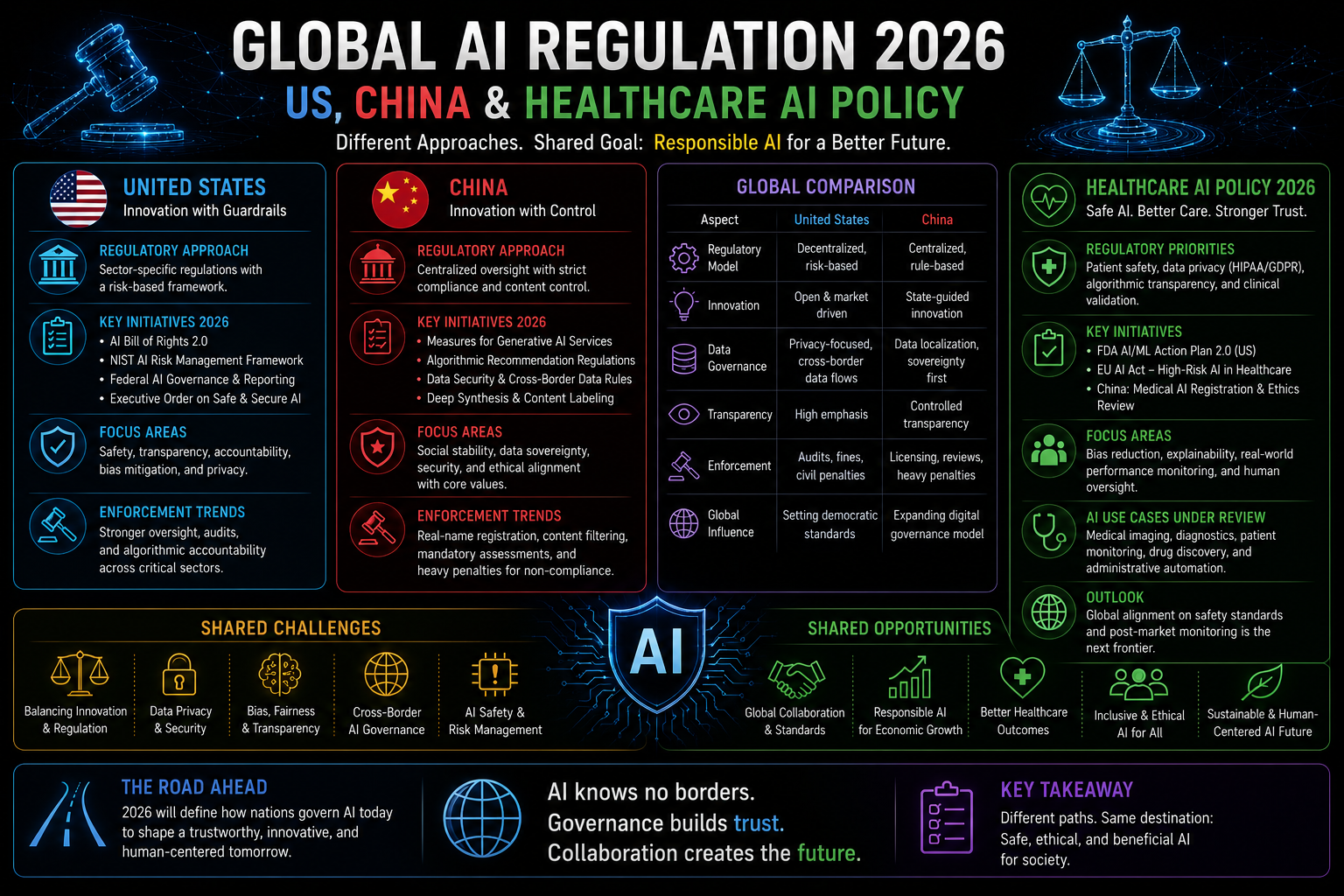
The US, China, and healthcare regulators are each building distinct AI governance frameworks
US AI Policy: What Washington Is and Isn't Doing
The fragmentation of regulation regarding AI in the US continues, meaning that any US AI safety policy news today is a hot topic for business executives. In contrast to the EU's all-in-one AI Act, there is still no federal AI regulation applicable to all sectors in the US. At this point, federal authorities have introduced only sector-specific guidelines, while states have been developing their own AI laws.
For instance, California has made its provisions regarding AI more transparent thanks to such legislative initiatives as SB 53. Similarly, Texas has passed its own version of the Responsible AI Governance Act. It should be noted that such a tendency towards state-level regulation of AI is becoming more and more common. This means that for companies using AI technology, compliance issues become very complicated, since they should adjust their governance and document their risks depending on the state.
China AI Regulation: The World's Other Major AI Governance Framework
China has devised an elaborate framework of AI governance, distinct from that of the European Union. In contrast to the EU approach, which stresses only risk classification, China AI regulation news places significant emphasis on content governance, security evaluations, algorithm registration, platform responsibilities, and compliance with national policies. More recently, new proposals have been made with additional provisions related to AI-generated and human oversight with specific requirements such as labeling and control.
With respect to manufacturers and firms having China-based suppliers or operations, AI governance includes not just technological compliance but also involves the areas of supply chain management and cybersecurity.
Healthcare AI Regulation: The Highest-Stakes Compliance Frontier
Healthcare has always been one of the industries that is highly regulated when it comes to the application of artificial intelligence. This makes Medical AI regulation news today vital not only to developers but also to medical organizations. In the USA, the FDA is constantly introducing new guidance related to the development, validation, monitoring, and control of artificial intelligence-enabled medical devices. The recent regulatory documents make requirements for clinical decision support and medical device documentation higher than before.
In the EU, most of the healthcare artificial intelligence solutions are considered to be high-risk under the EU Artificial Intelligence Act and require full technical documentation, human supervision, risk management, and performance monitoring.
An application of responsible AI in healthcare sector can be seen through the Nurabot trial in which AI is used to help nurses handle their administrative and patient assistance work, but the healthcare practitioners continue to be liable for making any decision related to clinical practice. The above approach represents a general trend of regulation towards trustworthiness, explainability, and accountability of AI.
In the healthcare sector, it is now becoming equally important to ensure that AI is explainable as well as accurate.
AI Ethics & Trust Frameworks — Q2 2026
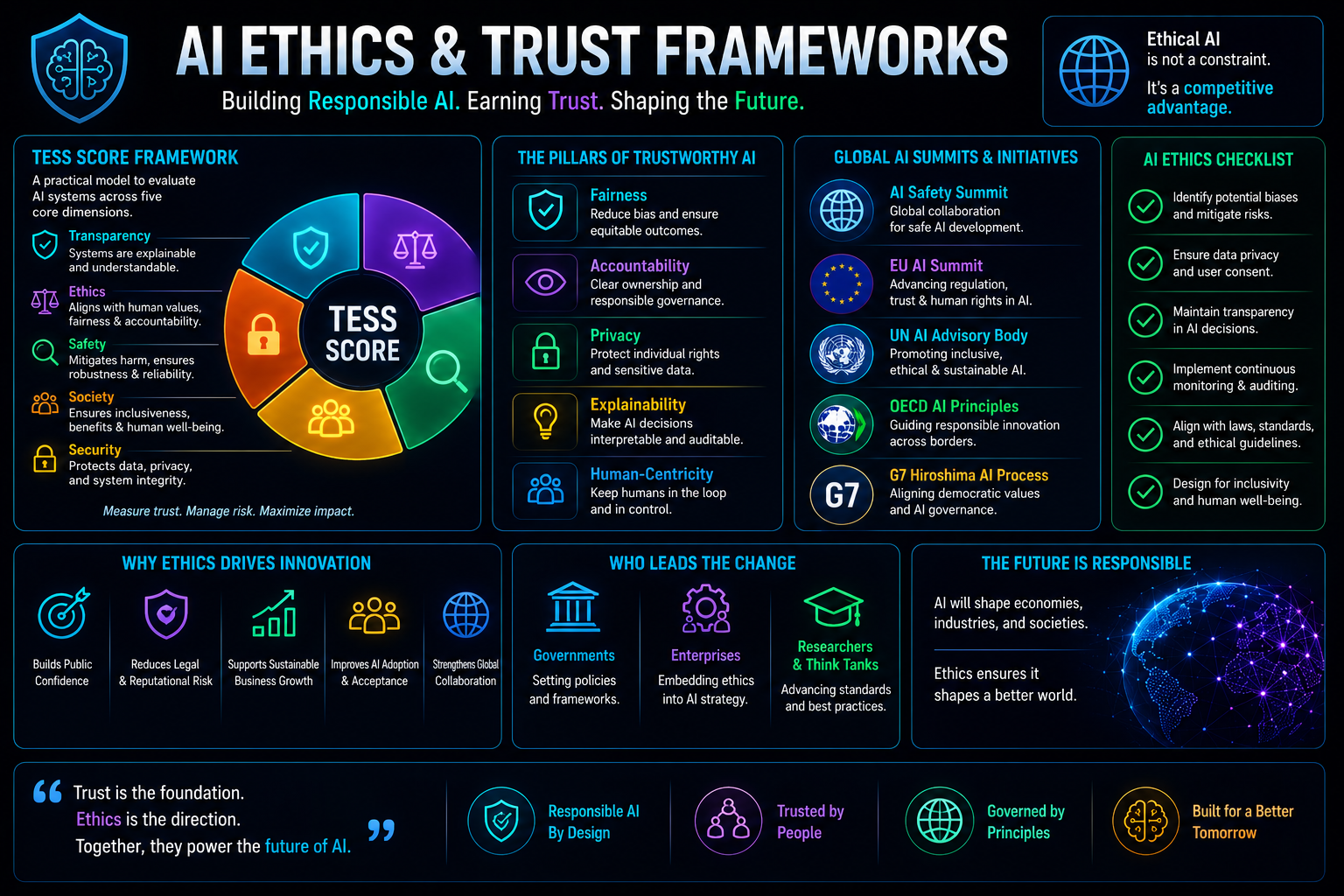
From the Stanford TESS score to the Seoul Summit, trust is becoming a measurable AI standard
Stanford TESS Trust Score — AI's New Credibility Standard
Stanford HAI's TESS framework remains one of the key points when it comes to AI ethics news, defining trust as something that can be measured in regard to AI technology and not an abstract concept. TESS measures AI along three pillars, which are transparency, fairness, and governance, providing a systematized approach for measuring the responsibility of AI systems in real-life situations. By 2026, the wider AI transparency trend has gained momentum, with corporations widely implementing structured measurement approaches, following the principles laid out by the TESS framework.
Though the TESS framework has not become a mandatory regulatory framework at this point in time, its influence can be traced through enterprise governance and benchmarking. Trends in research on AI system transparency indicate that academic frameworks and approaches have started becoming integrated into companies' AI risk programs as part of their preparations for compliance with regulatory frameworks such as the EU AI Act and ISO 42001. At the same time, there is no evidence of any TESS' regulatory adoption in the form of a certification framework anywhere in the world.
Global AI Ethics Summits — From Seoul to 2026
The Seoul Summit and AI Geneva Accord constituted a significant breakthrough in global collaboration regarding ethical standards in AI technology. These two milestones allowed for the establishment of common principles that include transparency and responsible application of AI among 30+ nations worldwide. From the moment of signing this accord, the direction of AI ethics news has changed from reaching agreements to issues associated with enforcement, auditing, and harmonization of regulations.
In 2026, debates about new participants have included more countries in terms of involvement, especially in the EU, Asia-Pacific, and parts of the Middle East region; however, there is no single milestone in the field of expansion on the global scale, which would completely replace the previous accord signed by 32 countries. Instead, gradual development of the system has been taking place through selective adoption of the new principles.
Defense AI Governance — The Oversight Question
Defense AI governance has turned out to be one of the most contentious aspects of international AI policy in light of agentic AI governance news related to the use of autonomous and semi-autonomous systems in military planning and intelligence processes. Both the United States and the United Kingdom increasingly rely on the use of AI in support systems and surveillance analysis.
The core governance issue involves the question of oversight: how much autonomy should these AI systems be allowed to have in a defense context, and how much human involvement is necessary?
Currently, the emphasis in the framework of policies is placed on the need for human involvement and limitations of AI autonomy; however, implementation may differ greatly depending on the country.
AI Hallucinations: The Governance Risk No One Is Auditing Enough
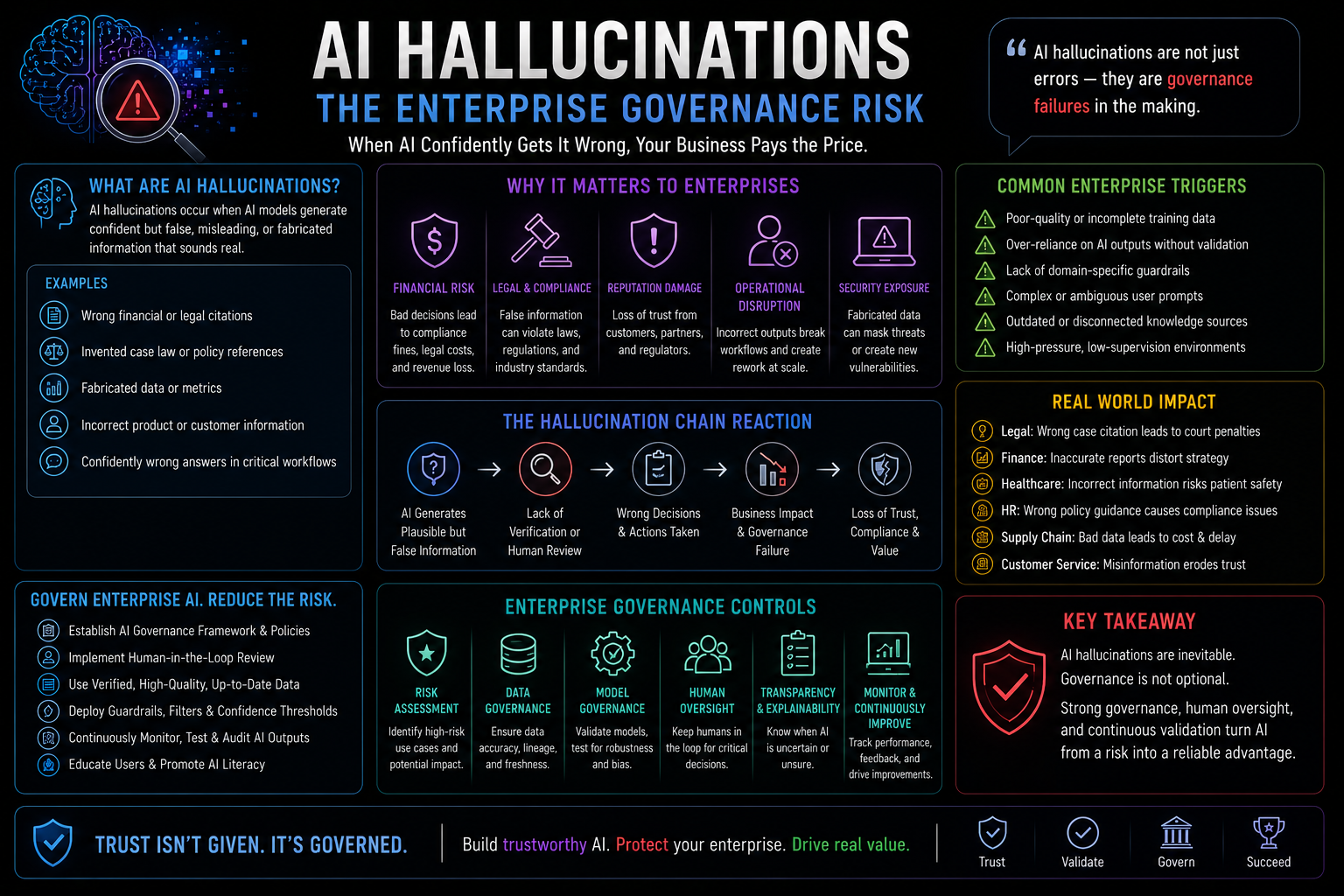
Hallucinations remain one of the least-audited risks in enterprise AI governance
What Are AI Hallucinations?
Imagine having to use an AI assistant to write a legal brief, then finding out during a hearing that the cases referenced do not even exist. This was precisely the case of a lawyer who included fake references to cases in the legal brief created using an AI assistant, putting the lawyer at risk of sanctions.
This is one of the well-known cases of AI hallucinations. AI hallucinations can be defined as when an AI system produces information that is completely made up, and the system believes it is true. It should be noted that this is not done to mislead users; instead, the system generates words based on predictions in data but does not check whether the information is true or not. With AI systems becoming increasingly popular in research, decision-making, and interacting with customers, hallucinations become an important enterprise governance issue.
Real-World Consequences: Legal, Medical, and Business Risks
AI hallucinations have far more reaching effects than simply making embarrassing errors by chatbots. They can cause liabilities, endanger patients, result in monetary losses, and damage reputation. Here is a look at some AI hallucination examples to show why.
Legal sanctions
This particular case involving the lawyer is just one of many instances. Various legal firms have found that legal research produced by artificial intelligence software includes court cases that are entirely made up or misrepresent actual legal precedents, presenting serious professional and ethical challenges.
Medical malpractice
A physician has noted that an AI-powered clinical assistance tool has recommended prescribing a dosage of medicine nearly three times its recommended amount. Luckily, this mistake was caught prior to treatment.
Business decisions
A marketing manager has reported that an AI-supported market analysis contained false information about the market. The faulty information had an influence on the strategy-making process and eventually resulted in mistakes during the product launch.
Educational impact
With the increasing use of Artificial Intelligence tools for educational purposes, educators find themselves confronted with papers containing false events or scientific findings created by Artificial Intelligence systems.
This clearly shows that hallucinations are not something that occurs only in test environments for AI. They are actually impacting organizations in real life, making the case for good governance and validation very clear.
Why Hallucinations Are Getting Worse, Not Better
One of the most unexpected discoveries in the AI field is that more sophisticated models for reasoning do not necessarily hallucinate less often. In fact, some advanced reasoning systems have been reported to hallucinate incorrect information in around 41% of complex reasoning problems.
But what causes AI hallucinations?
The thing is that large language models create answers based on prediction and pattern detection rather than on checking the objective truth. With longer reasoning chains, a single wrong assumption can affect numerous logic steps and lead to the wrong conclusion. Tests within the internal environments of AI firms have revealed that the hallucination rate varies from around 3% in simple cases up to almost 30% in more complicated reasoning cases.
How to Prevent AI Hallucinations in Enterprise Deployments
It is not enough to have improved AI algorithms to know how to prevent AI hallucinations. The organizations that do this well blend all three of these approaches together.
Useful detection techniques include:
Consistency check
Pose the same question through several routes and analyze for any inconsistencies in the replies.
Authentication of sources
Seek references and independently confirm the information before accepting it.
Cross check
Challenge answers that contradict existing information or seem too confident.
Pattern detection
Look out for suspiciously precise figures, extraordinary statements, or perfectly crafted solutions to difficult questions.
Leading organizations are also implementing practical governance strategies:
GreenLeaf Capital
Practices a "four-eyes principle," where all AI-generated outputs must be reviewed by humans before being used, which reduces errors by 87%.
HealthStream
Developed domain-specific test data sets with challenging medical cases to expose the weaknesses of AI before deployment.
NexTech
Shows confidence scores with AI output for the user to determine reliability.
RespondeAI
Developed automatic feedback loops that record the number of confirmed hallucinations and improve AI model performance, decreasing false information by 42% in six months.
These approaches show that the problem of hallucinations is not only a backend problem but rather it needs governance, education of the users, and also Human-in-the-Loop (HITL) reviews.
Case Study: LovingIs.ai and the GrayCyan HITL Approach
An example of responsible AI in practice is the LovingIs.ai project that was created by GrayCyan AI Consultants & Developers. The developers were able to show during the creation of their AI that even the best models are capable of providing wrong answers when they feel confident.
There was one case in which the simple question "How many R's are there in strawberry?" was asked to ChatGPT, which provided an answer that was wrong. However, the same question was answered correctly by GrayCyan because the model used their AI workflow that included structured intelligence together with a Human-in-the-Loop (HITL) verification process instead of pure generation of the answer.
This is a lesson that goes much farther than just one prompt. Responsible AI does not mean expecting perfection from models. It means making sure that AI will be transparent, that the output will be verified, and that human experts will participate when needed.
Responsible AI in the Enterprise: A Practical Framework
When AI integration into daily business becomes mainstreamed, it is not enough to have advanced AI models. It is also important for enterprises to have governance structures in place so that these systems can be reliable, transparent, and compliant. Responsible AI in the enterprise involves integrating ethical, technical, and operational safeguards across the entire lifecycle of AI rather than simply having AI governance at the end. It also means staying current on enterprise AI compliance news.
Six Pillars of Responsible AI
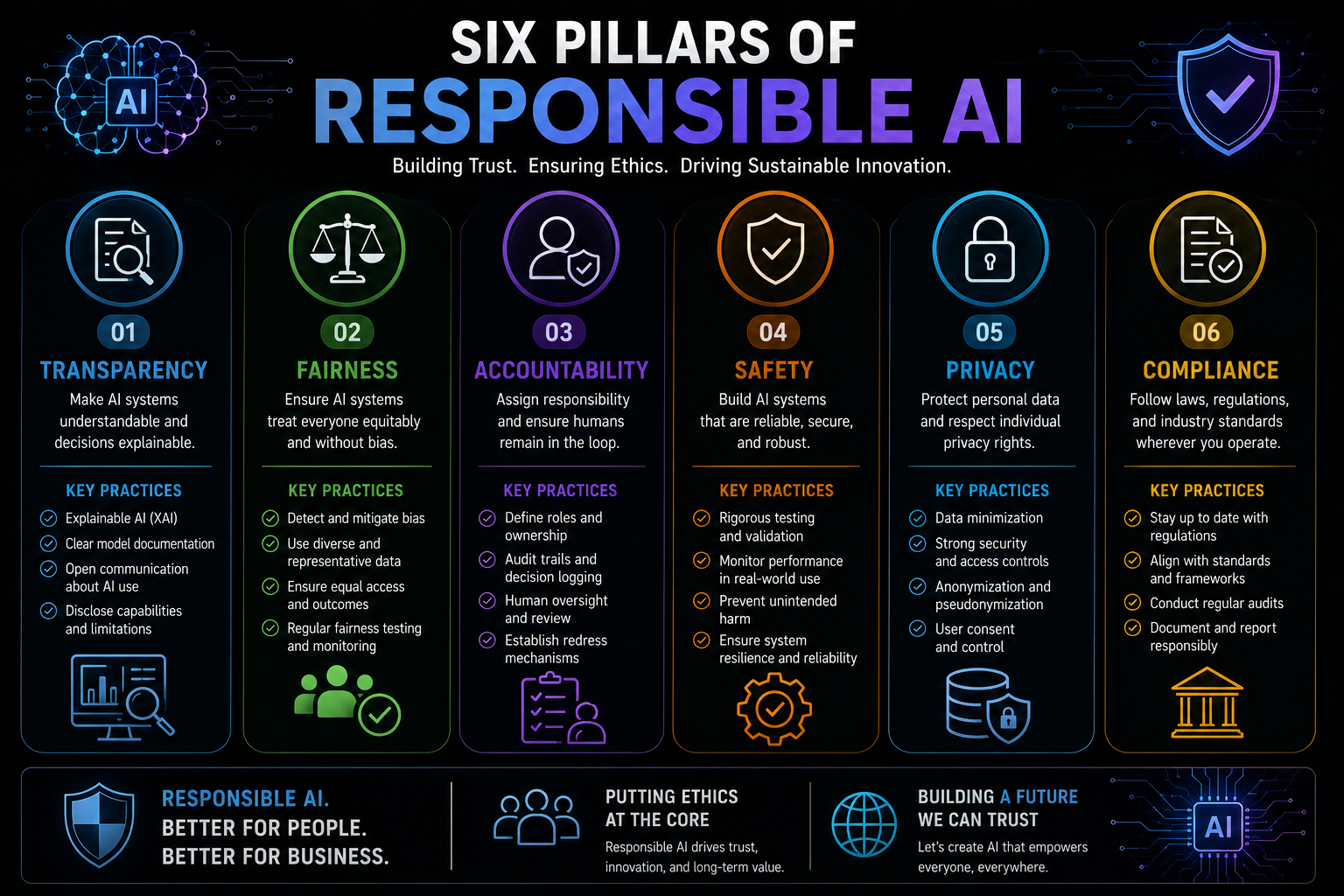
The six pillars that define a practical, enterprise-ready responsible AI framework
Transparency
AI should explain why significant decisions are being made. An explainable AI system enables employees, customers, regulators, and auditors to know how the output has been arrived at instead of just making black-box recommendations. This is one of the most essential responsible AI practices.
Fairness
Another responsible AI principle is that there should be regular testing of AI models for any bias in different data sets and user groups. Continuous checking will ensure there is no discrimination or inequality in the decisions that have been made.
Accountability
In high-stakes AI processes, there must always be some human supervision in place. There needs to be some ownership of the process along with the procedure for reviewing and overriding the recommendations from the AI system.
Safety
AI systems should incorporate some safety measures that ensure there are no hallucinations or mistakes by the models. They ensure that the AI models do not generate any bad recommendations.
Privacy
Adequate governance ensures that all confidential business data is protected. Companies need to have clear guidelines for data access, storage, encryption, and AI implementation in compliance with relevant privacy laws.
Regulatory compliance
There is a need for the AI governance framework to be compliant with the changes in the regulatory landscape, as well as the existing standards and internal policies.
What GrayCyan's HITL Architecture Delivers
The GrayCyan model employs these six principles using a Human-in-the-Loop (HITL) deployment model tailored for the enterprise space. Rather than deploying fully autonomous black-box models, human verification is added when necessary to ensure that all critical decisions are reviewed before action.
This allows for much more better transparent reasoning paths, audit-ready documentation, governance policies, and ongoing monitoring to enhance accuracy over time. The use of AI coupled with human expertise allows for the deployment of AI safely while minimizing hallucinations and increasing explainability and compliance preparedness.
For enterprises looking for responsible AI consulting services, here's an architecture to help move from AI experimentation to enterprise deployment.
How GrayCyan Builds Compliant, Explainable AI — No Black Boxes
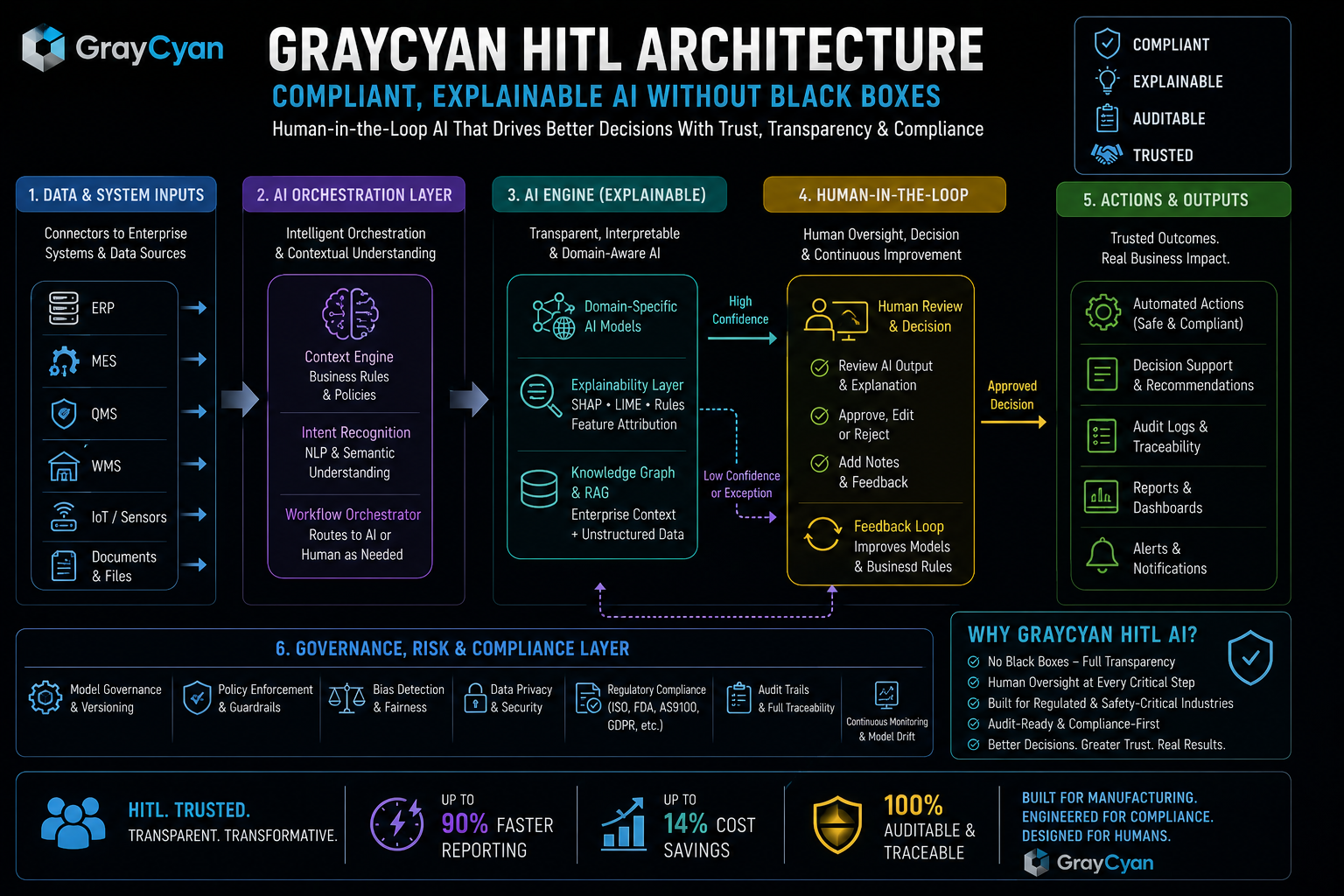
GrayCyan builds auditability, explainability, and human oversight into AI from day one
With strict AI regulation across different markets, businesses are now caught between two extremes, those integrating compliance after deployment and those developing it from scratch. The GrayCyan approach fits the second category, in which compliance, transparency, and explainability are part of the system's behavior rather than being a separate module.
All deployments are built with auditability in mind. Rather than having black-box decision outputs, the systems provided by GrayCyan feature reasoning pathways that lead to decisions, structured decision logs, and documentation meeting the latest regulatory requirements, such as those of the EU AI Act. Thus, it allows companies to prove how an AI system came up with a particular solution, not only the final decision.
The Human-In-The-Loop (HITL) process is incorporated into all business-critical workflows. Important outputs are subject to validation at specific checkpoints in order to minimize the risk of hallucinations while keeping the speed of operations intact.
Explanation is considered an output requirement rather than a feature itself. The outputs are made in such a way as to be easily interpreted by business people, auditors, and compliance specialists, which enables validation and management of AI systems much more effective. In combination with controlled monitoring and measuring the results, it helps form a cycle of continuous improvements.
As enterprises speed up their adoption of enterprise AI solutions, GrayCyan's architecture guarantees compliance, explainability, and auditability by design. Thus, it helps to avoid any problems in the future concerning regulations and does not require any costly changes to be made.
To create explainable AI systems right from the start, take a look at GrayCyan's framework of Monitoring, Accuracy & Compliance and the concept of AI Strategy Readiness.
FAQs
Start Building Governance-Ready AI Systems Today
Schedule a consultation with GrayCyan to build compliant, explainable, and audit-ready AI systems from day one.
Schedule a Consultation