



While mainstream discussions focus on AI-generated content, self-driving cars, and chatbot wars, some of the most profound AI breakthroughs are happening elsewhere. Many of the most important emerging AI trends 2026 are developing quietly inside research labs, enterprise technology teams, and industrial environments, far from the headlines that dominate public conversations.
From Quantum Machine Learning (QML) and AI-powered synthetic biology to edge AI and neuro-symbolic reasoning, these innovations have the potential to reshape industries, redefine how we interact with technology, and solve some of humanity's most complex challenges. For manufacturers and enterprise leaders, these developments are more than research projects. They represent the next wave of operational intelligence, helping organizations improve productivity, strengthen decision-making, and build long-term competitive advantage.
So, why aren't these innovations making front-page news? Some are still in early research phases, others are too technically complex for mainstream coverage, and many are happening inside enterprises where companies keep their AI capabilities private for competitive and regulatory reasons.
In this article, we'll uncover 10 underreported AI trends in 2026 that deserve far more attention:
Quantum Machine Learning
AI-Powered Synthetic Biology
AI for Social Cohesion
Edge AI
AI Knowledge Management
AI Hyperpersonalization
Environmental AI
Neuro-Symbolic AI
AI on Neuromorphic & Optical Chips
AI for Cultural Heritage
These AI breakthroughs may not be making headlines today, but they are laying the foundation for the next generation of enterprise AI and will shape how businesses, manufacturers, researchers, and governments adopt artificial intelligence in the years ahead.
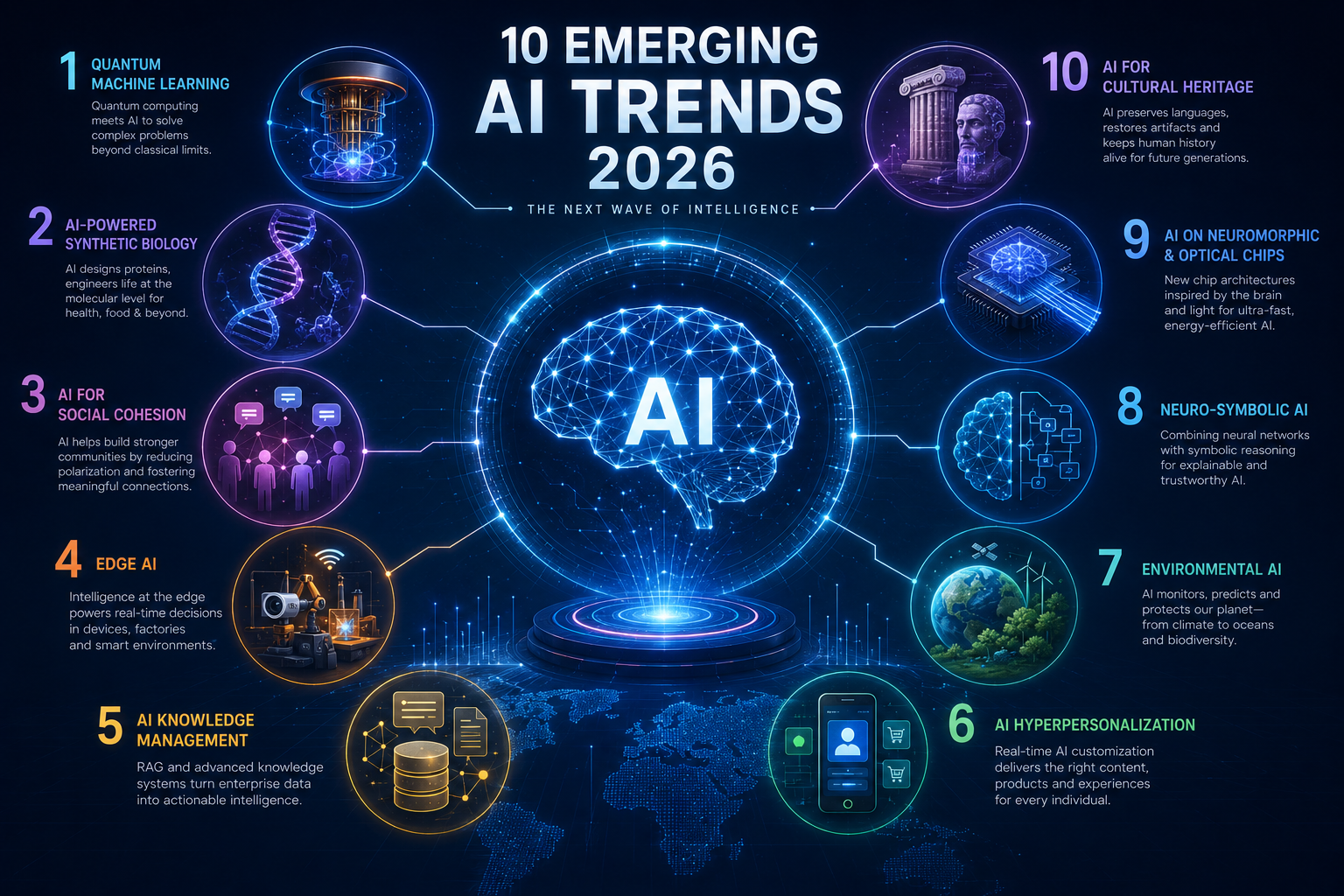
10 emerging AI trends 2026 — an overview of the underreported breakthroughs shaping the next wave of intelligence
Why These AI Breakthroughs in 2026 Aren't Making Headlines
There are several notable developments in artificial intelligence in January 2026, which make great progress, but get much less AI Breakthroughs than consumer AI products. First of all, the innovations are not widely used yet, and they are at the stage of research, testing, or pilot deployment. Secondly, many of the new trends are quite complex from the technical point of view, and they are hardly suitable for news stories. Finally, the main reason is the fact that some of the enterprise Ai trends 2026 take place away from the public eye, since companies try to develop AI products internally to stay ahead of the competition.
This means that many of the greatest breakthroughs in AI have been left unnoticed by the general media, although they change the way businesses work, the software development process, cybersecurity, manufacturing, healthcare, and other aspects of decision-making and production. This gives an idea of what is really going on with artificial intelligence in 2026.
Quantum Machine Learning: AI's Next Computational Leap
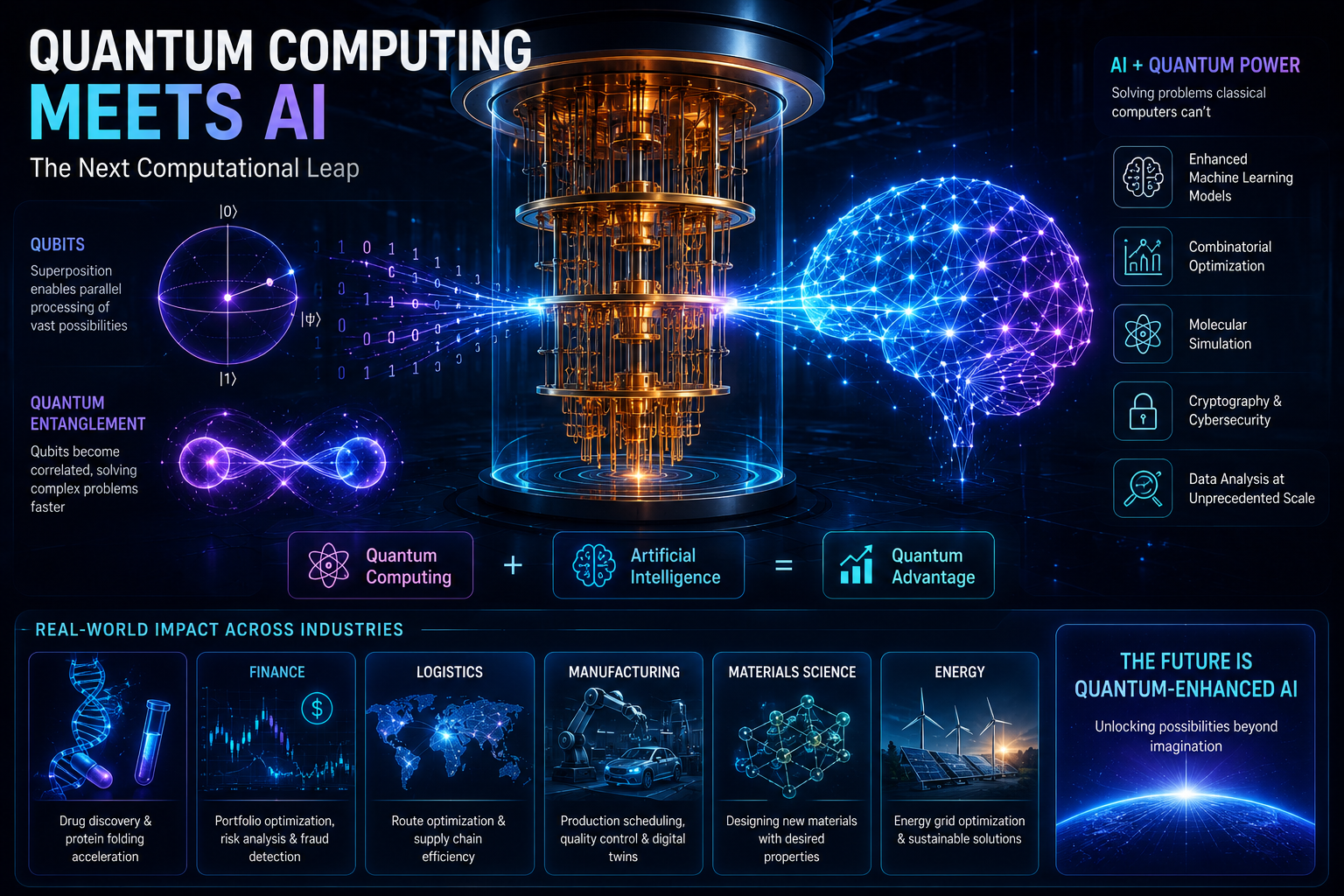
Quantum computing meets AI — qubits, entanglement, and quantum advantage explained
What's Happening
Quantum computing and AI are coming together, where both can solve certain computational problems beyond the scope of classic AI. Where today's AI uses conventional computer technologies, quantum machine learning applications merges AI algorithms with quantum computing for processing particular calculations. Though the technology is yet to be developed, experts see great potential in it for such industries that work with huge amounts of information and require optimization and simulation processes.
For those who ask what is quantum machine learning, the answer lies in the merging of quantum computing and machine learning aimed at improving the learning abilities of AI, pattern recognition, and solving hard computational problems. Contrary to common belief, quantum computing will not replace current AI, but rather complement it.
What Does "Quantum Advantage" Mean for Machine Learning?
Quantum advantage is just the notion that a quantum computer can perform some computational task much more quickly or efficiently than any of the best classical computers. For example, in the realm of machine learning, this would enable AI to process gigantic amounts of data, explore millions of possibilities at once, and optimize processes much more efficiently and rapidly. Although experts still struggle to achieve quantum advantage on many different AI tasks, the potential gains include increased efficiency in training models, optimization, and decision-making on highly complicated data for different industries.
With ongoing research, various applications of quantum machine learning are being developed in healthcare, finance, logistics, manufacturing, materials science, cybersecurity, and scientific research. Most of these applications are still in their experimental phase, but they show how AI computing might evolve within the next ten years.
Real-World Example
Drug Discovery via Quantum AI by IBM: IBM is leveraging quantum AI in order to simulate the interaction of molecules like never before, thus reducing the time required for drug discovery.
Quantum Boltzmann Machines from D-Wave: These machines work on probability distributions and help in optimizing supply chains as well as portfolios by making calculations that cannot be done efficiently on classical computers. For manufacturers, it would be useful for production scheduling, inventories, logistics, and supply chain management.
Why It's Underreported
Quantum computing is at a very beginner's stage, and it is not very easy for regular people to understand it due to all the technicalities involved. The developments in this area are mostly happening in research laboratories and pilot enterprise implementations as opposed to consumer-level applications. This means that these developments do not get covered by the media as much as other AI-related advancements do, even though they are very much promising for the future of AI computations.
AI-Powered Synthetic Biology: From AlphaFold to Biofactories
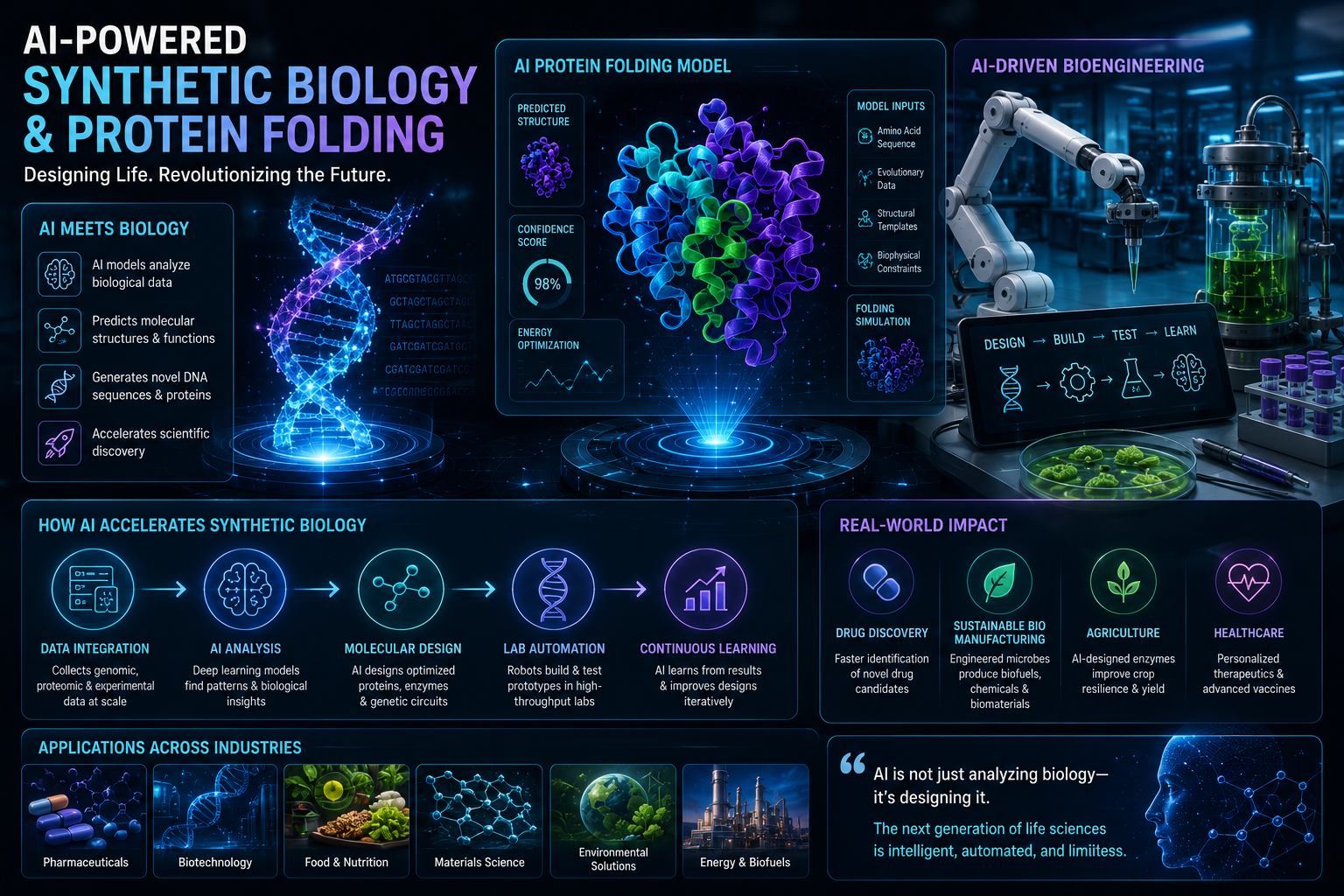
AI-powered synthetic biology — designing proteins and life at the molecular level
What's Happening
Artificial intelligence is creating DNA sequences for synthetic organisms and speeding up the biomanufacturing process. Rather than spending many years in a lab doing trials, scientists can now use AI to make predictions about protein folding, gene interactions, and the behavior of engineered organisms before performing any physical experiment, which cuts down the time taken for research and lowers development costs.
The achievement that stands out is the continuous development of AlphaFold 3. AlphaFold 3 is the latest addition to the protein structure prediction software and works by modeling interactions between proteins, DNA, RNA, and other biological molecules with much more precision. These developments are enabling scientists to learn about biological systems and make discoveries much more faster in medicine, biotechnology, and manufacturing industries. The Ai drug discovery breakthroughs 2025 2026 are due to these biological AI models.
Potential Impact
It may result in innovations in areas such as drug discovery, personalized medicine, and sustainable bio-based products. But beyond the scope of medicine, AI-driven synthetic biology also provides manufacturers with the ability to produce eco-friendly substitutes for fossil-fuel-based materials. Bio-based components and materials are being designed to be used in the packaging industry, textile industry, as well as other industries, thus allowing companies to cut down their carbon footprints.
Real-World Example
Application of DeepMind's AlphaFold in Protein Design: The predictions made by DeepMind's AlphaFold have allowed scientists to design artificial proteins for their use in medicine and biological engineering. With the new features offered by AlphaFold 3, researchers can also predict protein interactions with other biological entities, which allows for faster drug discovery and better biological engineering.
AI-Guided Biofactories by Ginkgo Bioworks: This technology uses AI to develop microbes that can manufacture biofuels, fragrances, and antibiotics. Another application of AI similar to this one is the creation of bio-based products that can substitute petrochemical components used in packaging and textile manufacturing.
Why It's Underreported
It tends to be overshadowed by the conversation about more pressing concerns such as those regarding the development of technologies such as generative AI and automation. This is mainly because a lot of such research happens in laboratories and biotech firms, and breakthrough discoveries take a long time to come to market.
AI for Social Cohesion: Fighting Polarization at Scale
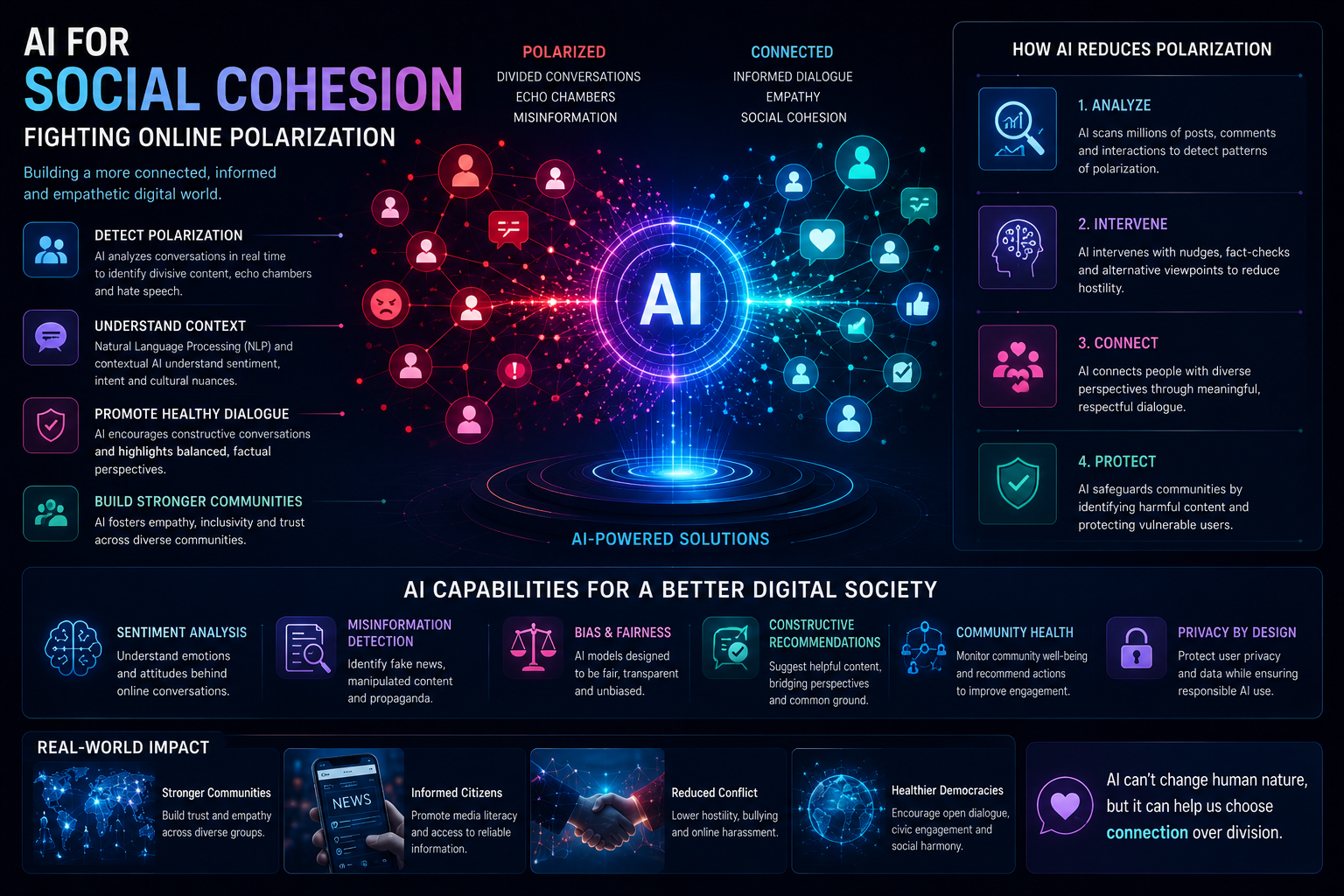
AI for social cohesion — building a more connected, informed, and empathetic digital world
What's Happening
There are many developments in AI aimed at fostering healthy online debates as opposed to eliminating abusive content. Advanced AI has the ability to recognize toxic language, spot patterns of misinformation, recognize conflicts, and foster healthy debate even before it becomes heated. Rather than working on moderating content only, scholars are developing ways to foster respectful debate using AI while maintaining meaningful discourse.
Potential Impact
In such a manner, these technologies would not only be able to prevent cases of harassment on the Internet but also prevent the dissemination of divisive material and form communities where people would engage in compassionate interaction, cooperation, and reasonable debates. This means that AI could prove to be a useful resource for social platforms in the future.
Real-World Example
Jigsaw's Perspective AI (by Google): Utilizes NLP to identify and minimize any toxicity in comment threads.
MIT's Harmony AI: Detects polarizing patterns in social media and offers suggestions for interventions to promote balanced dialogues.
LovingIs: This is an AI system that is under development at GrayCyan AI Consultants & Developers and would create a better living world for the users of GrayCyan. This platform promotes compassionate dialogue, while the HITL AI layer of GrayCyan ensures that the replies are empathic and ethical rather than being purely automated.
Why It's Underreported
While most interest lies in generative AI, automation, and productivity technologies, AI systems that can enhance the well-being of society are rarely spoken about. This is because it is harder to quantify improvements in aspects such as empathy, trust, and better communication compared to improvements seen in business metrics.
Edge AI Trends 2026: The Silent Takeover of Industries
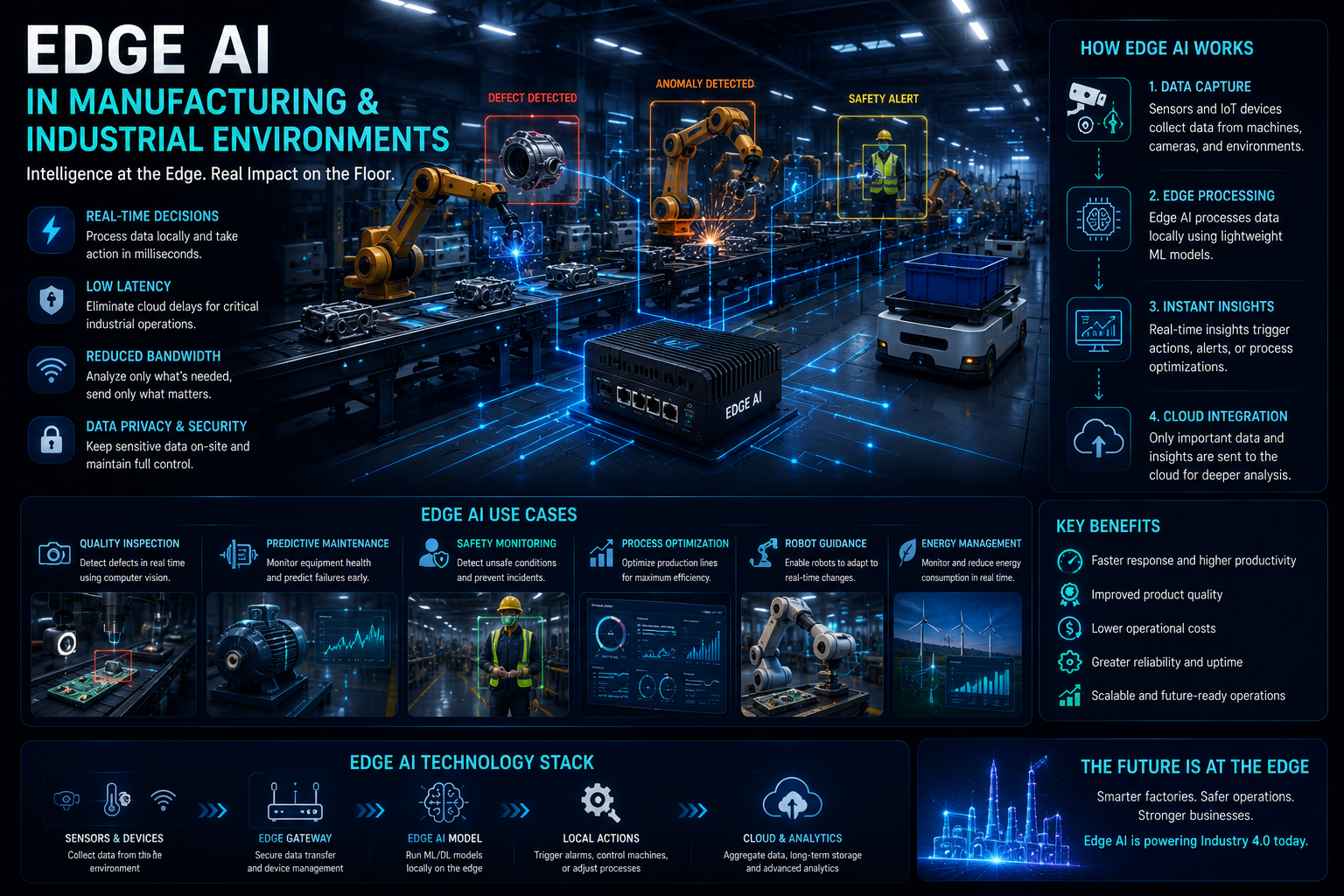
Edge AI in manufacturing — real-time decisions, low latency, and intelligence at the factory floor
What's Happening
AI will shift from central cloud computing to edge computing, thus ensuring faster processing without being dependent on an internet connection constantly. Edge AI will process the data on cameras, sensors, robots, industrial machines, and autonomous cars. This way, it becomes possible to reduce latency and ensure better functionality of AI solutions in case of a lack of internet connection.
The most promising Edge Aai deployment trends 2026 is connected with the increasing use of intelligent devices that perform decision-making and send the minimum required information to the cloud.
Potential Impact
It will result in innovations in sectors that are far removed, such as farming, drone technology, and rural medicine. The need for fast decision-making without any delay due to cloud computing is also turning out to be one of the key AI in manufacturing trends 2026. Additional enterprise applications include:
- Vision-based AI in assembly line: AI-enabled cameras can be used to examine products in real time and check if there are any manufacturing problems or quality concerns, and automatically filter out any defective products from reaching customers.
- Edge AI in warehouse management: Intelligent cameras, barcode scanners, robots, and sensors can be used to track inventory, manage warehouses, and pick up items efficiently without having to depend on continuous cloud connections. It has become one of the significant parts of modern warehouse automation.
- Local AI in sensitive industries: Industries such as manufacturers, healthcare facilities, banks, and critical infrastructures are increasingly implementing AI locally to secure their systems and data as well as adhere to regulatory policies.
Real-World Example
Application of AI Tractors of John Deere Edge: Use AI technology directly in the agricultural equipment for analysis-competitors of soil condition, crop status, moisture content, and other parameters. This ensures, tractors will perform irrigation, sowing, fertilization, etc., effectively without permanent connection to the cloud.
Application of Autonomous Drones of Skydio: With the help of AI technology, these drones will be able to make an analysis of their surroundings and avoid obstacles autonomously without using cloud computing. They will be able to check the condition of infrastructure, construction sites, and farmlands, as well as conduct search and rescue operations.
Why It's Underreported
The transition takes place gradually, and it is less visible in comparison with the innovative AI solutions that are based in the cloud. The majority of the applications of edge AI are being conducted in a much low profile way within the walls of factories, warehouses, farms, and industries. That is why many of the most effective business implementations of this technology remain unknown to people.
AI Knowledge Management Tools: Eliminating Enterprise Information Silos
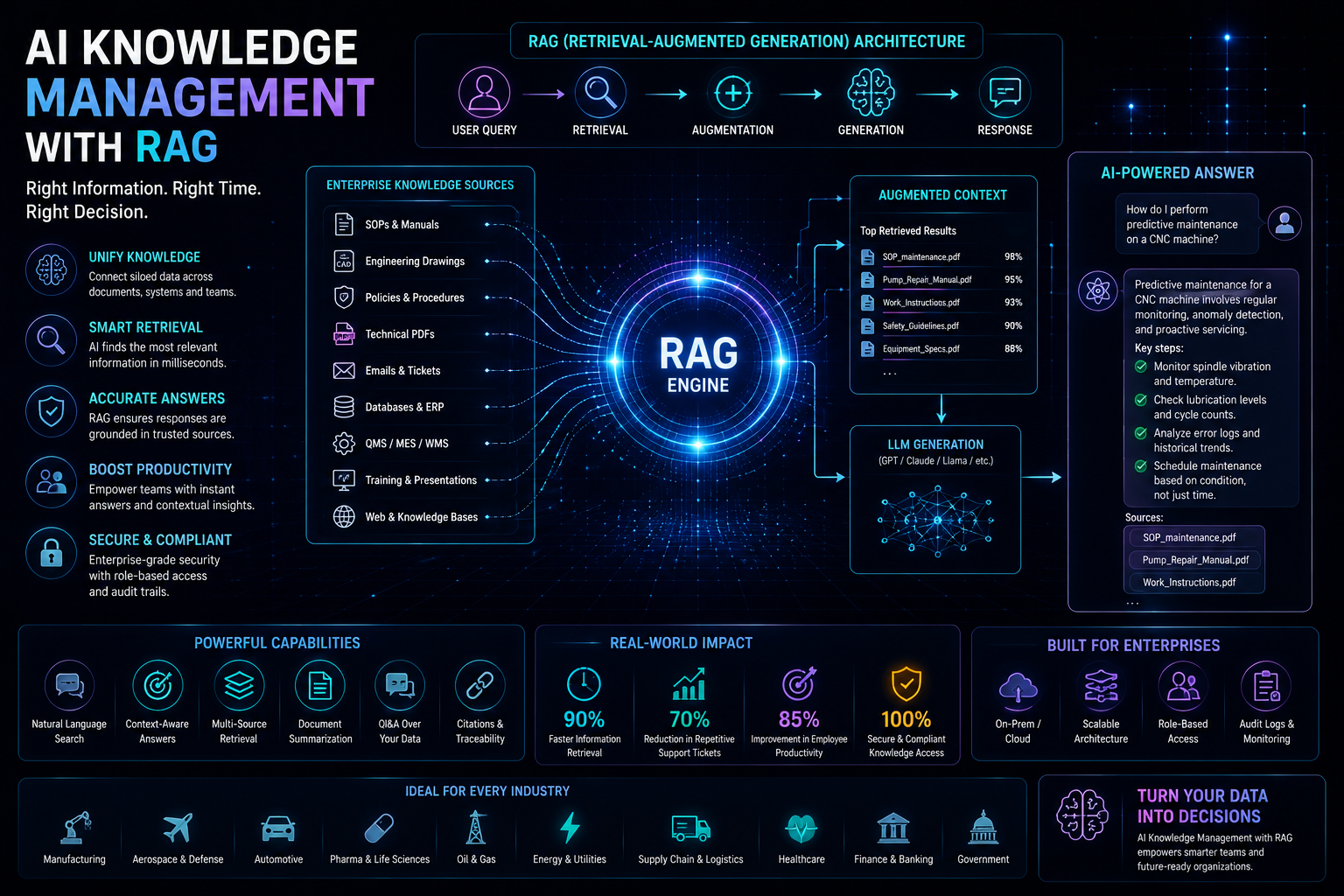
AI knowledge management with RAG — unifying enterprise knowledge for right information at the right time
What AI Knowledge Management Means
One of the major developments in enterprise AI is the emergence of AI knowledge management solutions that assist companies in locating, organizing, and using all sorts of information scattered throughout hundreds of documents, emails, databases, PDFs, manuals, and other business applications. The typical search yields a large number of results and leaves it to people's discretion to go through the materials and find the required information. AI takes care of that by providing context-awareness, summaries of documents, answering questions, and presenting the most valuable knowledge instantly.
From a technological perspective, AI for knowledge management is mostly based on the Retrieval-Augmented Generation (RAG) approach. Rather than depending on the pre-existing training data of a language model, RAG extracts the most recent information from the internal knowledge base of an organization before responding to a question. This way, AI becomes more precise, current, and knowledgeable about certain questions of an organization. In this regard, AI for knowledge management becomes one of the most rapidly developing enterprise AI use cases.
Why It Matters for Manufacturers
In manufacturing firms, there is a lot of internal knowledge generated every single day; however, such information is scattered throughout several disconnected systems. Production manuals, standard operating procedures (SOPs), engineering specifications, maintenance information, suppliers' information, quality information, audit information, training information, and technical information can be scattered across various platforms where employees have to waste their time trying to find what they need.
A AI based knowledge management system lets employees ask natural language queries and get relevant answers from those documents without having to search for them among thousands of other files. Engineers can easily get the required specifications of the machines, production departments can find the latest SOPs, quality departments can get audit information, and procurement departments can find supplier information within seconds. This type of technology is increasingly gaining popularity in enterprise AI adoption trends 2026.
Top AI Knowledge Management Tools 2026
Organizations are evaluating a growing number of AI knowledge management tools to improve enterprise search and information retrieval.
- Palantir AI for Government & Enterprises: Uses AI to gain insights from huge amounts of data, assisting decision-making in the areas of finance, defense, and logistics.
- Notion AI's Smart Knowledge Base: Generates automatic summaries, highlights key information, and structures notes.
- Guru: Offers verified knowledge about the employees' workflows, saving the time needed to find information.
- Glean: Offers search for enterprises, making it easy for employees to find documents, messages, and organizational knowledge.
- Microsoft Copilot for Microsoft 365: Integrates with enterprise documents, emails, meetings, spreadsheets, and collaboration services to provide answers to business questions based on organizational data.
- Confluence AI: Improves team documentation by generating automatic summaries, structuring information, and optimizing enterprise collaboration.
- GrayCyan's Custom RAG Deployments: Creates AI knowledge systems for organizations, allowing safe extraction of answers from internal documents without compromising enterprise data.
As companies consider the best AI knowledge management tools, the emphasis has shifted from mere storage of documents to AI-based systems that can contextualize information, integrate information from multiple sources, and provide accurate responses instantly.
Why It's Underreported
Many of these AI knowledge management initiatives are being rolled out within corporate IT departments and not commercialized as consumer products like chatbots and picture generators, and are therefore much less visible than other applications. Nevertheless, these systems are having a profound impact on how information is accessed, training is conducted, and decisions are made by enterprises. Indeed, industry experts, such as Gartner, have noted that AI knowledge management is one of the top enterprise concerns for the year 2026. While they may not be getting the press, they are some of the most pragmatic and important uses of AI for enterprises today.
AI Hyperpersonalization: Beyond Recommendations to Real-Time Content
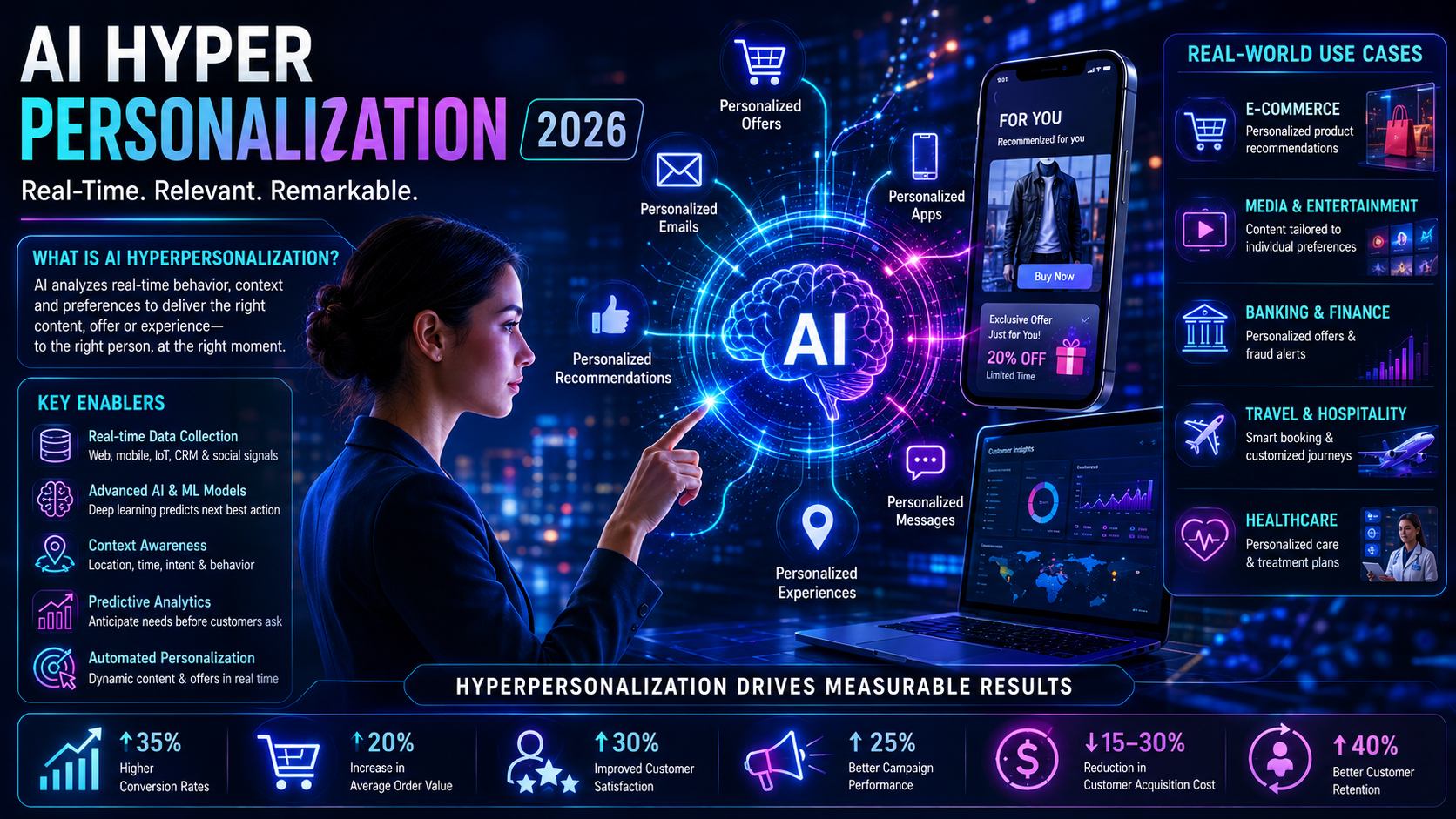
AI hyperpersonalization 2026 — delivering the right content, offer, and experience to every individual
What's Happening
AI technology is no longer limited to basic product recommendations; it can provide personalized experiences in real-time on websites, apps, emails, videos, and other digital platforms. Rather than delivering the same content to everyone, AI uses data related to behaviors, preferences, interaction history, geolocation, and context to deliver highly personalized content in the most appropriate moment. Today's AI technology can do personalization for messaging, visuals, product recommendations, and customer journey without human interference. One of the most significant advances in AI technology involves the creation of content using generative AI technology, rather than only recommending basic content.
Potential Impact
Personalized experiences can make customers engage more, convert higher, increase their loyalty, and create an experience that matters more digitally. It is no longer confined to consumer brands. Account-level personalization is one of the new AI personalization trends b2b marketing 2026 will use, where businesses will rely on AI to create customized experiences, marketing campaigns, sales engagement, product recommendations, and communications for individual accounts rather than audience segments.
HubSpot AI and Salesforce Einstein are some of the platforms that are making it easier for B2B businesses to personalize their experiences for each customer journey, which makes AI hyperpersonalization more important for small and medium businesses to compete against larger firms.
Real-World Example
AI-Generated Thumbnails & Storylines on Netflix: Netflix utilizes AI in providing personalized trailers for customers and even creating personalized thumbnails of TV shows. Moreover, Netflix is also making efforts to incorporate generative AI into its services to facilitate content discovery and a personalized storytelling experience, along with enhanced personalization of recommendations.
Video Ads with AI Personalization in Synthesia: Through the generation of videos through AI, Synthesia enables marketers to personalize videos with respect to speech, tone, language, etc., according to the demographics of different audiences without having to produce multiple videos.
Why It's Underreported
Most of the hyperpersonalization that takes place through AI technology does not take place through consumer-facing technologies but through backend marketing tools, CRMs, and other enterprise solutions. The fact that these developments take place gradually and seamlessly within existing digital experiences means that these innovations often do not get as much attention as AI models, although they make a huge difference in customer engagement.
Environmental AI: Oceans, Wildfires, and Biodiversity Beyond Climate
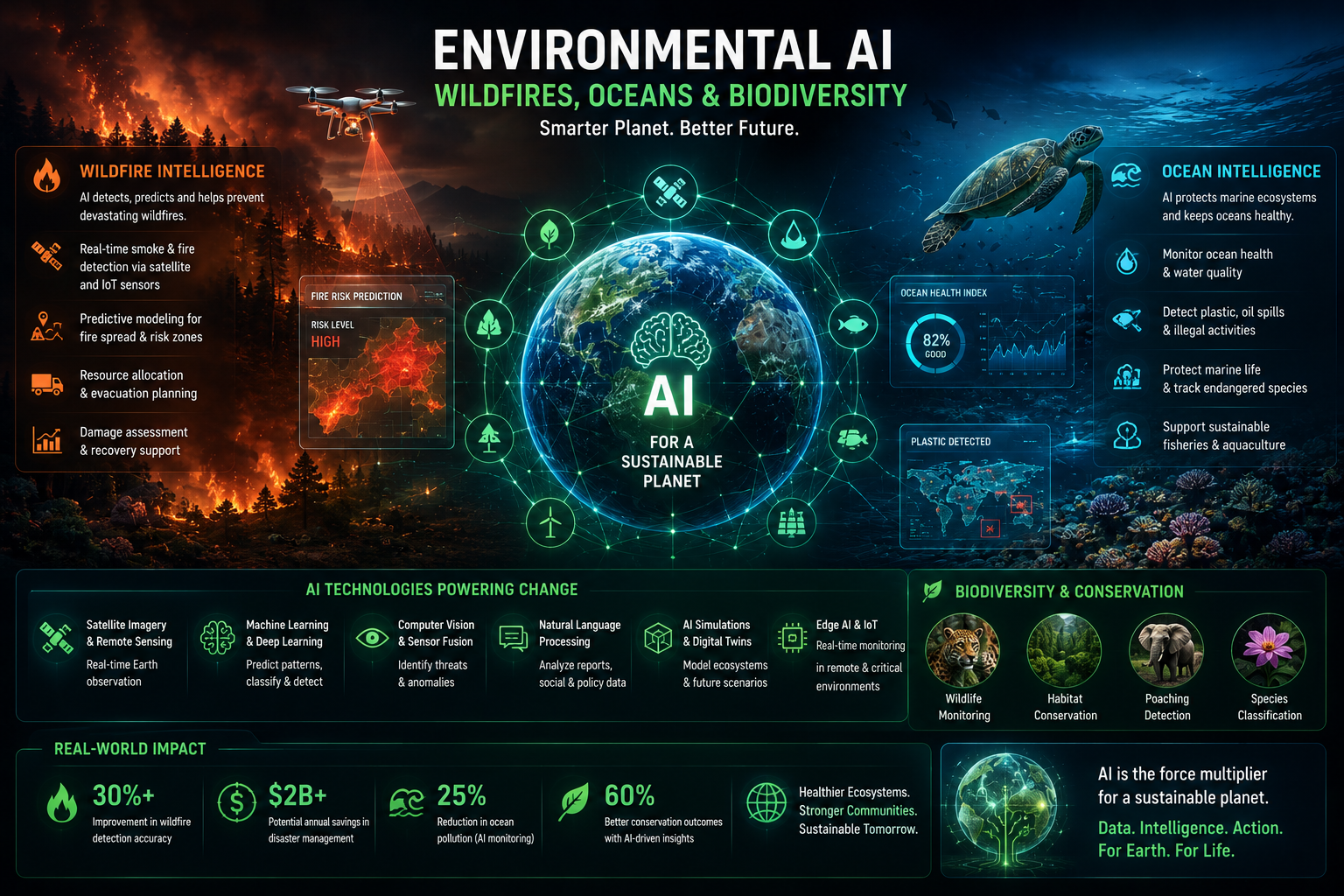
Environmental AI — wildfire intelligence, ocean health monitoring, and biodiversity conservation
What's Happening
Environmental AI applications are growing well beyond just renewable energy and weather prediction. AI technologies are now being used for tracking the environment, analyzing satellite imagery, safeguarding biodiversity, predicting natural disasters, and enhancing environmental protection on an international level. Using vast amounts of data collected through satellite observation, drone images, sensor readings, and science, AI is able to track environmental changes much faster than any other method of observation.
Potential Impact
AI can be applied in the improvement of wildfire readiness, conservation of species that are on the brink of extinction, ocean health monitoring, better agricultural practices, and carbon emission reduction efforts. As of 2026, the field where AI is being researched more and more widely is that of carbon capture optimization with the use of machine learning algorithms, which will enable more efficient operation of carbon capture systems by minimizing energy costs.
Real-World Example
Fire Detection AI by Google: Makes use of satellite images and AI algorithms to forecast wildfires in areas that are susceptible to them.
Coral Reefs Monitoring AI by NOAA: Monitors the health of coral reefs and marine biodiversity to protect threatened ecosystems.
Carbon Capture Processes AI: More and more studies and companies are focusing on using AI in the carbon capture process to improve efficiency and minimize greenhouse gas emissions and energy consumption.
Why It's Underreported
AI systems that help the environment normally emerge from years of scientific study and government collaboration projects and rarely from consumer-oriented technological products. Hence, significant achievements remain underreported by the press even though they are playing an increasingly vital part in preserving ecosystems, climate change mitigation, and sustainable industrial activities. Although these developments do not attract the attention of journalists, they become increasingly crucial instruments in solving environmental problems.
Neuro-Symbolic AI: The Hybrid Approach That Fixes the Black Box Problem
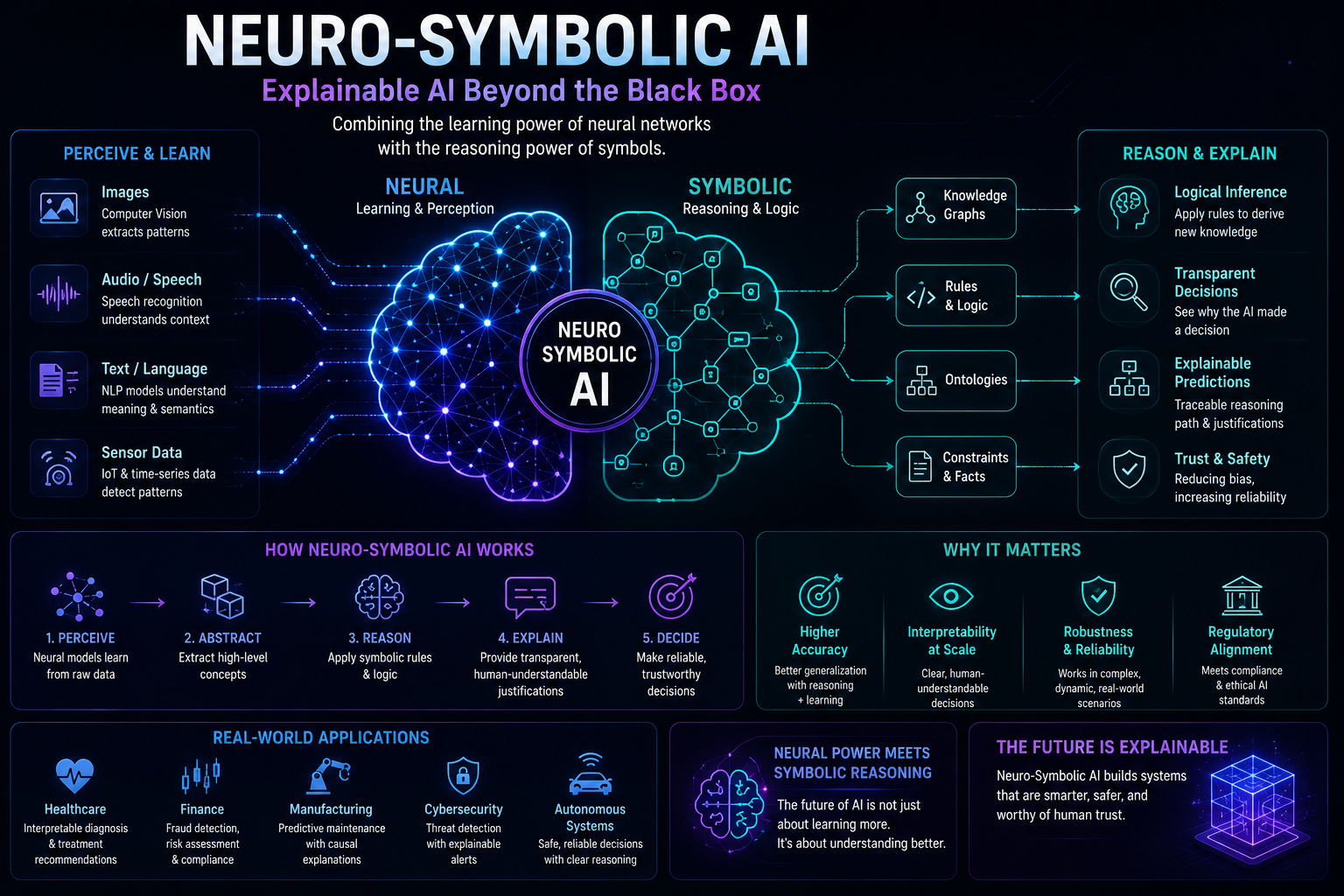
Neuro-symbolic AI — combining neural network learning with symbolic reasoning for explainable AI
What's Happening
Neuro symbolic AI takes advantage of both the ability of neural networks to detect patterns within a dataset and the ability of neuro-symbolic AI to reason. Traditional deep learning models do an excellent job of recognizing patterns in big data, but often fail in explaining how the conclusion was reached. Symbolic AI is based on explicit rules and reasoning that can be understood by humans. Thus, neuro-symbolic AI can provide a solution that is equally effective and explainable.
This technology becomes very relevant now when companies use AI in industries that are heavily regulated. In such an environment, each decision made by AI requires validation or auditing. Unlike traditional models, neuro-symbolic AI is not a black box; it allows for traceable reasoning.
Potential Impact
One of the key benefits of neuro-symbolic AI is the explainability of the process. Not only does this technology generate an answer, but it also allows understanding of how it came up with that particular solution. It becomes possible to make AI decisions verifiable and supportable by regulators, compliance officers, and company management.
For industrial purposes, there is a great benefit in this characteristic of neuro-symbolic AI technology. There are many situations when quality control, approval of production, diagnostic of machinery, or regulatory decisions require a detailed explanation of why a product has or hasn't passed inspection. Neuro-symbolic AI will enable companies to document their decisions with both visual and rule-based analysis.
Real-World Example
IBM's Neuro-Symbolic AI for Legal AI: Interpret contracts and recommend legal precedents in an interpretable way, providing an explanation that enables legal experts to comprehend the rationale behind AI recommendations and not get just some black-box output.
Explainable AI (XAI) from DARPA: Develops trustworthy AI models explaining why they made certain decisions in mission-critical situations, including defense, health care, and many others.
Why It's Underreported
Unlike consumer-facing AI, explainable AI gets comparatively low visibility in public discourse due to the nature of its focus, which includes trust, governance, and compliance issues, as opposed to demonstration purposes. Yet, as AI regulations change and become more complex, companies will have an increased demand for justifiable systems as opposed to accurate prediction ones. This is the reason why neuro-symbolic AI becomes crucial in the development of enterprise AI, particularly in those industries where transparency, responsibility, and compliance are required.
AI on Neuromorphic & Optical Chips: Beyond Silicon
What's Happening
Compared to consumer applications of AI, the concept of explainable AI gets less attention from the public, as it is all about trust, governance, and compliance rather than showmanship. But as AI-related regulations keep changing, there is growing demand for an AI system that can not only make predictions but back its choices up. It is exactly why neurosymbolic AI is becoming one of the key elements of enterprise AI, particularly within those industries where transparency and accountability are required by regulation.
Potential Impact
The greatest strength of these chips is that they are energy-efficient. The neuromorphic processor will be able to do some AI tasks using significantly less energy than would be needed by huge clusters of GPUs, thus making them more cost-effective and eco-friendly solutions for implementing AI technology. As AI becomes increasingly complex, the need for more energy-efficient hardware will become inevitable.
Real-World Example
The Loihi Neuromorphic Chip by Intel: Simulates brain neurons, enabling low-energy AI calculations. The newer version, the Loihi 2 chip, offers further development through increased scalability, enhanced programmability, and more better performance in AI research.
Optical AI Chips from Lightelligence: Use light in place of electrical currents to perform AI calculations 100 times faster than graphics processing units for certain AI applications.
Why It's Underreported
Most breakthroughs happen in semiconductor laboratories and not in consumer goods, and thus are not as prominent as those made in AI software. However, such hardware developments may end up forming the basis of better and more efficient AI systems.
AI for Cultural Heritage: Restoring Languages, Texts, and Artifacts
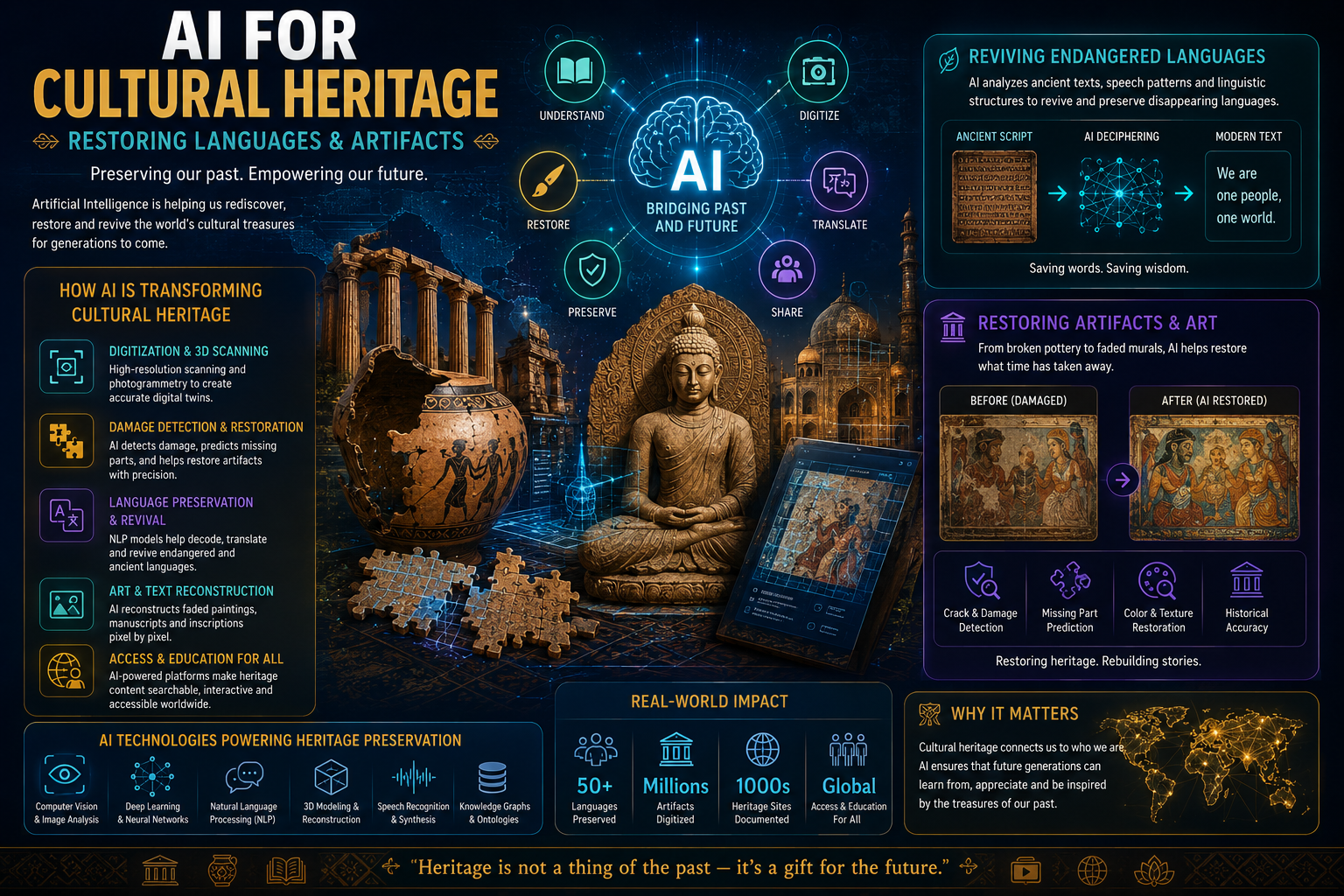
AI for cultural heritage — preserving our past, empowering our future through language and artifact restoration
What's Happening
AI has started to play an important role in cultural preservation in the form of deciphering old texts, recreating damaged documents, and resurrecting forgotten languages. With its powerful capabilities of natural language processing and pattern recognition, AI is able to analyze old fragmented or complicated documents and reconstruct their missing parts with remarkable precision.
Potential Impact
The influence of Artificial Intelligence on cultural preservation is not limited to the sphere of science. It enables cultures to retrieve lost history, save dying languages, and recreate culture based on incomplete information. Through the automation of archive studies, AI drastically accelerates processes that used to take years. In addition, AI plays an important role in archiving museum artifacts.
Real-World Example
AI by Google for Decoding Ancient Manuscripts: This application uses NLP to decode and repair ancient manuscripts to assist scholars in understanding ancient writings that have faded over time.
Dead Languages AI Project by DeepMind: Helps reconstruct dead languages by studying their linguistic relationships with other languages, thus helping to learn more about ancient civilizations.
Project Vesuvius (Herculaneum Papyri Project): In 2026, AI technologies will be utilized to digitally peel carbonized scrolls discovered in Herculaneum in order to decipher the unreadable texts written on them.
Why It's Underreported
Despite its relevance, the area of AI in cultural heritage remains relatively unexplored due to the fact that it is neither commercially visible nor does it have consumer-level applications. Almost all discoveries take place in academia and through institutions, which means that they do not get the same amount of publicity as other applications of AI in business and entertainment.
Agentic AI Trends 2026: From Automation to Autonomous Systems
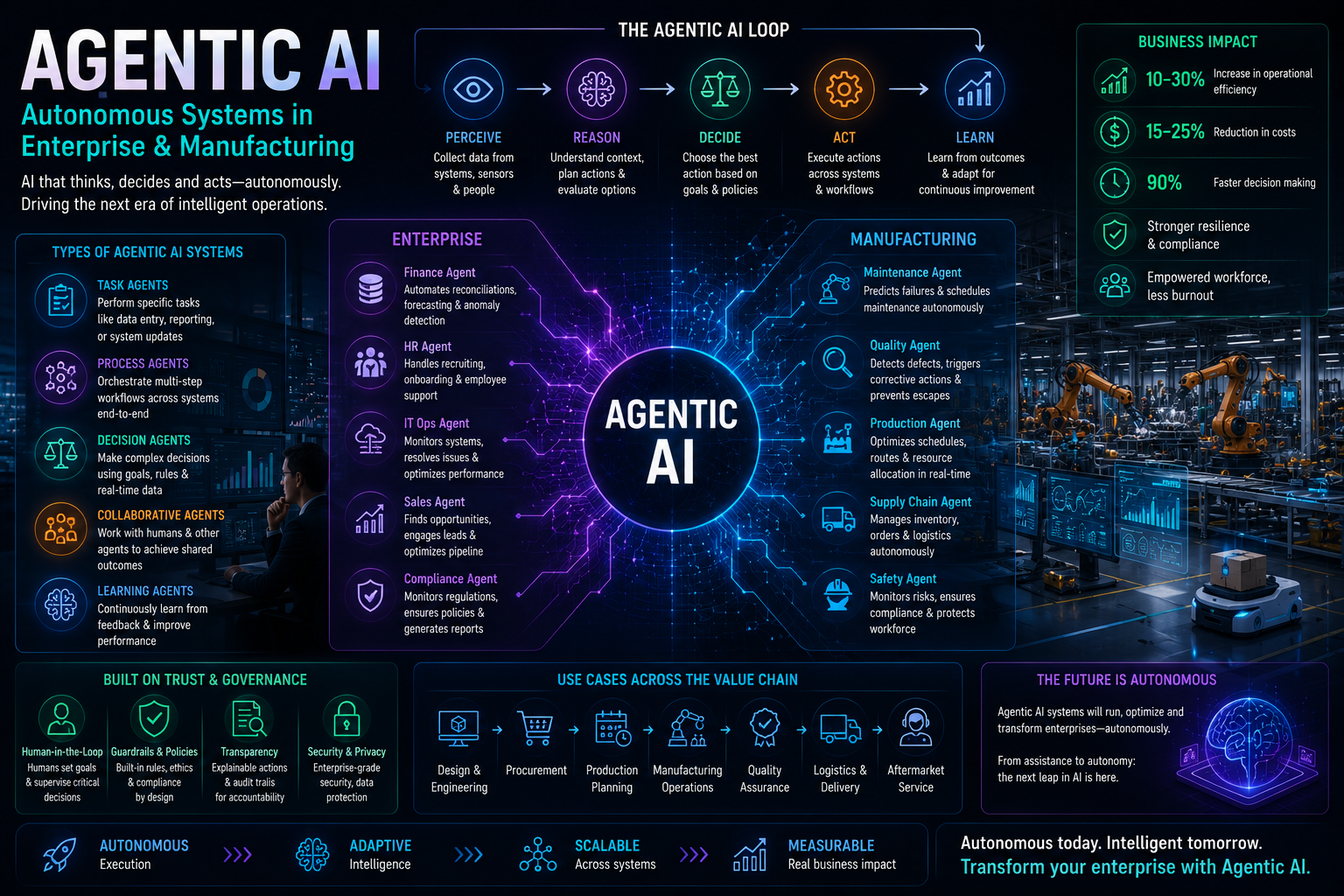
Agentic AI — autonomous systems that perceive, reason, decide, act, and learn across enterprise and manufacturing
What's Happening
The Agentic AI Trends 2026 are a significant departure from traditional AI tools, which passively answer user queries, to autonomous systems that are able to independently perform planning, implementation, and adjustment of activities. While traditional chatbots can provide responses to queries alone, agentic AI tools are capable of task decomposition, using external instruments such as APIs, database connections, and software platform capabilities, taking actions on other systems, and correcting themselves for an unexpected outcome of their work. All this makes up the definition of autonomy of AI.
In short, what changes in AI agent trends 2026 is the fact that AI starts to do things, not just answer questions.
How It Differs from Chatbots
Chatbots, like the previous generation of LLM-driven chatbots, operate using prompt input. Agentic technology takes the process a step further by executing workflows. It is capable of choosing its next course of action, calling upon external tools, validating results, and continuing towards an end result with little or no human interference. This has contributed to the rise of AI agent trends 2026.
Why It Matters for Enterprises
The most pronounced effect seems to be in enterprise AI adoption trends 2026, particularly among industries with complex processes such as manufacturing, logistics, finance, and supply chains. Agentic AI allows for automating processes including procurement, inventory, production planning, customer support resolution, and reporting.
Enterprise early adopters are already experiencing efficiencies since agentic AI requires less coordination between different software systems and people. Rather than having employees coordinate processes within different applications, an AI agent is able to carry out a full workflow.
Real-World Context and Emerging Adoption
Agentic systems are slowly being integrated within organizations' automated systems as opposed to the front-end client applications.
- Manufacturing firms are piloting AI agents in predictive maintenance scheduling and production scheduling.
- Logistics firms are piloting workflow agents for optimizing routes and managing dispatches.
Why It's Underreported
Media attention is largely paid to customer-facing AI assistants and chatbots when, in fact, the revolutionary changes taking place in this technology are occurring behind the scenes. This is due to the fact that agentic AI functions are working through internal processes and not in a public interface. Yet, this is one of the biggest transformations in the history of AI in the form of AI agent trends 2026.
What These Trends Mean for Manufacturers — GrayCyan Perspective
From the manufacturing perspective, not all of the developments in the AI world are immediately actionable. The most important thing here is to distinguish between those that add value today and those that remain to be discovered.
Edge AI, which is revolutionizing manufacturing through real-time defect detection, predictive maintenance, and automation of warehouses; and, secondly, AI solutions for knowledge management, which address one of the most underappreciated issues of modern manufacturing – lack of operational knowledge. With SOPs, engineering documentation, quality reports, and suppliers' information available through AI-driven RAG systems, it becomes easier to access information instantly.
Quantum machine learning is another technology that falls into the "watch and monitor" section, offering benefits to manufacturers only after five to ten years due to the impact it can make in optimization and simulation, yet no immediate deployment.
What poses a challenge to manufacturers is that they need not to implement everything but rather know which technologies to focus on first. That is why an AI Strategy Readiness Approach by GrayCyan plays an important role.
Start With Clarity, Not Complexity
Explore AI Strategy Readiness with RAG AI Manufacturing Solutions.
Explore AI Strategy Readiness