AI Productivity: Why Efficiency
Is Now the Floor, Not the Ceiling
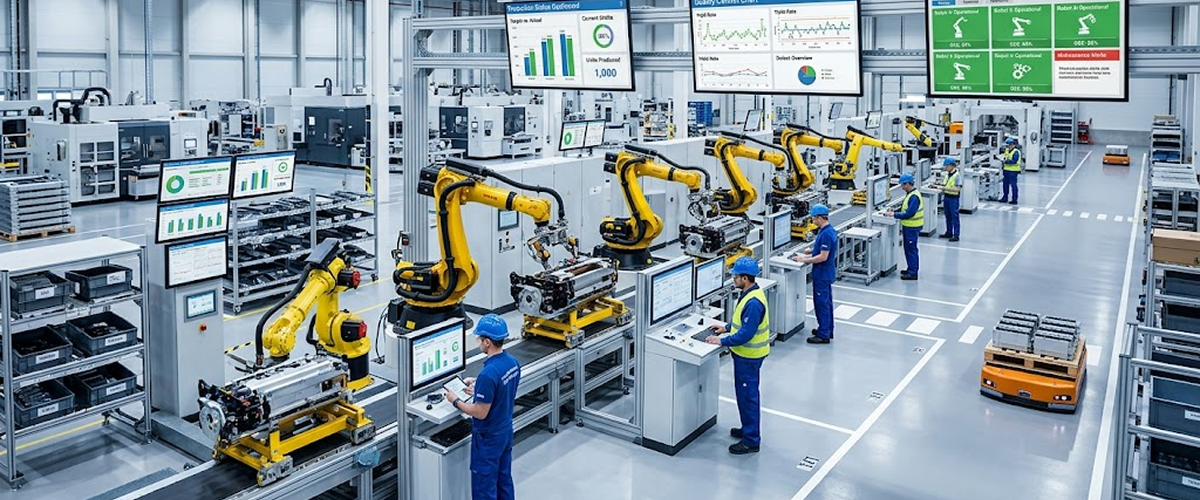
Almost everyone can use AI now to boost efficiency. However, the big turning point is going beyond basic automation. It's about using AI to hit goals that we couldn't dream of before. These following top companies are showing how exactly this works.




AI Productivity: Why Efficiency Is Now the Floor, Not the Ceiling
AI productivity has crossed a threshold. What was once a competitive advantage is now more quickly becoming a must-have for businesses. With a lot more faster reports, automated workflows, instant analytics, and AI-generated content are available to organizations of all sizes. But simply being productive isn't enough anymore to stand out.
Almost everyone can use AI now to boost efficiency. However, the big turning point is going beyond basic automation. It's about using AI to hit goals that we couldn't dream of before. These following top companies are showing how exactly this works.
Microsoft
Microsoft found that their AI systems don't just save time; they help with more smarter decisions too. By looking at millions of data points, teams move from figuring things out after the fact to predicting future needs more quickly than before.
Coca-Cola
Coca-Cola used AI to make marketing projects with their teams, which helped to focus more on creativity and customer connections than repetitive everyday work.
Walmart
Walmart uses AI to manage its supply chains, predicting inventory needs and cutting shortages to keep customers happy with constant sales.
HubSpot
HubSpot helps small teams use AI to offer personalized experiences, which are only often typically seen in larger enterprise level business.
These examples show that the real worth of AI isn't just about speeding up tasks. Instead, it's all about making smarter choices, getting more better results, and changing how businesses operate completely.
From AI Literacy to AI Agency: The Real Workforce Shift
What Is AI Literacy vs. AI Agency?
A few years ago, knowing how to use AI tools gave you an edge. Learning prompts, testing automation, and checking out new platforms were a big part of being AI literate. Back then, it was all about figuring out basic AI and using it to enhance personal productivity.
Now, though, the conversation has totally changed. Companies aren't just adopting AI; they're diving into an AI agency. This means reworking how tasks are done, handing jobs over to AI, and keeping tabs on results.
This move shows a shift in business thoughts about AI and productivity. First, the goal was to help people do their tasks more quickly. Now, it's about changing whole processes. Rather than asking "How can AI make this easy for me?" Now the question is more like "How can AI take ownership of parts of this workflow while humans provide direction and oversight?"
AI literacy says: "I know how to use this tool." The AI agency says: "I know how to redesign the process so the tool delivers results without my constant involvement."
— HonestAI Magazine · Edition 9This difference is getting more crucial as companies put money into AI for productivity boosts. While staff who grasp prompts and automation get efficiency perks, those who can revamp workflows with AI create bigger value. So, it's not just about knowing new tools; it's about learning to orchestrate intelligence. Humans set goals, lay down rules, and make key calls, whereas AI does tasks, filters data, and scales up the results.
AI Literacy vs. AI Agency — What's the Real Difference?
AI Literacy
node to
compare
AI Agency
Select a node on either side to see how AI literacy and AI agency approach the same challenge differently — and why the gap between them is widening.
AI literacy gets you faster. AI agency gets you fundamentally different outcomes. Both matter — but only one creates competitive advantage.
Case Study: BCG's Enterprise GPT and the Rise of AI Agency
Boston Consulting Group (BCG) shows just how AI is changing how knowledge work gets done. They created a top-tier GPT platform that lets consultants build special AI agents for their specific projects. These aren't just basic tools; BCG really transformed the whole processes by integrating AI into how they collaborate with humans.
In one case, a team had to interview thirty engineers, transcribe all those conversations, find common themes, and make a strategy presentation. Usually, this takes about two full weeks.
But with their new AI tool, BCG totally changed the workflow. They streamlined everything, making the whole project way more efficient.
- AI transcribed and summarized the interviews
- AI identified key themes and surfaced critical insights
- AI drafted presentation outlines and organized supporting evidence
- Consultants focused on validating findings, refining recommendations, and strengthening the strategic narrative
A project that previously dragged on for almost two weeks was very easily completed in just 2–3 days while maintaining equal or higher quality and at the same time reducing the hassle of employees and boosting efficiency of the business to its consumers.
Instead of wasting a huge amount of time just transcribing, documenting, and formatting slides, consultants focused more better on high-value tasks which boosted their productivity and business growth sustainability like analysis, solving problems, and boosting creativity and client impact.
This shows the contrast between AI literacy and AI agency. AI literacy helps people to speed up their work, but an AI agency changes the workflow entirely. Humans set the goals and quality standards, make big decisions, and let AI handle much of the time consuming process at scale.
It's more than just getting things done faster; instead it's about transforming how teams work more efficiently while still maintaining accuracy. By coordinating smart systems, teams can easily deliver way more better results in less time, without having to do every task manually.
Raising the Bar: Turning AI Efficiency into Competitive Advantage
Today, pretty much every organization uses AI productivity tools in some form, whether it's through generative AI productivity chatbots, copilots, or some other popular advanced productivity tools for their everyday work. Businesses are already speeding up automation, and because of this, just merely boosting efficiency with AI isn't enough to give you an edge anymore.
The real benefit now goes to those who figure out the best ways to use AI tools for business productivity within their operations. The issue? Settling for outputs that are merely "good enough" can make companies look the same in terms of what they offer without any unique traits to make them stand apart to get a competitive edge. Generating reports, proposals, and all sorts of content gets super fast with AI, but keep in mind that just being speedy isn't valuable anymore.
Now, everyone wants high-quality stuff, accurate information, smart analyses, personalized content, and inventive solutions.
This is where an AI agency becomes critical.
Today's companies developing AI go beyond just using it to speed up tasks. They revamp how work gets done by setting up smart guidelines and building systems for improved results. Instead of being content with automation doing only average work, they set things up so that people handle the important tasks, while AI takes care of the heavy lifting.
One firm might quickly whip up a report using AI. Yet another will use the tech to analyze data, pull out key insights, draft suggestions, double-check their work, and assist in making decisions. This way, employees can focus on strategic calls while AI deals with the background work.
The first gains efficiency. The second gains a competitive advantage.
With AI getting more accessible, the real deal isn't about whether firms use it or not; it's how well they blend human knowledge with smart technology. To truly succeed, businesses need to go past just automating tasks. They have to boost quality and innovation in all their processes using AI.
Case Study: JPMorgan Chase — AI in Customer Service
JPMorgan Chase — AI-Powered Customer Service
JPMorgan Chase, a top financial institution, shows how AI can boost up business productivity, making customer service way more better without cutting out human oversight. The bank uses generative AI to help with customer service, having it draft replies to common email queries. After that, human agents check and approve the responses. This setup lets them use AI tools for business productivity for its quickness and blend it with human judgment skills.
Before, dealing with common queries used to drag on for over a day. Now with the help of AI in creating and generating personalized responses, these teams can create replies in just a few hours. This upgrade not only speeds things up but also helped them to provide a much more personalized experience for their customers which in return helps to foster long term loyalty and business growth. In 2023, the Financial Times reported that JPMorgan aimed for expanding generative AI in customer services, for boosting efficiency and enhancing the quality of service.
The benefits go beyond just quicker responses. By handling mundane tasks, agents have more time to tackle serious issues, resolve problems, and build more better relationships with customers. This lines up with wider workplace studies showing that AI in customer support boosts team productivity by about 14%. Customers are happier, too, and there are fewer issues being detected in the operation.
When companies use AI to create drafts and then let staff review and tweak them. Service gets faster and better, and workers get to focus more on high-value productivity that actually makes a difference.
Faster resolution, happier customers, agents focused on high-value relationshipsCase Study: Coca-Cola — AI-Powered Marketing Campaigns
Coca-Cola — "Create Real Magic" AI Campaign
Coca-Cola is often used to show how AI can boost up marketing in big companies. They don't just use AI for making content either; the company focuses on putting together campaigns, customizing stuff for their audience, and teaming up creatively on a large scale.
Back in 2023, Coke started the "Create Real Magic" program. It was a joint effort with OpenAI and Bain & Company that let consumers and marketing team to generate AI-made content with Coke's well-known brand assets. This created a fresh way to connect with consumers with creative engagement production.
Rather than merely creating taglines or ads, Coke used AI models that were shaped by their brand rules, old creative material, and data insights from their audience. This meant their teams could collaborate on visuals, tailor messages for specific groups, and swiftly test lots of campaign versions without making production take longer.
Key Outcome: AI-powered campaigns got way higher click-through and social sharing rates than a lot of traditional digital ads, showing clear boosts in engaging audiences more effectively.
The business impact went beyond just performance numbers. Marketing teams sped up content creation, tried out more inventive ideas, and kicked off personalized campaigns on a scale which was almost impossible through old manual ways alone.
Leaders at Coca-Cola saw this move as more than just getting new technology; it marked a fresh approach to blending creativity, technology, and brand stories.
This case shows the difference between knowing how to use AI and actually shaping how it fits into your processes. Instead of simply using AI to quicken content production, Coca-Cola revamped its workflow for more better AI-human teamwork. They left strategy, brand direction, and creative choices to the human team, while handing AI the task of boosting output, making things more personal, and boosting up experiments.
So, it wasn't just about becoming more efficient; they boosted engagement, sped up project execution, and adopted a more flexible take on modern marketing, too.
Higher engagement, faster execution, more flexible modern marketingCase Study: Microsoft Copilot — From Faster Work to Better Decisions
Microsoft Copilot — From Hindsight to Foresight
A lot of organizations started using AI mainly to automate tasks and save time. Microsoft shows how AI can offer much more than just everyday automation used by almost every business today and how it can boost decision-making and teamwork while still maintaining the human touch required for accuracy and quality of the service. They did this by integrating AI into daily tools like Word, Excel, PowerPoint, Outlook, and Teams. It doesn't just sit there as a separate tool; instead Copilot jumps in to analyze info, sum up chats, create content, and pull insights from tons of data. So, employees get supported right where they work.
The impact goes beyond efficiency gains.
Look into this simple example for a more better understanding, leaders can use Copilot to analyze a number of huge amount data sets, sum up long lengthy reports, spot risks which would be a lot more harder to spot with manual process and human eye, and come up with smarter recommendations all in just a matter of few minutes. Teams also benefit by swiftly reviewing meeting transcripts, pulling out key action items, and crafting summaries way faster, skipping the manual processing hours of information.
Key Outcome: The internal team employees spend less time gathering and organizing repetitive everyday information which frequently takes up a precious amount of their time and more time on growth oriented tasks and responsibilities like smarter decision making, accurate problem-solving, and putting data backed strategies into action.
This shift is one of the most important developments in how businesses use AI. Now, the aim isn't just about speeding things up; it's about making smarter choices with more confidence.
Microsoft says this change allows teams to move from hindsight to foresight prediction. So, instead of analyzing historical old sets, they can spot trends sooner, find new opportunities quicker, and react more proactively to shifting market conditions.
The benefits of AI isn't just about saving mere minutes or hours of time during operation instead it's about creating much more better results for the business without overwhelming the employees while at same time giving them the full control to manage the operation. Although automation does get rid of tedious tasks, the real boost happens when AI lets employees concentrate on analytical work, creative thinking, and strategic planning to enhance more of its power in delivery with not only faster results but also with data backed accuracy and human knowledge.
This example shows how AI takes action in a workplace setting. Human employees set goals, check AI suggestions, and make the decision making process, while AI handles the massive information processing that would be way too big for anyone to do alone. In the end, this leads to improved performance and a better chance of staying ahead in the market.
Improved performance, smarter decisions, stronger market positionHow to Use AI to Increase Productivity: A Practical Framework
Lots of organizations bring in AI, thinking it'll instantly make everything more efficient. Yet, they often find out that just having the technology isn't enough. Real success comes when AI is used cleverly within work processes, not just by putting new tools in place. The framework below shows how to use AI for productivity to boost efficiency, amp up quality, and get better overall results.
AI Agency in Action — BCG Project Workflow Before vs. After
InterviewsHuman Led
& SummaryAI Handles
IdentificationAI Handles
DraftAI Handles
ValidationHuman Led
Consultants spend 2 weeks on transcription, note-taking, formatting slides, and organizing data — before strategy even begins.
AI handles the groundwork in hours. Consultants jump straight to analysis, recommendations, and creative thinking within days.
AI agency isn't about replacing consultants — it's about removing the parts that don't require their expertise, so they can focus entirely on what does.
Step 1 — Audit Your Repetitive Workflows
Whenever a firm implements AI in their work, they come across a very common question of how to use AI to increase productivity in their workflow? They can start by using AI for boosting productivity, look at the tasks that take up lots of employee time but don't really offer much strategic benefit. Think about data entry, report making, meeting notes, and routine customer queries. Begin by mapping out daily workflows and spotting the tasks that are done over and over again. Focus on the rule-based, predictable operations that happen in big volumes. These usually give you the quickest ROI with minimal hassle. Before implementing an AI solution, figure out where all your time goes and what's causing those operational bottlenecks. Understanding these basics will show you what activities aren't adding the most value and could be handled better by AI.
Step 2 — Match the Right AI Productivity Tool to Each Workflow
Not every workflow calls for the same AI solution. Those businesses who have successfully implemented AI productivity tools, match the best AI tools for productivity with particular business needs. For instance, platforms like Otter.ai and Fireflies automatically record, transcribe, summarize, and point out all kinds of valuable key points from meetings which reduces the manual efforts of shifting through several sheets of irrelevant data to collect the right information. Meanwhile, writing-focused AI types of tools such as Claude and ChatGPT assist teams in crafting accurate reports, emails, proposals, and research overviews much more faster than before without any hassle of sitting through an entire day to sort through several numbers of data to spot and make each report. Then there are workflow automation platforms like Zapier AI and Make, which link systems and handle repetitive tasks across different departments. Plus, scheduling tools like Reclaim AI and Motion helps to streamline calendars and prioritize tasks without any constant human input or even risk of forgetting any important events which lead to complications in the business operations in the future.
Step 3 — Build Human-in-the-Loop Review Checkpoints
Successful adoption of AI agents for productivity requires a very insightful and properly organized oversight. While AI can very easily automate tasks and speed up a lot of workflows, human employees need to check the outputs for accuracy, research and ethical standards, give approval for the decisions, and manage any potential exceptions in any situation. For example, at JPMorgan, the AI drafts customer replies, but employees review them before sending for accuracy and quality standards. This Human-in-the-Loop approach applies to AI in productivity too, which in very simple words means the tech handles the time consuming work, while people confirm that everything is accurate, compliant, and aligns with business goals.
Step 4 — Measure AI Productivity Gains, Not Just Time Saved
Organizations often measure the success of AI productivity gains by looking at the time saved. While that's important, the true worth of AI lies in the improved business outcomes. For true effectiveness, one needs to track other factors too, like response times, customer happiness, quality boosts, revenue changes, mistake drops, worker capacity increases with faster decision-making. The real gains come when businesses see better overall performance.
Best AI Productivity Tools in 2026 — What Actually Works
The AI talk has moved from just experimenting to actually making a difference in business results. Organizations seek practical ways to boost efficiency and improve how work gets done. They now focus more on choosing the best AI productivity tools 2026 for each task. In 2026, the best AI tools aren't always the most high-tech; rather, it's about which ones fit seamlessly into daily tasks and offer dependable results.
AI Writing & Communication Tools
Writing and communication remain key areas where AI is used in business. Tools like Claude and ChatGPT make team tasks much more easier by helping with report writing and client communication. Grammarly steps in to polish writing, adjusting tone and fixing mistakes. Otter.ai transcribes meetings and takes notes automatically. These tools are especially helpful for those spending lots of time crafting messages such as content teams, consultants, sales and customer teams.
AI Workflow & Automation Tools
The thought of how to increase productivity with AI workflow is really gaining popularity in the world of productivity tools. Platforms like Zapier AI and Make help businesses link apps, streamline tedious tasks, and cut down on manual data entry. GrayCyan Workflow Agents takes things further by adding smart decision-making to the mix. If you're an operational manager or run a small business and want to enhance your productivity, these AI tools for productivity can ease the administrative workload, speed up task completion, and keep a consistent operations process.
AI Analytics & Decision-Making Tools
More organizations are turning to AI tools for business productivity to turn heaps of data into useful insights. Microsoft Copilot helps employees by analyzing documents, summarizing meetings, spotting trends, and giving recommendations right from the commonly used apps. Power BI does its part with features like forecasting, finding potential errors missed by the human eye, and offers advanced analytics to keep everything on track without much effort. These tools stand out for boosting much more better business productivity. They let leaders focus less on collecting information and much more on making smarter decisions that move the business towards sustainable growth.
AI for Developer Productivity
Software development is surely one of the biggest areas that make use of AI. Developers now use GitHub Copilot, Cursor, and Codeium to help them write code, find flaws, write docs, do tests, and even restructure code. These top AI tools for developer productivity helps to speed up repetitive coding tasks and quicken the operational delivery process. Industry research, including developer productivity studies published in 2026, shows that development with the help of AI, supported by proper review processes, can bring a very notable significant increase in coding efficiency. Successful firms most often view AI not as a substitute for developers but rather as a tool that gives them the ability to concentrate much more on designing, solving problems, and coming up with new ideas.
How GrayCyan Builds AI Productivity Systems for Your Team
A lot of companies have reached AI literacy. Their teams get prompt writing and play around with AI tools, and they track market moves, too. But the big test is turning all that knowledge into solid business results.
GrayCyan aids businesses in moving from AI literacy to AI agency. They do this by creating and putting AI systems in place that boost productivity, automate work, and back up smarter decision-making. To start, they offer AI Strategy & Readiness assessments. This helps firms to find top AI opportunities and map out roadmaps that fit their operational goals.
Following that, GrayCyan crafts custom Workflow AI Agents. These tools take on repetitive jobs and smooth out business processes while keeping people in the loop through approvals and governance. Plus, their predictive intelligence solutions let organizations foresee trends, run more efficiently, and make quicker decision making processes based on data.
It's not just about checking off AI implementation. It's about crafting systems that reliably show solid results.
AI Strategy & Readiness
GrayCyan helps firms find top AI opportunities and map out roadmaps that fit their operational goals — starting with where the real ROI is, not the flashiest technology.
Custom Workflow AI Agents
GrayCyan crafts Workflow AI Agents that handle repetitive jobs and smooth out business processes — while keeping people in the loop through approvals and governance checkpoints.
Predictive Intelligence
Predictive intelligence solutions let organizations foresee trends, run more efficiently, and make faster decisions based on data — not guesswork or delayed reporting.
Ready to move beyond AI experimentation and create measurable productivity gains? Schedule a consultation with GrayCyan to explore how AI-powered workflows can transform your business.
Frequently Asked Questions
How does AI increase productivity?▾
AI boosts productivity through automation, speeding up research and content generation, and providing more quick insights. Combined with more better workflows, the effect is even greater. BCG streamlined a two-week consulting process down to 2-3 days using AI, proving how powerful this technology can be.
What are the best AI productivity tools in 2026?▾
The best AI productivity tools depend on what you need them for. Claude and ChatGPT help with writing, while Zapier AI and Make automate tasks. Microsoft Copilot is great for analytics, and GitHub Copilot helps developers in their tasks. Companies should pick their tools based on what fits their goals and workflows best.
How to use AI for productivity at work?▾
To begin, audit your repetitive workflows to find those time-consuming tasks. Then, match the right AI tools to each process and set up review checkpoints with humans in the loop. Instead of focusing on time saved, measure business outcomes. Organizations that follow this generally see better results compared to those deploying AI without a solid plan.
What is an AI agency vs. AI literacy?▾
AI literacy means knowing how to use AI tools well. An AI agency is about restructuring workflows so that AI can run tasks and show results on its own more often. So, literacy is about using the tools, but agency is about putting systems together in a way that creates value for the business.
Does AI actually improve productivity?▾
Yes of course it does, companies like BCG, JPMorgan, and Coca-Cola reported how AI boosts their efficiency and makes operations run much more smoothly. Still, good results come from careful planning and continual oversight, not just the tech itself, implementation, workflow changes, and governance matter a lot too.