
Early-stage food and beverage companies rarely begin with perfect systems.
They begin with people. Especially founders.
A founder quickly becomes the operational center of gravity for the entire business. Information flows through them because they’re the only person who understands how everything connects. Over time, they develop a powerful mental model of the business.It works like an invisible operating system.
For example, a founder might instinctively know:
- Which production runs are risky
A founder may notice that a certain ingredient supplier often causes inconsistencies in texture or shelf life. Even if lab results look fine, their experience tells them the batch needs extra attention. - Which distributors require scrutiny
In CPG, distributor deductions can quietly erode margins. Experienced founders know which deductions are legitimate and which ones are routine errors that must be challenged. - Which retailers reorder reliably
Founders often understand which retail partners generate consistent sell-through and which ones place large opening orders but struggle to move product. - When inventory signals don’t make sense
Inventory numbers may look correct in software, but founders often detect inconsistencies based on shipment timing, production yields, or historical patterns.
These are not random decisions.
They are pattern recognition and exception handling, the same core logic used by modern AI systems.
The difference is that founders do it manually.
The Problem: Human Intelligence Doesn’t Scale Easily
As the company grows, complexity grows faster than instinct can keep up.
Suddenly the founder is juggling information from dozens of sources:
- ERP systems tracking inventory
• Distributor portals reporting deductions and payments
• Logistics systems monitoring shipments
• Co-packer production schedules
• Accounting tools managing invoices and costs
Each platform holds a piece of the operational puzzle. But none of them see the whole picture. So the founder becomes an integration layer.
They are the one connecting signals between systems and resolving conflicts when something doesn’t line up.
For example:
- A distributor reports that inventory was short shipped.
• The ERP shows the order was fulfilled correctly.
• The co-packer production report suggests the yield may have been lower than expected.
Three systems. Three different versions of reality.
The founder becomes the detective who figures out what actually happened. This kind of operational detective work is common across growing CPG brands.
Case Study: Justin’s and the Limits of Founder-Led Operations

According to APQC benchmarking, lower-performing order-to-cash operations may require manual intervention on 20% or more of orders, roughly one in five. In founder-led companies, that burden often falls on the founder in the early stages.
Justin Gold’s early journey with Justin’s reflects the kind of hands-on founder role common in emerging food brands. Gold built the company in Boulder, sold products at farmers’ markets, secured local retail placement including Whole Foods, and continued working other jobs while the business was still developing.
In 2016, Hormel acquired Justin’s for a reported purchase price of $280.9 million.
Justin’s illustrates a familiar CPG pattern: early growth often depends on unusually high founder involvement, but scale eventually requires more formal operating systems, clearer workflows, and less dependence on one person’s direct oversight.
This final sentence is an interpretation drawn from the broader pattern, not a direct claim about internal Justin’s systems.
For many founders, the first reaction to AI is Uncertainty.
Food and beverage businesses are built on judgment that comes from years of navigating messy supply chains, unpredictable retailers, and production realities that rarely match what spreadsheets promise. Founders develop instincts about their operations that no dashboard can fully capture. They know when something “doesn’t feel right” long before the numbers confirm it.
That’s why the idea of AI replacing founder decision-making often feels unrealistic.
But the real value of AI isn’t replacing instinct.
It’s capturing it and making it scalable.
Every operational decision a founder makes, whether it’s identifying a risky production batch, challenging a questionable distributor deduction, or deciding which order should move first. These decisions aren’t random.
They’re shaped by years of experience, repeated exposure to similar situations, and lessons learned from past mistakes.
AI systems operate in much the same way. They analyze historical data, recognize patterns across operations, and flag anomalies when something doesn’t align with expected behavior. The difference is scale. While a founder can track dozens of signals at once, AI can monitor thousands of operational variables simultaneously and do it continuously.
For growing CPG brands, this shift is essential. The goal isn’t to remove the founder from the operational loop. It’s to ensure the business can operate with the same intelligence, judgment, and responsiveness even when the company grows to ten times its current scale.
What AI Actually Does Inside Food Operations
When founders hear “AI,” they often imagine complex prediction models or futuristic automation. But inside most food and beverage operations, AI plays a much simpler role.
It acts as a continuous monitoring layer across the systems that already run the business — ERP, inventory platforms, distributor portals, retail data feeds, and logistics systems.
At its core, AI helps teams do three practical things:
- Track lot numbers and batch data in real time
AI continuously monitors lot numbers across production, storage, and distribution. Instead of manually tracing batches, teams can instantly see where a specific lot is from raw materials to finished goods in the market. - Improve traceability and recall readiness
With AI connecting data across systems, traceability becomes faster and more reliable. If there’s a quality issue or recall, teams can quickly identify affected batches, trace their movement, and take action without delays or guesswork. - Ensure compliance and visibility across the supply chain
From expiration dates and batch tracking to supplier records and distribution logs, AI helps maintain a clear audit trail. This reduces compliance risks and gives teams full visibility into how products move through the supply chain. - Recognize patterns in operational data
AI systems analyze historical operational data to understand what “normal” looks like for a business. For example, they may learn typical production yields from a co-packer, standard shipment timelines to certain retailers, or how distributor orders usually correlate with sell-through at the store level.
Once those patterns are established, the system can compare new activity against that historical baseline. If a distributor suddenly places an order that’s significantly larger than typical demand patterns, or if a production batch yield drops below its normal range, the system can highlight that change for review.
The goal isn’t to make the decision automatically, it’s to surface signals that humans might otherwise miss.
- Identify operational inconsistencies early
Food supply chains generate many small errors that often go unnoticed until they become bigger issues. These might include mismatched order quantities, incorrect distributor deductions, shipment delays, or inventory discrepancies between systems.
AI tools can continuously check for these inconsistencies across multiple data sources. For instance, if a distributor reports receiving fewer units than the shipment record shows, the system can flag the discrepancy immediately rather than weeks later during reconciliation.
By catching these issues early, teams can resolve them before they affect retailer relationships, inventory availability, or financial reporting.
- Direct issues to the right people faster
In many growing CPG companies, operational issues bounce between teams before they reach the person who can actually resolve them.
AI systems can help by automatically routing flagged issues to the relevant team or system. For example, a production yield anomaly might be sent directly to the operations team, while a questionable deduction could be forwarded to finance for review.
This doesn’t remove human decision-making, it simply shortens the time it takes for the right person to see the problem.
In practical terms, these capabilities allow food businesses to move from reactive problem-solving to earlier operational awareness by identifying issues while they’re still small enough to fix easily.
And that’s often where the real operational value of AI appears first: not in replacing decisions, but in making sure the right decisions happen sooner.
Example 1: Distributor Deduction Validation
Distributor deductions are one of the most common and often overlooked sources of revenue leakage in the CPG industry. Many brands only discover incorrect deductions weeks or months later during financial reconciliation, when the trail is harder to trace and the recovery window has already narrowed.
This is where an AI-powered operational intelligence layer from GrayCyan can make a meaningful difference.
Instead of relying solely on manual reviews, GrayCyan’s AI monitors operational data across the systems that food brands already use including co-packer logs, ERP platforms, HACCP tools, sales spreadsheets, distributor portals, trade promotion records, shipment confirmations, and accounting systems.
For example, the system can continuously analyze:
- Trade promotion agreements — verifying that discounts or allowances match the actual promotional terms.
• Distributor deduction behavior — comparing new deductions with historical deduction patterns from that distributor.
• Shipment and delivery records — checking whether the quantities claimed in a deduction align with confirmed deliveries.
• Promotional timelines — validating whether a deduction is tied to an active promotion period.
If a distributor submits a deduction that doesn’t align with these operational records, such as claiming a promotional discount that wasn’t scheduled or applying a chargeback inconsistent with shipment data GrayCyan’s AI flags the discrepancy immediately.
Instead of discovering the issue months later during reconciliation, the finance or operations team receives a real-time alert while the transaction is still recent and easier to investigate.
The goal isn’t to replace the finance team’s judgment. It’s to surface inconsistencies early, so teams can review them quickly and take action before small issues quietly erode margins.
For many growing CPG brands operating across multiple distributors and retail partners, this kind of early validation can recover revenue that would otherwise go unnoticed while reducing the operational burden on founders who often end up investigating these issues manually.
Example 2: Inventory and Production Monitoring
AI systems continuously compare real-time production output with historical yield patterns and expected benchmarks. This allows them to detect even small deviations that might otherwise go unnoticed in day-to-day operations.
For example, if a batch yield suddenly drops by 8–10%, the system flags it immediately, not days later. It can also correlate that drop with specific factors like raw material lot variations, machine performance, or process inconsistencies.
That early signal gives the operations team time to act. They can adjust production schedules, inspect specific batches, recalibrate equipment, or even redirect existing inventory to avoid downstream shortages.
In some cases, AI can also predict the impact estimating how that yield drop will affect available stock across warehouses or retail locations in the coming days.
Without that visibility, the issue often surfaces too late, typically when distributors or retailers report empty shelves or delayed orders. By then, the response becomes reactive instead of proactive, leading to lost sales and strained relationships.
A Real Founder Scenario: RXBAR’s Early Operational Bottleneck
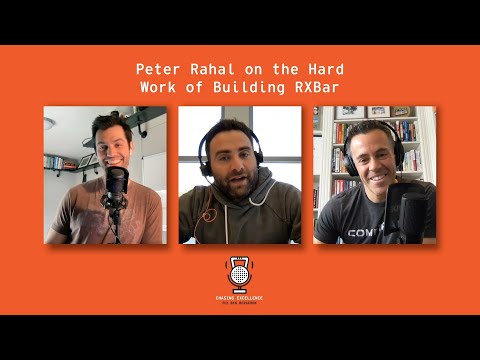
In the early days of RXBAR, Peter Rahal was not just building a brand. He and co-founder Jared Smith were deeply involved in making, selling, and growing the business themselves. Chicago Magazine reports that Rahal and Smith began making bars in Rahal’s parents’ Glen Ellyn basement and that after six months they moved production to a small product development facility on Western Avenue.
RXBAR’s early go-to-market strategy was highly hands-on. The founders focused on direct sales, especially into CrossFit gyms, and later leaned heavily on Amazon.
Chicago Magazine reports that for the first two years, RXBAR’s business plan was essentially to make a batch of product, sell it on Amazon, get paid, and then make another batch. The same report says that by managing their own inventory, the founders also “managed their own fate,” suggesting an early operating model that relied heavily on direct founder involvement rather than formal systems.
Rahal’s personal cell phone number appeared on early packaging, and the original wrapper was designed by the founders themselves in PowerPoint.
Those details suggest how closely the founders were tied to day-to-day execution in RXBAR’s early phase.
RXBAR entered Whole Foods in 2015, followed by Trader Joe’s, Kroger, and Target, with its packaging redesign helping attract major retail partners.
Chicago Magazine also reports that mass distribution increased the company’s cash-flow needs, including a $500,000 loan from Rahal’s father that was later repaid. In October 2017, Kellogg announced it would acquire RXBAR for $600 million, with expected 2017 net sales of approximately $120 million, and said RXBAR would continue operating independently as a standalone business.
RXBAR’s early growth relied heavily on direct founder involvement across production, sales, customer contact, and inventory management. As the brand expanded into major retail channels, the scale of the business increased well beyond its original hands-on operating model. That broader lesson is supported by the reporting, even though some of the more detailed operational claims in the original draft are not.
The Founder’s New Role
When operational intelligence becomes embedded in systems, something important changes. The founder stops running every operational decision. Instead, they begin designing the operation itself.
Rather than reacting to daily operational noise, founders can focus on the areas that truly drive growth:
- Developing new products
• Expanding retail partnerships
• Building brand identity and marketing
• Strengthening supplier and distributor relationships
• Creating long-term strategic opportunities
This shift has already happened in other industries. When cloud infrastructure automated server management in technology startups, founders stopped worrying about hardware and began focusing on building better products.
Food and beverage brands are now beginning to experience a similar transition, moving from founder-driven operations to systems that can support growth at scale.
A Question Every Founder Should Ask
- What happens if the founder disappears tomorrow?
- How much operational intelligence disappears with them?
- For many founder-led brands, the answer is: a lot
- Years of experience are:
- Not documented
- Not systemized
- Stored only in the founder’s mind
- This creates a hidden risk:
- Business dependency on one person
- Slower scaling
- Operational bottlenecks
The AI Opportunity
- AI enables you to:
- Capture founder knowledge
- Convert experience into structured processes
- Build repeatable systems
- The real advantage isn’t just data . It’s turning instinct into infrastructure
Key Insight
- The fastest-scaling brands:
- Don’t just collect data
- They systemize experience
GrayCyan has built an Operational Intelligence Audit for food and beverage founders to map where operational intelligence lives inside your business today. And where AI could begin capturing it. Because your instinct built the brand. But systems are what will scale it.