



AI Training Data forms the base for every machine learning algorithm and decides the accuracy, reliability, and scalability of the model. To put it in some very simple words, it can be referred to as the information that is fed to the AI algorithms so that they understand patterns, predict results, or generate an output. People who ask about what is AI training data need to know what actually powers up the intelligence of these AI systems.
This comes at a very heavy cost. Multiple studies have shown that data experts spend around 60-80% of their time working on data preparation rather than creating the models themselves, and data quality continues to remain the biggest reason for failure of AI algorithms in production. There is nothing in the world that even the best algorithms can do with bad, inconsistent, or biased data sets.
As organizations scale AI adoption, the challenge is no longer just building models but building the right data pipelines that support them. Without strong foundations, AI projects often fail to move beyond pilot stages or deliver unreliable results in real-world environments.
This guide breaks down the full lifecycle of AI training data across four key pillars: how to source data effectively, how to structure annotation workflows, how to ensure quality control and validation, and how to manage ethics, privacy, and compliance. Together, these pillars form the backbone of any successful and production-ready AI system.
By the numbers: Data experts spend 60–80% of their time on data preparation rather than model-building, and roughly 35% of first-submission supplier data files contain errors — making data quality the leading cause of AI failures in production.
Source Data Effectively
Pull from internal systems, open datasets, crowdsourcing platforms, and licensed vendors based on the use case.
Structure Annotation Workflows
Label data consistently across image, text, audio, and enterprise-scale annotation platforms.
Ensure Quality Control
Validate consistency with inter-annotator agreement, gold standards, and AI-assisted checks.
Manage Ethics & Compliance
Handle consent, copyright, privacy, and secure training on sensitive data.
What Is AI Training Data and Why Quality Matters
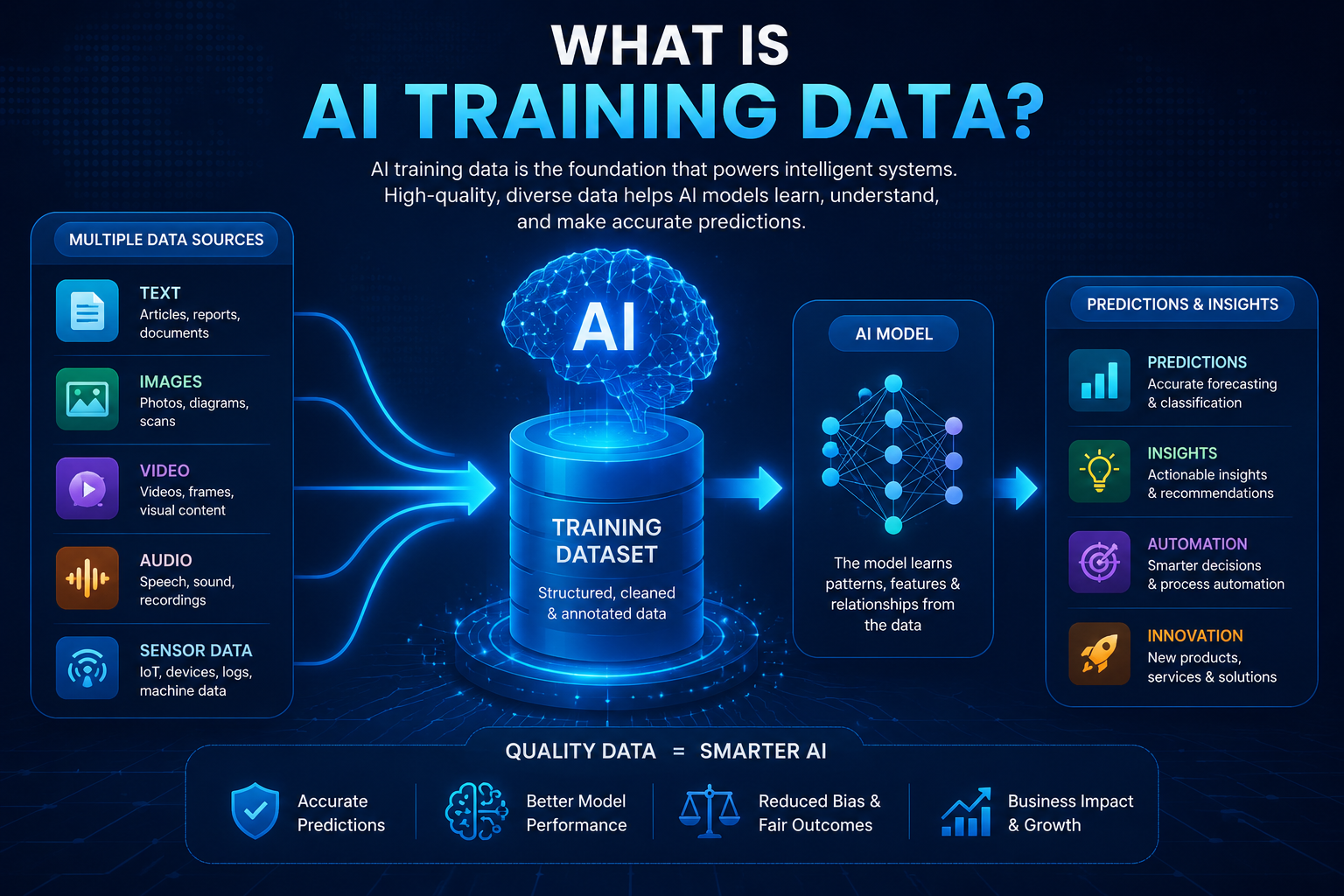
What is AI training data — how structured, cleaned, and annotated datasets power AI model training
Training data in AI refers to the dataset that is employed in teaching an ML model how to recognize patterns, predict, or produce outputs. The data is in the form of text, numbers, pictures, or sensor data that is well-prepared to enable the system to learn through examples rather than through the use of instructions. The quality and structure of the data determine the accuracy of the AI model produced.
Labeled vs. Unlabeled Data
Labeled data is used in supervised learning algorithms, where every input has a corresponding answer, such as "defective" or "non-defective" in a manufacturing process. Unlabeled data is used in unsupervised learning algorithms, where the computer learns on its own, and there is no predetermined answer set. The labeled dataset is often used in classification tasks, whereas unlabeled data can be used in clustering or anomaly detection tasks.
Structured vs. Unstructured Training Data
Structured data refers to data that is arranged in specific formats, such as spreadsheets, enterprise resource planning (ERP) solutions, or relational databases. On the other hand, unstructured data involves emails, pictures, videos, voice, and documents. Both structured and unstructured data are important in manufacturing organizations, as critical operations insights may be gained from a combination of manufacturing logs, visual inspection, and documentation.
Why Data Quality Determines Model Quality
The performance of AI is largely influenced by the accuracy of data used in the learning process. Problems such as class imbalance, inconsistency in labeling, and missing values can bias the learning process. There have been reports that in some corporate data sets, about 35 percent of supplier data files submitted for the first time had errors. Bad data can also cause AI training data poisoning, which is the contamination of machine learning models by bad input data.
35% of first-submission supplier data files contain errors in some corporate datasets — a reminder that even well-labeled data can quietly poison a model if it isn't validated before training.
How to Collect and Source AI Training Data
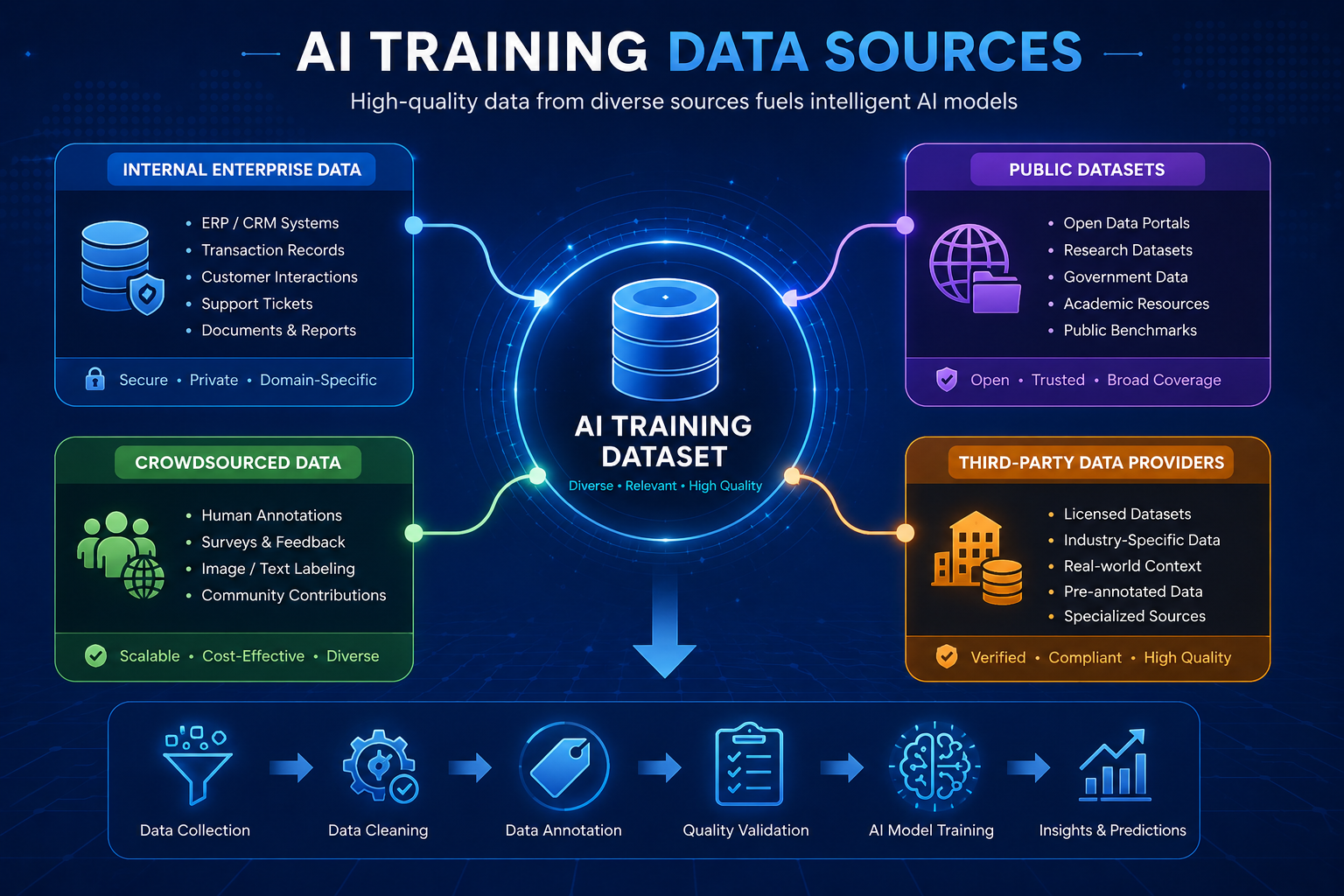
AI training data sources — internal enterprise data, public datasets, crowdsourced data, and third-party providers
The collection of quality training data is among the most critical aspects of developing dependable AI models. The source of data determines the accuracy, bias, and performance of the model. Companies tend to use a variety of sources of data based on their specific applications and industries.
Internal Data Sources
There are usually valuable AI training data sources that enterprises can use from within the organization itself. This will include the records found in the enterprise resource planning system, client relationship management records, production data, client service ticket details, email exchanges, and operational reports. Internal data is usually the most useful source to use as the basis for AI applications as it is highly relevant, based on actual business practices, and easy to use. Companies can leverage such data by integrating the systems using the Data Connection & System Integration services offered by companies like GrayCyan.
Public and Open-Source Datasets
A frequent method for AI training data sources for AI models involves the use of openly accessible datasets. Such datasets include those from sources such as Common Crawl, ImageNet, Hugging Face datasets, and government open data portals, among others. They are suitable for initial research and testing purposes training data for AI. Nevertheless, the datasets may not have industry-specific information, could be out-of-date, and some might carry licensing conditions that restrict commercial use.
Crowdsourced Data Collection
In cases where data alone does not suffice, then companies turn to crowdsourcing. Here, crowd-sourced inputs like image labels, text outputs, or language translation are collected. It proves to be highly beneficial when subjectivity plays a critical role in the process of data labeling. Crowdsourcing is used to create diversified data sets rapidly.
Buying AI Training Data
Most businesses find it wise to purchase AI data from vendors where speed is key. Organizations such as data marketplaces and Appen, Scale AI, and Lionbridge AI provide industry-specific sets of labeled data. This may save on collection time, but the business should be wary of the legal implications of doing so. Though purchasing data will expedite AI development, companies need to make sure that the data is both ethical and legal to use.
Internal Data Sources
ERP, CRM, production data, and service tickets — highly relevant and grounded in real business practice.
Public & Open-Source
Common Crawl, ImageNet, Hugging Face — good for early testing, but may lack industry specificity.
Crowdsourced Collection
Useful when subjectivity matters and diversified datasets need to be built quickly.
Buying AI Training Data
Vendors like Appen, Scale AI, and Lionbridge AI trade speed for legal and ethical due diligence.
Crowdsourcing Platforms for AI Training Data at Scale
Crowdsourcing platforms feed raw data into the same annotation-to-quality-review pipeline before it becomes training-ready
AI training data scaling goes beyond mere collection as it demands labeling and quality assurance of that data. Through crowdsourcing platforms, businesses can transform their unorganized data into organized datasets through collaboration with global annotators and built-in validation processes. The use of these platforms is common in the modern AI training data services industry due to the low cost involved and the efficiency associated.
Amazon Mechanical Turk
500,000+ global workforce for tagging, sentiment analysis, transcription, and image recognition.
Toloka AI
Breaks tasks into smaller components with automatic checks for complex annotation work.
Appen
High-quality multilingual datasets backed by a global annotator team and strict QA practices.
Labelbox & SuperAnnotate
Task-design platforms with automation and AI-enabled pre-labeling that can cut annotation time by up to 70%.
Amazon Mechanical Turk (MTurk)
Amazon Mechanical Turk is one of the biggest crowd-sourcing sites, with over 500,000 individuals in its global workforce. The site is mostly used to perform tasks that do not require much expertise, like tagging, sentiment analysis, transcription, image recognition, etc. Businesses upload tasks termed "human intelligence tasks" and pay the workers based on the completion of AI training data services task. Hence, it is quite flexible and economical. On the other hand, MTurk is not the best option when it comes to the annotation of highly specialized or complex tasks because of the variation in the quality of tasks due to the workers' expertise.
Toloka AI
The Toloka AI service is created to handle more complicated annotation processes. The service divides a task into smaller components and has an automatic check function for achieving much more higher accuracy. The approach allows for avoiding mistakes and maintaining consistency in datasets. Toloka is particularly helpful when working on natural language processing, search relevance assessment, and content moderation.
Appen (formerly Figure Eight / CrowdFlower)
Appen is a high-end crowdsourcing service that provides high-quality multilingual data sets. This service integrates a worldwide team of human annotators together with robust quality assurance practices, thus making it a perfect tool for large companies developing sophisticated AI solutions. Appen is used to train conversational AI, translation, and computer vision systems. The advantage of this service is its ability to balance scalability and strict data validation.
Task Design Tools: Labelbox & SuperAnnotate
The tools like Labelbox and SuperAnnotate contribute significantly to creating and organizing annotation workflows. Labelbox is a scalable platform equipped with automation capabilities, real-time quality control, and the ability to handle various types of data, including images, videos, and text. Moreover, it has SDKs that help to create custom annotation processes. The tool SuperAnnotate increases the efficiency of annotation by means of AI-enabled pre-labeling that may cut down the time required for annotation by up to 70%.
Data Annotation Tools: Labeling with Precision
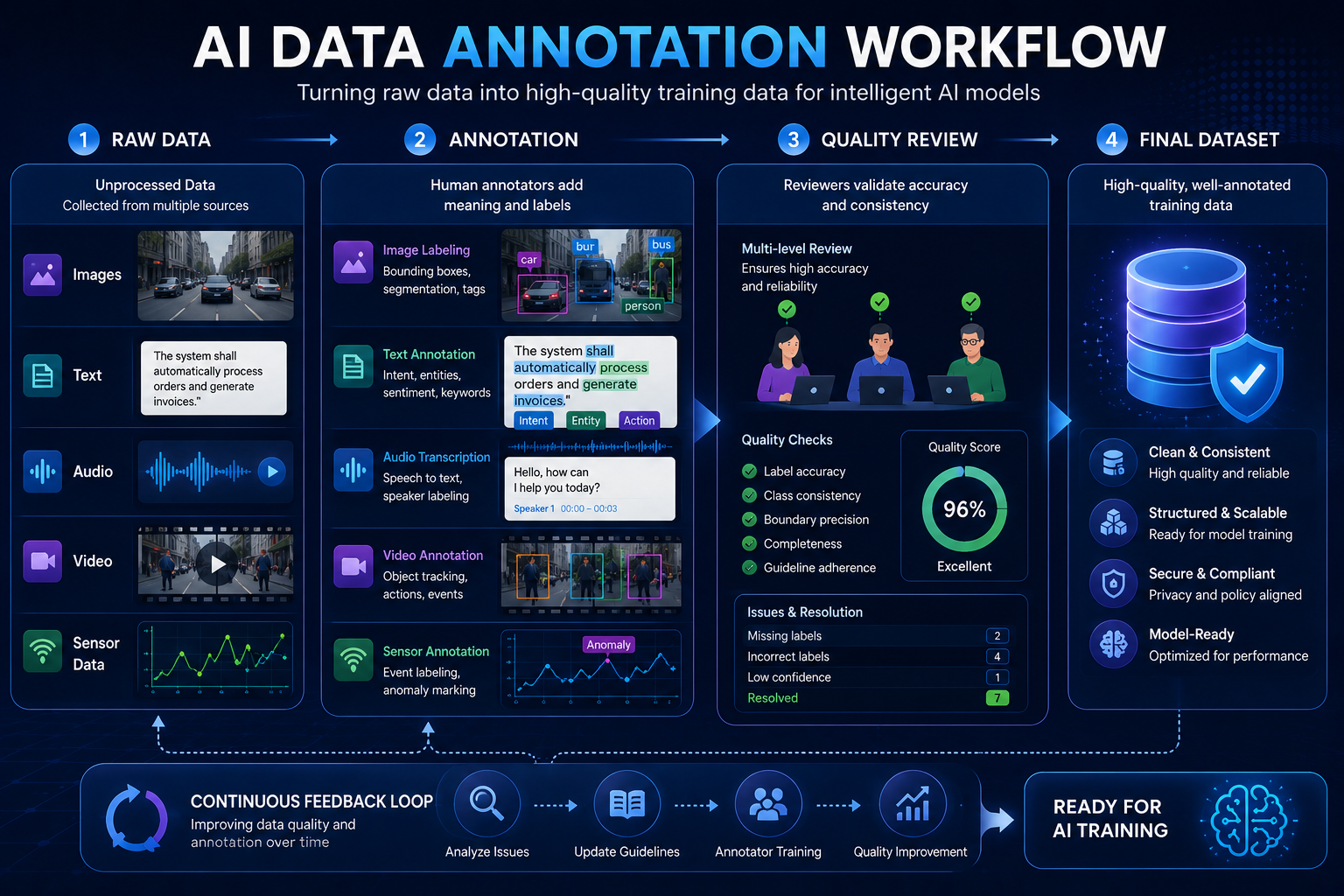
AI data annotation workflow — from raw data to annotation, quality review, and a final training-ready dataset
Proper labeling is an important component of the AI training data annotation process. This allows for machine learning models to be trained on the correct structure of the example to improve accuracy and minimize bias. Such tools allow teams to handle various types of data, keep things consistent, and improve the entire process of data annotation AI training.
VIA & CVAT
Browser-based labeling for research, and large-scale object detection, bounding boxes, and video tracking.
Doccano
Free NLP annotation for named entity recognition, classification, and sentiment analysis.
Audacity
Noise removal, trimming, and normalization ahead of speech dataset annotation.
Dataloop
End-to-end workflows across images, video, text, and LiDAR with workforce and QA management.
Image & Video Annotation: VGG Image Annotator (VIA) and CVAT
VGG Image Annotator (VIA) is an easy-to-use tool that can be accessed via browsers and is extensively used in research projects and small-scale endeavors. This tool enables fast image and video labeling without any complicated setup process, making it perfect for research or academic projects, or even for the first stages of AI development. As for CVAT (Computer Vision Annotation Tool), this is an advanced tool designed for large-scale environments. It includes features of object detection, bounding boxes, segmentation, and video tracking. When used in manufacturing, this tool can help to label production line images to detect defects.
Text Annotation: Doccano
Doccano is a free tool that can be used for natural language processing applications. Doccano offers functionality such as named entity recognition, text classification, and sentiment analysis, making it very handy when developing datasets for NLP purposes. The application is mostly used to label customer support requests, chat messages, and review texts so that the AI system can comprehend user intentions and sentiments better. Due to its straightforward interface, it is easily used by both tech-savvy and non-tech-savvy annotation teams.
Audio Annotation: Audacity
While Audacity is mainly used as an audio editor, it is commonly utilized as part of the AI training process in data annotation for speech dataset creation. With its help, users can remove noise from audio, cut audio pieces, and normalize recordings prior to their annotation. Even though Audacity is not a special annotation tool, it is often combined with other software, such as Praat or ELAN, for the thorough annotation of audio files.
Enterprise Annotation Platform: Dataloop
Dataloop is a high-performance platform that can be used to conduct end-to-end workflows of data annotation in various forms – images, videos, texts, and even LiDAR data. The platform provides assistance in labeling, managing the workforce, and quality control procedures, which can be very useful in scaling up processes in an efficient manner. The automation features provided by the platform help to enhance consistency while lowering the manual efforts involved, making it one of the best data solutions for AI model training.
Training AI Models: Quality Data Techniques That Work
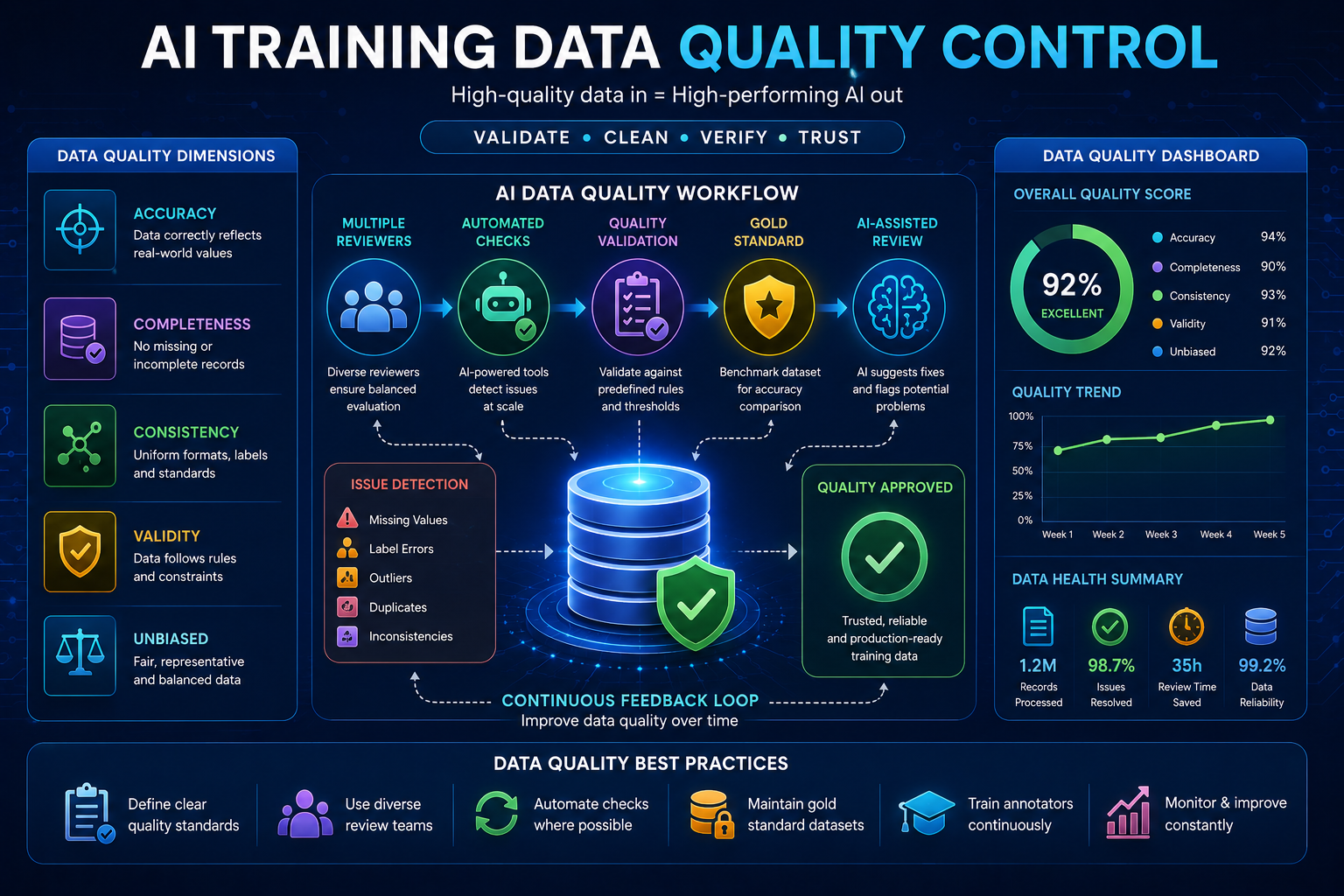
AI training data quality control — validation, gold standards, and continuous feedback loops that keep datasets trustworthy
Efficient AI systems need more than just big data sets; efficient AI models require efficient techniques for providing them with accurate, consistent, and reliable data. The process of quality assurance is not one-time; instead, it is an ongoing process that involves both manual and machine-driven verification of data in order to minimize errors prior to model training.
Inter-Annotator Agreement (IAA)
Inter-Annotator Agreement is one of the main methods employed for evaluating the consistency of annotations done by different annotators. This method involves the independent annotation of identical data samples by a number of people whose work is then compared to determine the level of agreement. When the level of agreement is below 80%, this usually means that either there are vague instructions or poorly defined guidelines for the annotations or classification. One of the best ways to improve the quality of data training techniques for AI models is through improving IAA.
80% is the general threshold for healthy inter-annotator agreement — dropping below it is usually a sign of unclear guidelines rather than a labeling problem.
Gold Standard Validation Sets
Validation using the gold standard is performed by introducing pre-tagged or labeled "right" instances to assess the accuracy of the annotation process in real-time. The secret test instances serve as a way for such annotation platforms as MTurk, Toloka, or Appen to constantly keep track of the performance of the annotators. In case the annotators repeatedly fail the test, their contributions can be excluded from consideration.
Fuzzy Logic and AI-Assisted Validation
In today's quality systems, the employment of fuzzy logic is gaining popularity as a way of transcending the basic pass/fail tests. In contrast to binary validation, AI provides a confidence rating for annotations and calls out those that are inconsistent for further checking. Quality systems such as Dataloop use monitoring by means of AI for the discovery of patterns of systematic labeling mistakes before the process of training the model. This technique allows achieving both scalability and precision and is an integral part of advanced AI training data validation techniques.
Avoiding AI Training Data Poisoning
The process of AI training data poisoning refers to introducing corrupt, misleading, or even biased data into the dataset through accidental means or deliberate attempts. The inclusion of faulty data leads to poor performance by the model. Having a proper validation pipeline helps in recognizing errors, inconsistent labels, and outlying distributions before the training phase. It is vital to have human supervision, automated validation tools, and strict data governance policies to mitigate the issue.
Generative AI Training Data: What's Different
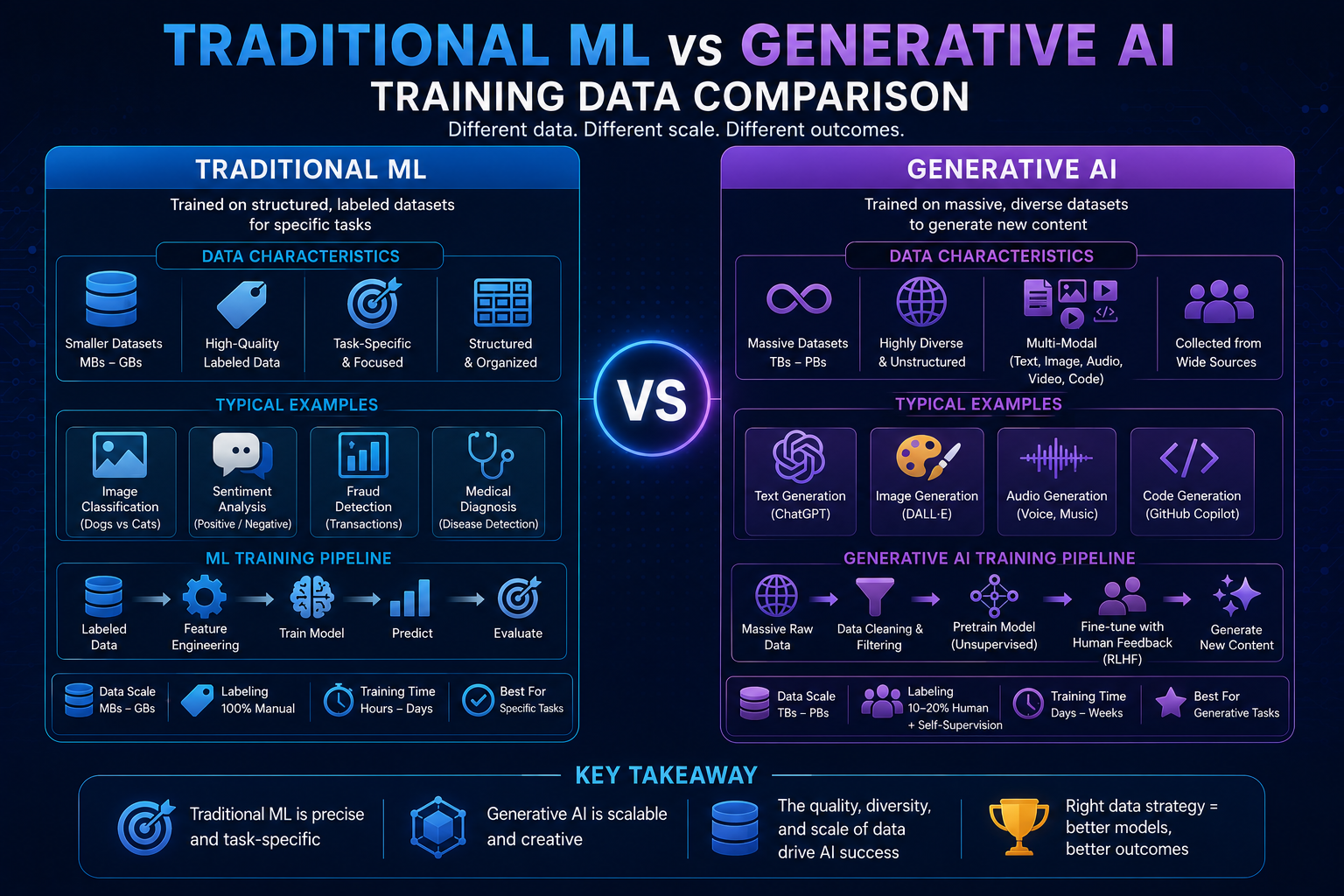
Traditional ML vs. generative AI training data — different scale, structure, and pipelines
There is a fundamental difference between the data used to train a Generative AI training data model vs regular machine learning algorithms, since the former helps the algorithm to generate new content rather than just classifying or making predictions. In contrast to the simple labeling required for a regular machine learning model, a generative AI algorithm requires datasets of a massive scale, diversity, and context with textual, visual, programming, and feedback data.
Why Generative AI Has Different Data Requirements
As opposed to conventional machine learning models, the Generative AI models, for example, language models (LLM) and image generation models, require huge unstructured data sets. The models learn from billions of examples and not from fixed labels. One of the components of generative AI models is RLHF (Reinforcement Learning from Human Feedback), where human reviewers judge or edit the outputs to train the model according to human intention. The instruction tuning dataset and preference data are other important parts of the data, as they aid in making responses in real-life situations.
Training Data for Generative AI: Key Sources
Training data for generative AI is derived from a blend of internet-scale public data as well as curated enterprise content. Public data sets such as Common Crawl, The Pile, and LAION-5B (for images) form the basis for internet-scale pretraining data sets. Enterprise models usually make use of internal documentation, Standard Operating Procedures, product manuals, etc., for fine-tuning. Both broad coverage and industry relevance are ensured through this Generative AI training data process.
Traditional ML vs. Generative AI Training Data
| Factor | Traditional ML Training Data | Generative AI Training Data |
|---|---|---|
| Data Scale | Fixed, labeled examples for a defined task | Billions of examples at internet scale |
| Data Type | Structured labels (e.g. "defective" / "non-defective") | Text, visual, programming, and feedback data |
| Human Role | Annotators label against a fixed schema | RLHF reviewers judge or edit outputs to align with intent |
| Key Sources | Internal ERP/CRM records, purpose-built labeled sets | Common Crawl, The Pile, LAION-5B, internal SOPs and manuals |
| Fine-Tuning Inputs | Not typically applicable | Instruction-tuning datasets and preference data |
Best Data Providers for Training Gen AI
There are several best data providers for training GEN AI dedicated to constructing datasets for gen AI's. Companies such as Scale AI, Surge AI, Appen, and Labelbox offer RLHF, instruction-tuning datasets, and annotation processes. The best data providers for gen AI training are companies that allow enterprises to generate high-quality and aligned datasets. They have a lot of experience in the creation of such datasets and thus can greatly benefit any company that develops its own gen AI.
Synthetic Data for AI Training: When and How to Use It
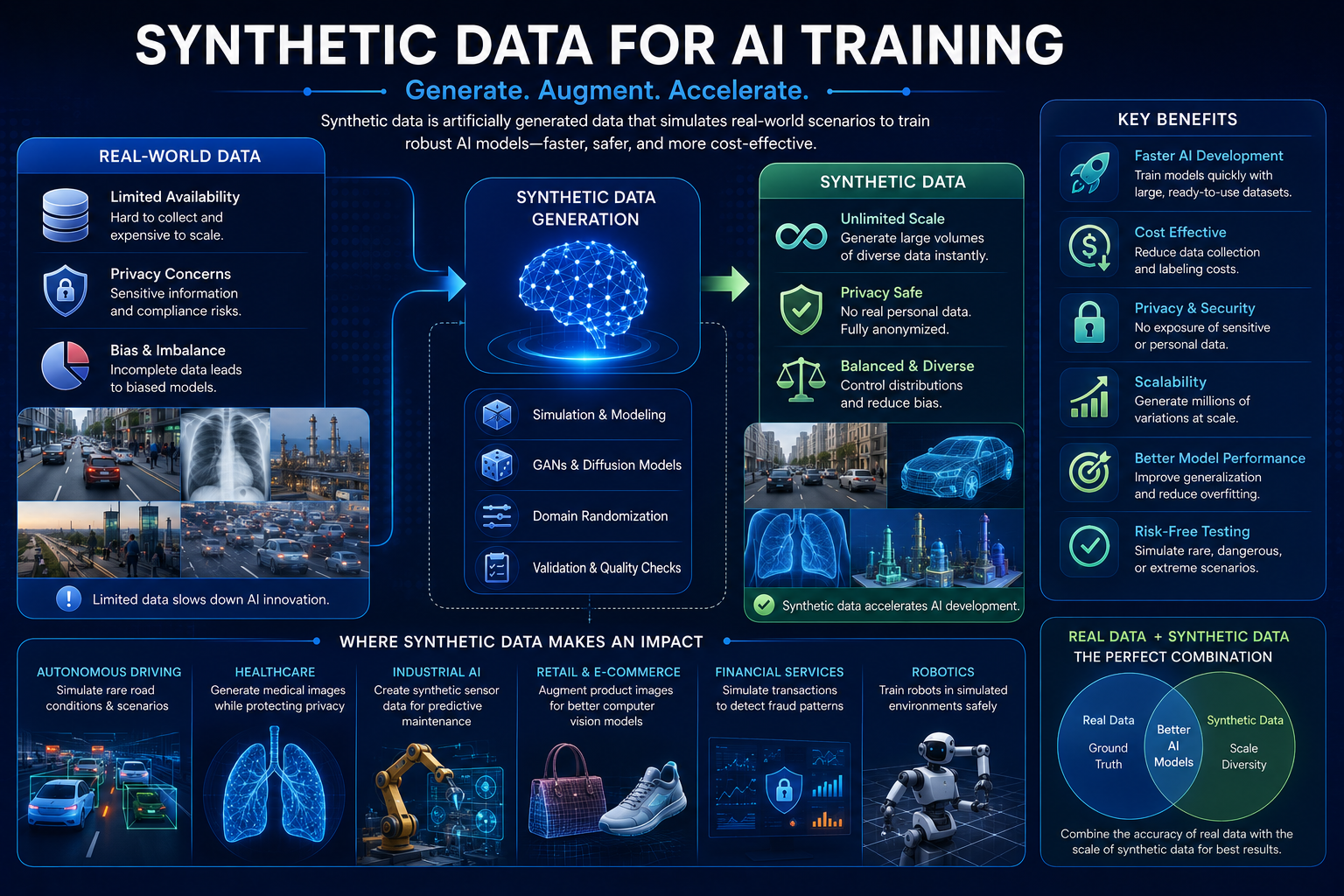
Synthetic data generation — simulating real-world scenarios without exposing sensitive or personal data
The use of synthetic data for training AI is an increasingly common solution to the problem faced by companies when dealing with a lack of sensitivity or high cost of collecting real-world data. Apart from using real records, synthetic data can be produced through algorithms or simulations that mimic real-world data without revealing sensitive data.
What Is Synthetic Data for AI Training?
Synthetic data refers to information that is created artificially, such that its structure and behavior resemble those of actual data sets, while not having any record of personal or sensitive information. Synthetic data can take the form of artificial images, text, tables, or even sensor data. Synthetically created data is especially valuable in industries that require privacy, such as the healthcare, financial, and legal sectors. It is also commonly employed for boosting data sets that have few actual examples.
When Synthetic Data Makes Sense
In artificial intelligence training, the use of synthetic data AI training would be most beneficial in situations where there is a lack or an imbalance of actual data. In cases such as manufacturing defect detection, where there is a very small percentage of defects, it will help in creating simulations for improving the detection process. It will also play a very much important role in highly regulated industries like health care and financial services, where it is restricted from sharing due to regulations like HIPAA and GDPR. For instance, NVIDIA has shown how synthetic data in AI training plays a significant role in speeding up the development of AI in industry by creating actual environments for robots and visual perception.
Limitations of Synthetic Data
While there are several benefits associated with synthetic data, some notable disadvantages have also been observed. If the data created through such methods is not a good representation of reality, then there can be a case of distribution shift, where the models can perform well during training but fail in real-world scenarios. Excessive dependency on synthetic data can limit the generalization capacity of the model.
Ethical AI Training Data: Privacy, Consent, and Compliance
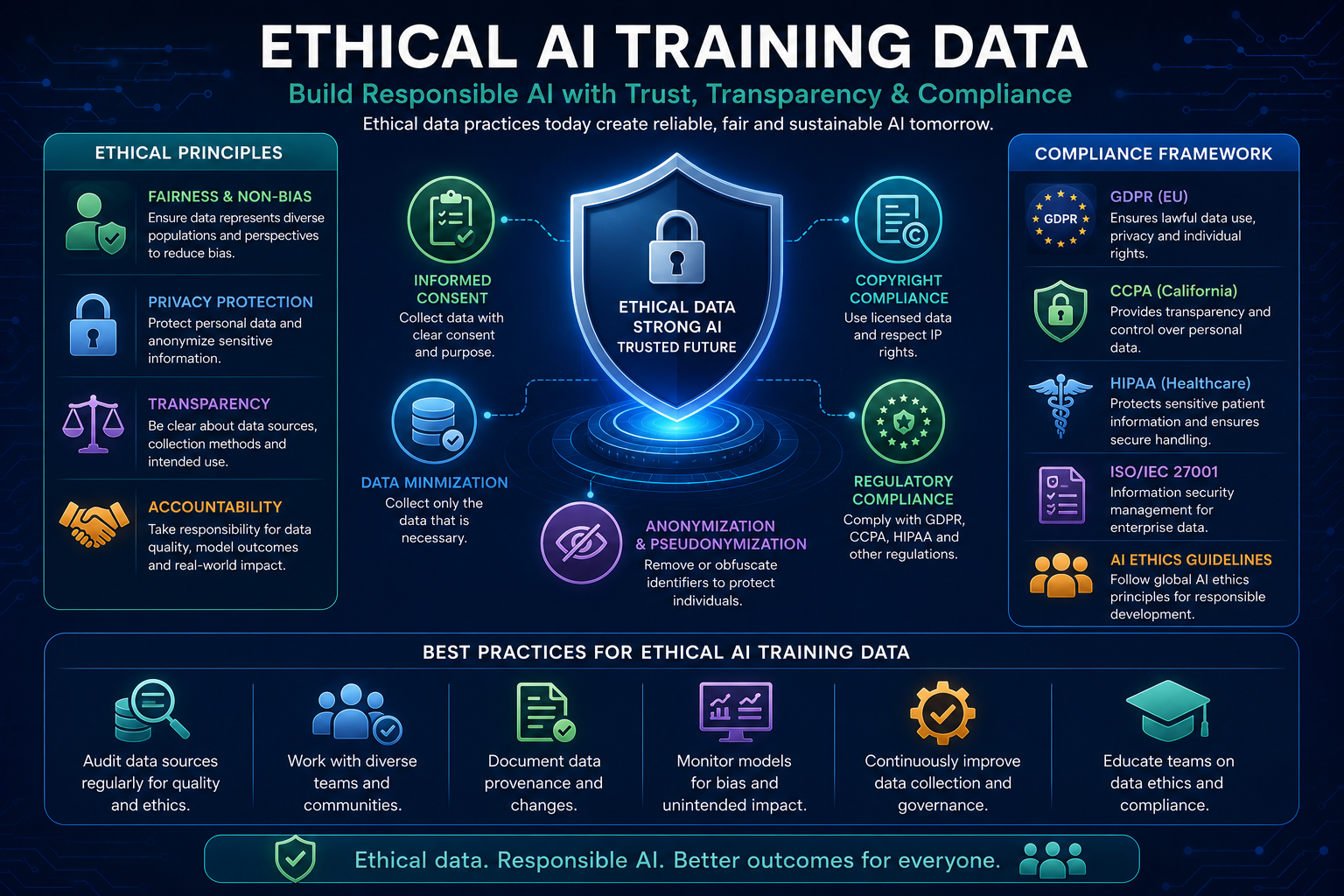
Ethical AI training data — consent, privacy, and compliance frameworks that build responsible AI
With an increase in the use of AI technology, there has been an emergence of the need for the use of ethical AI training data given the example of the AI training data copyright violation lawsuit 2026. It is not enough for corporations just to demonstrate that the datasets they have are effective; it has become necessary for them to show that they have been collected and used legally.
Consent and Copyright in AI Training Data
There remains a lot of uncertainty when it comes to the legal issues involved in training data, particularly where there is web scraping and copyrighted material involved. This is evident from the high-profile case from AI training data licensing news of The New York Times vs. OpenAI and Getty Images vs. Stability AI, which illustrates the growing problems with the use of public data to train models. Businesses will now have to consider whether the third-party sources of data that they use are properly licensed for AI usage.
Data Privacy in AI Training Pipelines
It is vital that there should be good best practices for data privacy in the training of an AI. There are regulations such as the GDPR and CCPA, which have very strict rules about the way data is handled in regard to storage, collection, and processing of the data. It is therefore necessary that there be anonymization of data, limiting of data access based on roles, and maintenance of a data usage audit trail for best practices for data privacy in AI training'.
Secure Training of AI Models on Sensitive Data
In order to increase the level of security and compliance, companies are resorting to new techniques like federated learning, differential privacy, and secure on-premises training platforms. In this way, the data never leaves the location of its source or gets secured mathematically during the training process. It provides secure training of AI models on sensitive data based on sensitive information and the performance of the model. For the enterprise world, the incorporation of governance frameworks such as GrayCyan's Monitoring, Accuracy & Compliance services is crucial for ethical AI.
Takeaway: Effective datasets aren't just accurate — they need to be defensible. Consent, privacy, and secure training practices are what let AI systems hold up to scrutiny once they're in production.
How GrayCyan Builds Enterprise-Grade AI Training Pipelines
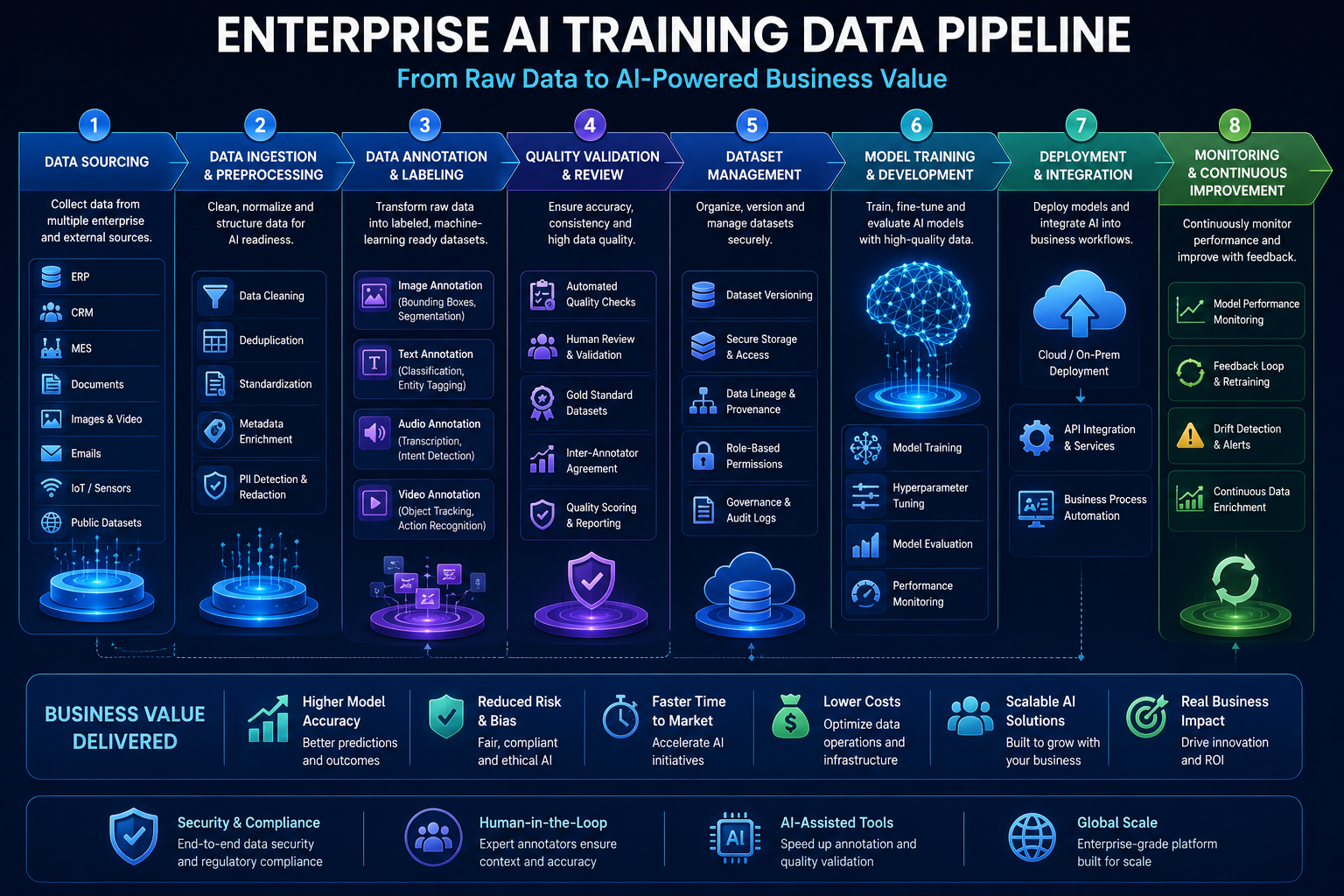
Enterprise AI training pipeline — from data sourcing through annotation, quality validation, and continuous monitoring
At GrayCyan, we build enterprise-grade AI training data services by paying attention to what most other teams ignore. Unlike the traditional practice, where data expert teams use generic datasets, we assist organizations to create pipelines that will incorporate their internal ERP systems, CRM platforms, operational logs, and raw business data in structured form. This way, AI algorithms will learn from actual business processes, not external databases.
At GrayCyan, we build enterprise-grade AI solutions using Human-in-the-Loop quality checking, explainability of AI outputs, and full audit trails for all decisions made in the course of the process. It makes it possible for us not only to provide an accurate training but also to make it fully compliant and transparent to use in the enterprise setting. Our data governance layer assists in reducing bias and inconsistency in training.
With the help of solutions such as Custom AI Assistants and Data Connections & System Integration, GrayCyan makes it possible for enterprises to create scalable AI training systems based on their fragmented data.
Contact our team if you want to start building or enhancing your enterprise-level AI training process.